Why Your Household Circuits Keep Getting Overloaded
Post Details
Key Takeaways
- Circuit overloads happen when a circuit draws more current than its wiring can safely carry, and Dubai homes face extra risk due to heavy AC usage and older installations.
- The most common culprits include too many high-draw appliances on one circuit, outdated wiring, overuse of extension leads and multi-plug adaptors, and undersized distribution boards.
- Warning signs include tripping breakers, flickering lights, warm outlet covers, and buzzing sounds from the fuse box.
- Overloaded circuits are a leading cause of residential electrical fires. Early attention protects both property and people.
- A licensed electrician in Dubai should assess any circuit that trips repeatedly. This isn't a DIY situation.
Your lights dim the moment the washing machine kicks on. The breaker in the hallway pops every time someone runs the microwave and the kettle at the same time. It keeps happening. And you keep resetting it and moving on.
Sound familiar?
That pattern isn't just annoying. It's a signal your electrical system is working harder than it was designed to. And in a Dubai home where air conditioners run for the better part of the year, where smart TVs, induction cooktops, and charging stations are part of everyday life, the load on residential circuits has grown far beyond what older wiring was built to handle.
Understanding why circuits overload is the first step to protecting your home's electrical infrastructure. Here's what we see most often.
What Actually Happens When a Circuit Overloads
Every circuit in your home has a rated capacity, measured in amps. That rating defines how much electrical current the wiring and breaker can safely carry at one time. When the combined demand from connected appliances exceeds that limit, the wiring starts to generate heat. The circuit breaker is designed to trip before that heat becomes a problem, cutting power to the circuit automatically.
That's the protection working as intended.
But if the underlying cause isn't fixed, repeated tripping puts stress on the breaker itself. Over time, a breaker that's cycled too many times may stop tripping reliably. And a circuit that overheats without protection is one of the primary causes of residential electrical fires.
Under DEWA's Regulations for Electrical Installations, all electrical systems in Dubai must include properly rated circuit protection devices, and installations must be sized to handle the full electrical demand of the building, including lighting, HVAC systems, and appliances. When those calculations were done at the time a building was wired, they reflected the appliance loads of that era. That's part of the problem.
The Most Common Reasons Circuits Become Overloaded
Too Many High-Draw Appliances on One Circuit
This is by far the most frequent cause we encounter. Kitchen circuits are the most vulnerable. A refrigerator, microwave, electric kettle, toaster oven, and blender may all be in the same space. If several of them share a single circuit, the combined draw can easily exceed its rating.
It's not just kitchens, though. Laundry areas with washing machines and dryers, home offices with desktop computers, monitors, printers, and docking stations, bedrooms where people run electric fans alongside phone chargers and gaming consoles. These high-demand zones often end up sharing circuits that weren't designed for that volume.
A circuit overload occurs when appliances, electronics, and other devices draw more electricity than a single circuit can handle. It's a problem particularly common in older homes with outdated wiring.
Heavy, Continuous AC Usage
In Dubai, air conditioning isn't seasonal. It runs around the clock for months, and multiple units often run simultaneously during peak summer temperatures. When multiple AC units run at the same time in extreme heat, older breakers can struggle to handle the amperage. This is a common cause of overloaded circuits in UAE homes.
AC units draw a significant amount of power, and that demand is constant rather than intermittent. If other appliances share the same circuit as an AC unit, or if the distribution board wasn't sized with full AC load in mind, you're likely to see tripping breakers when the temperature climbs.
Overuse of Extension Leads and Multi-Plug Adaptors
This one is easy to overlook because it doesn't look like an electrical problem. It looks like a tidy bundle of cables behind the TV or a strip of adaptor plugs in the home office. But if you rely on heavy use of extension cords, it's a sign you don't have enough outlets for your needs. A qualified electrician can inspect and add new outlets.
The real risk is stacking load. Plugging a power strip into another power strip, or running several high-draw appliances from a single multi-socket adaptor, multiplies the demand on one outlet and one circuit. Adaptors and extension leads are not a long-term solution to insufficient outlet capacity.
Outdated Wiring Not Built for Modern Loads
Many residential properties in Dubai were wired when the typical household appliance load was far lower than it is now. The circuits were sized for the era. Smart appliances, larger refrigerators, additional AC units, EV chargers, and full home entertainment setups weren't part of that original calculation.
Overloading distribution boards beyond their rated capacity is one of the most common causes of electrical hazards in UAE properties. If your building is more than fifteen years old and hasn't had an electrical assessment, it's worth having a certified technician evaluate whether your distribution board and wiring are still matched to your actual load.
Undersized or Ageing Distribution Boards
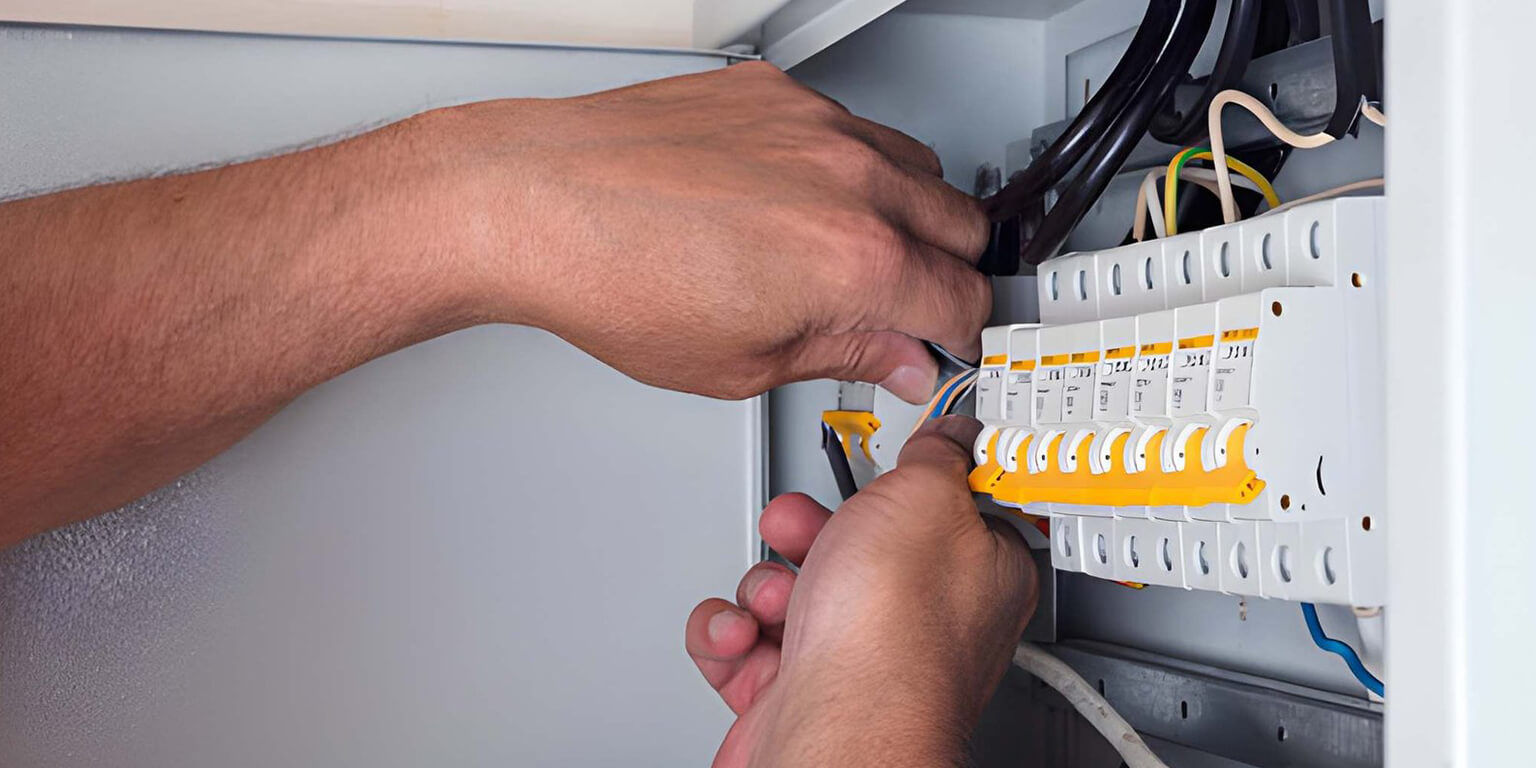
The distribution board, or DB, is the heart of your home's electrical system. It distributes power across circuits and houses the breakers that protect each one. An undersized DB, or one with ageing components, can't handle the total demand of a modern household.
An undersized electrical system means wiring can overheat. That's not just inconvenient. It's a fire hazard, and expensive equipment can fail well before it should.
If your DB is original to a building constructed more than a decade ago, it may not be rated for today's load. We often find this during annual maintenance contract inspections for both villas and apartments.
Faulty or Degraded Wiring
Wiring doesn't last forever. In Dubai's climate, where outdoor ambient temperatures can reach 48°C and humidity levels fluctuate sharply, cable insulation degrades faster than in temperate environments. DEWA requires all electrical installations to be sized appropriately to handle building loads and avoid overheating, voltage drops, or short circuits. But even compliant installations age.
Degraded insulation reduces a wire's effective capacity. A circuit that was properly sized when installed can start behaving as if it's overloaded if the wiring has deteriorated. This is one reason that electrical issues in older properties often appear without any obvious change in appliance usage. The wiring just isn't what it used to be.
Warning Signs You Shouldn't Ignore
Most circuit overloads give you advance notice. The signals aren't always obvious, but they're there.
Your electrical system gives warning signs when a circuit is struggling. The most obvious is a tripped breaker. When a circuit pulls too much power, the breaker shuts off electricity to prevent damage. If this keeps happening, the system is trying to tell you something. Warm or discolored outlets also indicate a problem. If an outlet cover feels hot to the touch or has dark marks around the edges, the wiring behind it may be overloaded.
Other signs include flickering or dimming lights when an appliance starts up, a buzzing sound from the distribution board or fuse box, and a faint burning smell near outlets or switches. Any one of these warrants attention from a professional. Don't keep resetting a tripping breaker without finding out why it's tripping.
We write about this in more detail in our guide on signs your electrical system needs maintenance. If several of these warning signs are showing up at once, it's time to call.
What Can Be Done About It
The good news is that most overload problems are solvable. A licensed technician can identify which circuits are under strain, determine whether the cause is a load issue, a wiring issue, or a capacity issue with the DB, and recommend the right fix.
In some cases, that means redistributing appliances across different circuits. In others, it means adding dedicated circuits for high-draw equipment like AC units or kitchen appliances. For older properties, a distribution board upgrade may be the most effective long-term solution.
If your lights drop or flicker when you switch on an appliance, that's a sign your electrical load may be excessive and worth having checked professionally.
Our electrical services in Dubai cover everything from fault finding and circuit assessment to full distribution board replacements and rewiring. For villas, we also offer villa maintenance packages that include scheduled electrical inspections so issues are caught before they become problems.
We also offer thermographic inspection for properties where owners want a deeper look at what's happening inside panels and wiring concealed within walls. Thermal imaging can detect hotspots in electrical systems before they're visible or dangerous.
How to Reduce Overload Risk at Home
You don't need to be an electrician to manage your home's electrical load more carefully. A few practical habits go a long way.
Spread high-draw appliances across different circuits where possible. Don't run the washing machine, dishwasher, and oven at the same time if they share the same phase. Plug major appliances directly into wall outlets rather than extension leads, which ensures they have access to the full circuit capacity. And replace overloaded multi-socket adaptors with properly installed additional outlets.
Know where your distribution board is and which breaker controls which circuit. If a breaker trips, don't just reset it. Try to identify what was running at the time and whether unplugging one appliance stops the issue from recurring.
And if the same breaker keeps tripping week after week, get it looked at. Repeated tripping is the system doing its job. But the job it's doing is protecting you from something that needs fixing.
When to Call a Licensed Electrician
Some overload situations are straightforward. Others point to something more serious. Electrical work in the UAE is strictly regulated. Doing repairs yourself or hiring unlicensed contractors could void your home insurance policy if a fire occurs. Electrical work that affects wiring, breakers, or the distribution board needs to be handled by a licensed professional.
At GeeM, our electricians are DEWA-certified and familiar with the electrical standards that apply to residential properties across Dubai. Whether you're dealing with a single tripping breaker or want a full electrical assessment for an older property, we provide a straightforward inspection and a clear recommendation. No guessing, no overselling.
If your circuits are giving you trouble, get in touch with our team and we'll take a look.
FAQ
.svg)
The most common cause is running too many high-draw appliances on a single circuit simultaneously. In Dubai specifically, heavy and continuous AC usage adds a significant base load on circuits, making it easier for additional appliances to push the system beyond its capacity.
Not always. A tripping breaker can indicate an overloaded circuit, a short circuit, or a ground fault. Repeated tripping from the same circuit, especially when a specific appliance is running, generally points to an overload. A licensed electrician can diagnose the actual cause.
Yes. As wiring ages, insulation can degrade. In Dubai's climate, with high ambient temperatures and humidity, this process can accelerate. Degraded wiring carries current less efficiently and generates more heat, which can cause overload symptoms even without any change in the appliances being used.
For temporary, low-draw use, extension leads are generally acceptable. But using them to power several high-draw appliances simultaneously, or stacking multiple strips together, puts unsafe load on a single outlet and circuit. If you're relying on extension leads regularly, it usually means you need additional outlets installed.
Signs include frequent breaker trips, a board that's more than 15 to 20 years old, visible burn marks or corrosion on components, or a home that has had significant new appliances or AC units added since original installation. A licensed electrician can assess whether your current board is matched to your actual load.
DEWA's regulations cover the design, installation, and compliance of electrical systems in Dubai. Regular inspections are required for certain categories of installation, particularly in older buildings or where modifications have been made. For residential property owners, having a periodic professional assessment is advisable to confirm the system remains safe and compliant.
Costs vary depending on the cause. Redistributing loads or adding a circuit may be relatively straightforward. A distribution board upgrade or partial rewiring is more involved. We recommend getting a professional assessment first so you understand exactly what the issue is before agreeing to any work.
Table of content
- Extreme Heat and Overworking
- Poor Maintenance and Dirty Filters
- Incorrect Sizing of AC Units
- Low Refrigerant Levels
Recent Posts

Download our App







© 2026 GeeM.
.svg)