How Electrical Faults Can Damage Your Internet and Smart Home Devices
Post Details
Key Takeaways
- Voltage fluctuations, power surges, and faulty earthing are common electrical problems in UAE homes that silently degrade or destroy smart devices and internet equipment.
- Routers, smart thermostats, security cameras, smart hubs, and voice assistants are among the most vulnerable devices because they're always on and rely on low-voltage power supplies.
- Poor earthing creates electrical noise that disrupts network performance and smart device reliability, even when no obvious fault has occurred.
- Surge protection at the outlet level is helpful, but whole-home surge protection at the distribution board provides more complete coverage.
- Recurring connectivity issues, unexplained device resets, and random offline behaviour from smart devices can all point back to an underlying electrical fault.
Your smart doorbell keeps going offline. The router resets by itself every few days. The smart thermostat's settings keep wiping. You've rebooted everything, spoken to your ISP, and swapped out the router. Still happening.
Sound familiar?
In many cases, the problem isn't the device or the network. It's the electrical system feeding them. Electrical faults don't always announce themselves with a tripped breaker or a burnt smell. Sometimes they show up as chronic connectivity problems, shortened device lifespans, and smart home gear that behaves as if it has a mind of its own.
Here's a straightforward look at how electrical faults affect internet and smart home devices, and what to do about it.
Why Smart Home Devices Are Particularly Vulnerable
Older appliances like washing machines and ovens were built to handle some degree of electrical variation. Smart home devices aren't. A voice assistant, smart plug, video doorbell, or wireless thermostat typically operates on a low-voltage power supply with sensitive internal components. There's very little tolerance for voltage instability.
Smart home gadgets are more vulnerable to surges for three main reasons: they're always on, they depend on low-voltage power adapters that can burn out from a surge, and they're frequently networked by both wiring and Wi-Fi, creating multiple entry points for damage.
And the damage isn't always obvious straight away. You might not notice damage to a smart device right away. Your security camera may randomly go offline, your smart lighting may act strangely, or your smart thermostat may start giving false readings.
By the time you trace the pattern, you've already replaced devices that didn't actually need replacing.
The Main Electrical Faults That Cause Problems
Voltage Surges and Spikes
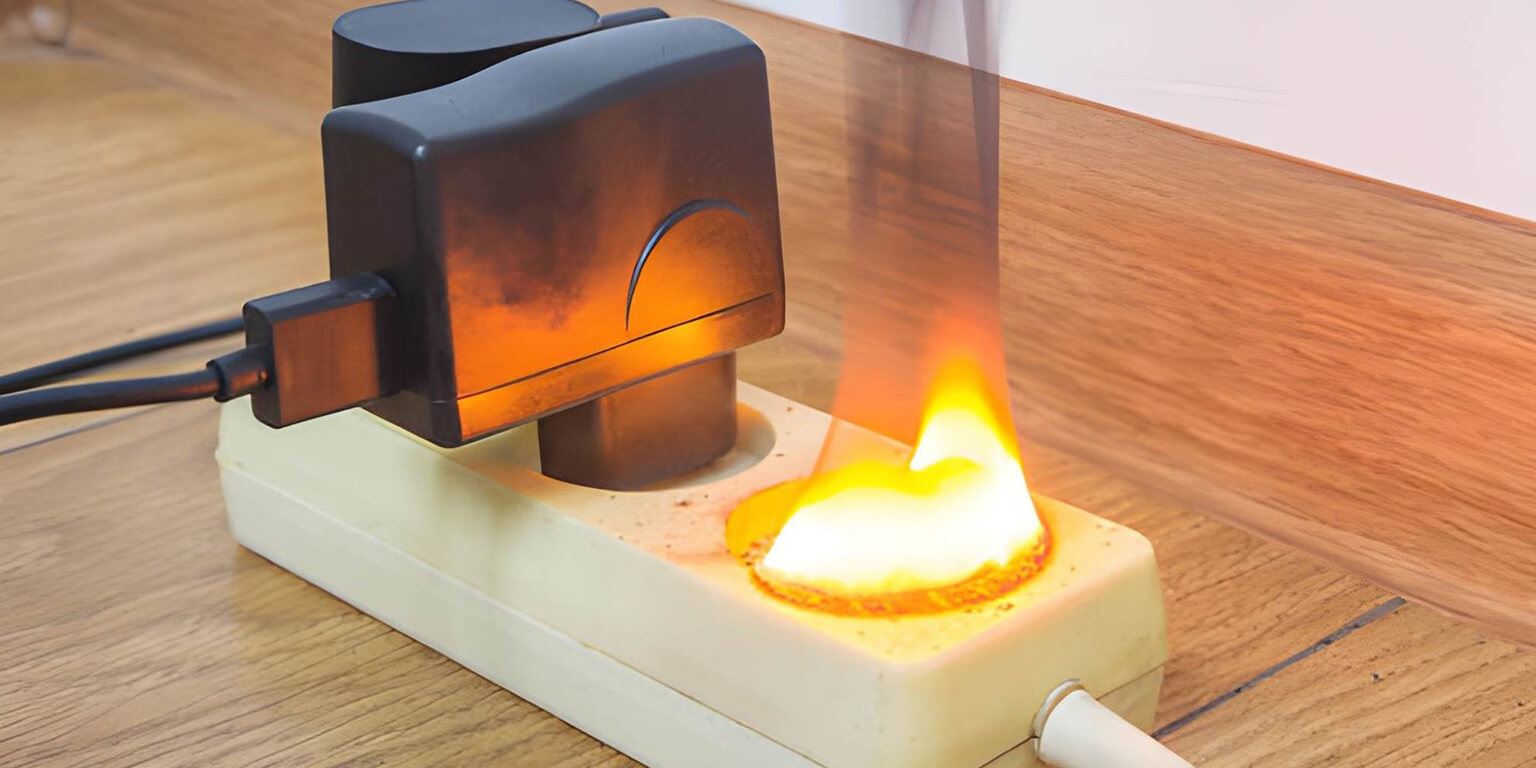
A surge is a brief but sharp rise in voltage above the normal supply level. Surges can come from outside the home, via the grid, or they can be generated internally when high-draw appliances like AC compressors, elevators, or washing machines switch on and off. Internal surges are often more frequent and go entirely unnoticed.
Sudden surges can burn out sensitive internal components in routers and modems, requiring costly repairs or device replacement. Even recurring brownouts can cause premature wear of electronic components, reducing device lifetime and increasing the likelihood of future failures.
For smart home setups in Dubai specifically, this is a real concern. Air conditioning compressors cycling on and off throughout the day generate internal surges, and in a home with older wiring, those voltage spikes travel through the circuits to every plugged-in device.
Voltage Drops and Brownouts
A brownout is the opposite of a surge. Voltage drops below the required level, and devices that depend on a stable supply start behaving unreliably. A drop in voltage can weaken the power supply to your modem, router, or gateway, affecting performance and your internet connection. Sudden surges of power can also cause your router to reboot, resulting in temporary internet loss.
In practice, this means your internet drops for no apparent reason, your smart hub loses connection to devices, or your router restarts at odd intervals. All of these can look like a network problem when the actual fault is in the wiring.
Faulty Earthing and Electrical Noise
This is the one most people don't think about, but it matters a lot in homes with extensive smart home setups.
Earthing keeps your electrical system stable and provides a safe path for fault current. When earthing is inadequate or deteriorating, it doesn't just raise safety risks. It also creates electrical noise on the circuits. Poor grounding can create noise in electronic signals. You might notice this as static on telephone lines, interference on computer networks, or humming sounds from audio equipment. These ground loops occur when an electrical system has multiple paths to ground with slightly different electrical potentials, creating circulating currents that interfere with sensitive equipment.
In plain terms: a home with poor earthing can have a Wi-Fi network that never quite behaves, smart devices that drop offline unexpectedly, and audio systems with persistent hum, even when everything else appears to be working normally.
A survey in the UAE found that nearly 70 per cent of home dwellers had experienced signs of electrical disorders such as burnt sockets and electrical stings from appliances, yet less than 30 per cent sought certified professional help. An alarming 70 per cent said the earthing in their homes had either never been checked, or that they simply weren't aware of when such a check had taken place.
That's a significant proportion of homes carrying an invisible problem.
Faulty or Ageing Wiring
Old wiring, loose connections, and worn outlets are generators of internal surges in their own right. Ageing and worn electrical wiring causes circuit breaker trips, an elevated risk of electrical fires, and an unsteady electrical supply. Worn wiring can also cause frequent power surges. Mini-surge events that occur inside homes due to faulty wiring take an ongoing toll on electronics. During these events, higher-than-normal amounts of voltage enter devices that are plugged in, accelerating normal wear, decreasing lifespan, and setting the stage for equipment failure.
And loose outlets create a related problem. If a router or network booster's cord constantly slips from a worn outlet, an electrical arc could cause cord damage. Worn and damaged outlets can also cause frequent circuit breaker trips and an uneven, inconsistent electrical supply.
How This Shows Up in Practice
Let's be specific about what these faults look like in a real home.
Intermittent internet drops with no change in ISP service or router configuration often point to voltage instability affecting the router or modem. The equipment restarts or underperforms without a clear software cause.
Smart devices randomly going offline and coming back without any user action is a common symptom of small surges or brownouts cycling through the circuit. The device doesn't fail permanently. It just resets, loses its configuration, or disconnects from the hub and needs to rediscover the network.
Smart thermostats with erased settings. If a power surge corrupts or damages a smart thermostat, it can stop sending signals to the system altogether. The screen may go blank, settings reset on their own, or the system simply does not respond when you adjust the temperature. Many homeowners assume a battery issue, replace the thermostat, and find the same thing happening again within weeks.
Security cameras with corrupted footage or frequent disconnections. These devices run constantly and are often connected to outlets that share circuits with higher-draw appliances. Any instability on that circuit reaches the camera directly.
Voice assistants and smart hubs behaving erratically. They drop commands, fail to execute automations, or lose connection to linked devices. Rebooting helps temporarily, but the issue returns.
What You Can Do About It
Use Proper Surge Protection
Individual surge-protected strips at the outlet level offer some protection for the devices plugged into them. But they don't cover everything, and they don't address the root cause. A better approach for a well-equipped home is whole-home surge protection installed at the distribution board. Whole-house surge protection devices are installed in the electrical panel. They block incoming power surges and divert extra voltage to ground, protecting devices and appliances that aren't plugged into individual surge protector cords, as well as the outlets and wiring themselves.
Getting this installed is a job for a licensed electrician in Dubai. It's not complex work, but it needs to be done correctly and matched to your DB's specification.
Have Your Earthing Checked
If you've never had your earthing assessed, or if your property is more than ten years old, this is worth doing. It's a specific part of any thorough electrical inspection, and in a home with smart devices throughout, poor earthing can explain connectivity problems that seem completely unrelated to the electrical system at first glance.
Our post on what happens during a professional electrical safety inspection covers earthing checks and what the testing process involves. And our electrical services in Dubai include full earthing assessments as part of the inspection process.
Get Wiring and Outlets Assessed in Older Properties
If your building is more than ten to fifteen years old and the wiring hasn't been checked recently, it's the most likely source of the kind of internal mini-surges that quietly wear down smart devices. A visual inspection isn't enough here. Proper insulation resistance testing and a check of all outlets and connections will tell you the actual condition of the wiring.
We cover the warning signs to look for in our guide on signs your electrical system needs maintenance. Warm outlets, discolouration around sockets, and intermittent breaker trips are all worth acting on.
Don't Share Circuits Between High-Draw Appliances and Sensitive Electronics
Depending on your setup, this might not be fully within your control without some rewiring. But where you can separate them, do. Plugging your router, smart hub, and home office equipment into a circuit that also runs an AC unit or washing machine creates unnecessary exposure to internal surges every time that appliance cycles.
A licensed electrician can advise on whether dedicated circuits for your network and smart home equipment make sense in your property.
When to Call a Professional
Some of this can be managed through better placement and proper surge protection. But if you're experiencing persistent connectivity issues, device resets, or smart home behaviour that doesn't respond to the usual fixes, the underlying cause may well be in the wiring or earthing.
At GeeM, we carry out electrical inspections and fault assessments for homes across Dubai. Our DEWA-certified technicians can check earthing, test insulation, assess the condition of outlets and wiring, and recommend the right protection measures for a home with significant connected technology.
For properties with a full smart home setup, we'd also recommend asking about our thermographic inspection service, which uses thermal imaging to detect hotspots in panels and concealed wiring that visual inspection alone wouldn't catch. And for those who'd prefer an ongoing service arrangement, our annual maintenance contracts include scheduled electrical assessments as part of the package.
If your smart devices are behaving in ways that don't add up, get in touch with our team and we'll take a look at what's actually going on.
FAQ
.svg)
Yes. Voltage fluctuations, internal surges, and poor earthing can all affect routers and modems directly. A brownout weakens the power supply to your router, degrading performance. A surge can cause an abrupt reboot or damage internal components. Poor earthing creates electrical noise on circuits that can disrupt network equipment and smart devices connected to them.
In many cases, this points to electrical instability rather than a device or network fault. Small internal surges or voltage drops, often caused by ageing wiring or high-draw appliances on the same circuit, can cause smart devices to reset or lose their network configuration. If the problem persists after rebooting and reconfiguring the device, the electrical system is worth investigating.
Earthing, or grounding, provides a safe path for fault current and helps maintain a stable reference voltage in your electrical system. When earthing is inadequate or has deteriorated, it can create electrical noise on the circuit. That noise can cause interference in network equipment, result in unreliable Wi-Fi, and cause smart devices to behave erratically, even when no obvious fault has occurred.
A surge-protected power strip protects only the devices plugged into it, and only from surges coming through that outlet. Whole-home surge protection is installed at the distribution board and intercepts surges before they reach any outlets in the house, protecting all devices including those not plugged into individual strips. For homes with extensive smart home setups, whole-home protection generally provides better coverage.
Signs include smart devices resetting without user input, settings being wiped regularly, internet drops that can't be explained by the ISP or router configuration, outlets that feel warm, and circuit breakers that trip without an obvious cause. Any combination of these suggests an electrical fault rather than a device or software issue.
Yes. Recurring low-level surges, sometimes called mini-surges, caused by ageing wiring or worn outlets apply repeated stress to the internal components of connected devices. The devices may not fail immediately, but the accumulated effect shortens their lifespan and increases the likelihood of unpredictable failures over time.
Generally speaking, yes. A home with multiple always-on connected devices, smart security, and network infrastructure has more to lose from electrical instability than a home with basic appliances. An electrical inspection that includes earthing checks and wiring assessment helps confirm that the foundation your smart home runs on is actually sound.
Table of content
- Extreme Heat and Overworking
- Poor Maintenance and Dirty Filters
- Incorrect Sizing of AC Units
- Low Refrigerant Levels
Recent Posts

Download our App







© 2026 GeeM.
.svg)