Manual vs Automatic Gate Barrier: Which Should You Choose?
Post Details
Key Takeaways
- Manual gate barriers require a security guard or operator to physically open and close the arm for each vehicle, while automatic systems authenticate and operate without human intervention
- Automatic gate barriers are significantly more practical for most Dubai properties due to high vehicle volumes, 24/7 access requirements, and the cost of staffing a manual barrier around the clock
- Manual barriers can still be appropriate for very low-traffic sites or as a backup mechanism within an automated setup
- Automatic systems integrate with RFID, ANPR cameras, remote controls, and intercoms to manage access without an operator present
- Long-term cost of ownership often favours automatic systems when staff costs are factored into the comparison honestly
- Dubai's climate places specific demands on both manual and automatic barrier hardware, making component quality and regular maintenance important regardless of system type
- A site assessment is the most reliable way to confirm which approach fits your property's traffic volume, security requirements, and budget
Ask a property manager in Dubai whether they'd prefer a manual or automatic gate barrier, and in most cases the answer comes quickly. But it's a question worth thinking through properly, because the right answer genuinely does depend on your specific situation, and a few less obvious factors often get overlooked when people are making this decision.
Let's work through both honestly.
What Is a Manual Gate Barrier?
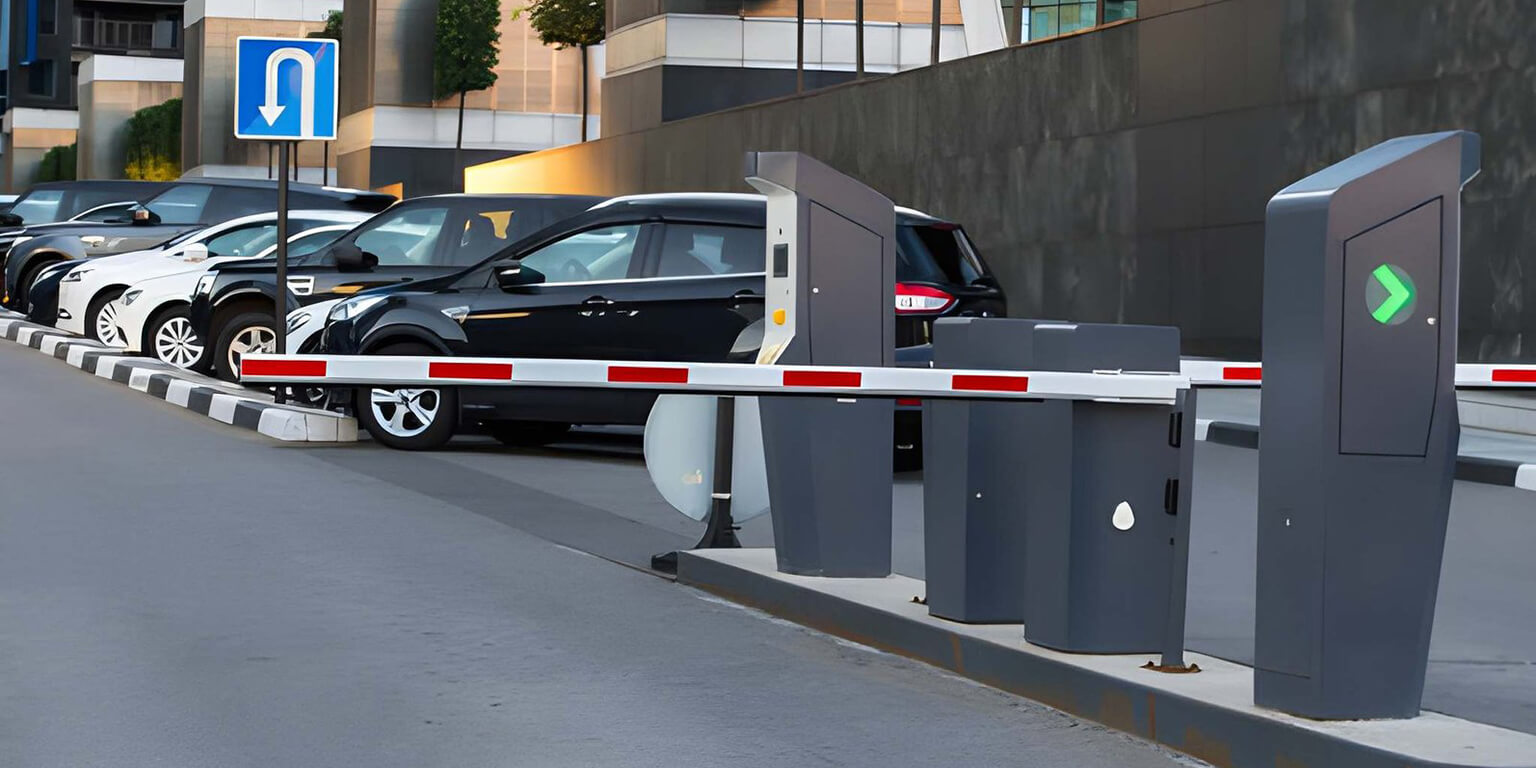
A manual gate barrier uses the same basic physical hardware as an automatic system: a boom arm mounted on a post that rises and falls to control vehicle access. What's different is the operation. Someone has to raise and lower it. That means a guard stationed at the barrier point who physically operates the arm for every vehicle that needs to pass.
In some configurations, a manual barrier includes a counterweight system to make lifting easier. But the essential point remains: without a person present and attentive, the barrier doesn't function as an access control device. It just sits there.
Manual barriers are lower in upfront cost. There's no motor, no control board, no loop detectors, and no access control integration required. The hardware itself is simpler and cheaper. But that initial saving doesn't tell the full story, and we'll get to why in a moment.
What Is an Automatic Gate Barrier?
An automatic gate barrier uses a motor, control board, and access technology to open and close without anyone physically operating it. When an authorised vehicle is authenticated, the barrier rises. When the vehicle has cleared, it closes. No guard required at the barrier point itself, though many properties still have security staff for other reasons.
The access method is what varies. Some systems use remote controls carried by authorised users. Others use RFID tags that vehicles carry and readers that detect them at range. More complex setups use ANPR cameras to read license plates and check them against a registered database automatically. Intercoms allow visitor communication with reception or security before access is granted.
All of these operate the barrier without requiring a person to stand at it and manually raise the arm for each vehicle.
The Real Cost Comparison
This is where the manual versus automatic debate usually settles, once you look at the numbers honestly.
A manual barrier costs less to install. But a manual barrier requires someone to operate it, every hour it needs to be functional. In Dubai, that means staffing a guard position at the barrier point. Depending on your property's operating hours, that could be a single shift or full 24/7 coverage.
Security guard costs in Dubai vary, but even a single guard position covering standard working hours adds up to a meaningful monthly expense. Extend that to round-the-clock coverage with multiple guards rotating shifts, and the annual staffing cost of a manual barrier typically exceeds the total installation cost of a quality automatic system within the first year or two of operation.
Automated access control systems are widely recognised in the security industry as a more cost-effective long-term solution for sites with consistent vehicle traffic, precisely because they remove the dependency on continuous human operation at the barrier point.
So when someone says a manual barrier is cheaper, they're only looking at the upfront hardware cost. The five-year cost of ownership is almost always higher for a manual setup on any site with meaningful traffic volume.
When Does a Manual Barrier Still Make Sense?
Not often, but there are situations where it's genuinely the right call.
Very low-traffic sites where vehicle movement is infrequent and a guard is already stationed at the entrance for other reasons might not justify the additional cost of motorising the barrier. If someone is already there and has very little else to do, operating the barrier manually isn't adding significant cost.
Construction sites and temporary access points are another case. A manual barrier that's going to be in place for six months and then removed doesn't need a motor, control board, and integrated access system. Simple hardware that can be operated by whoever's managing the site entrance is perfectly appropriate.
And in some setups, a manual override arm exists alongside an automatic system as a backup for power outage scenarios, though most quality automatic barriers include built-in battery backup or UPS options that handle this more elegantly.
But for permanent installations at residential compounds, office buildings, commercial car parks, or any property with regular daily vehicle movement? Manual barriers are rarely the practical answer.
Why Automatic Gate Barriers Suit Dubai Properties Specifically
A few things about Dubai's property environment push strongly toward automation.
Operating hours are the first factor. Many residential compounds need access control 24 hours a day, seven days a week. Visitors arrive late. Residents return from travel at all hours. Delivery drivers and maintenance contractors show up across a wide time window. Staffing a manual barrier for all of that is operationally complex and expensive.
Vehicle volume is the second factor. Even a mid-sized residential compound might see hundreds of vehicle movements daily across residents, visitors, and service vehicles. Processing each of those manually through a guard slows traffic flow, creates queues during peak hours, and puts consistent pressure on whoever's operating the barrier.
And Dubai's summer heat makes standing at a barrier post during peak hours genuinely uncomfortable for any operator. Automatic systems don't have that problem.
Our gate barrier installation in Dubai covers the full range of automatic system types, from basic remote-control barriers for smaller residential properties to ANPR-integrated parking management systems for large commercial sites. What's right for your property depends on your traffic volume, visitor management requirements, and the access technology that fits your operation.
Automatic Barrier Access Methods: Which Fits Your Property?
Not sure which automatic system makes sense? Here's a practical breakdown.
Remote Control Barriers
The simplest automatic option. Authorised users carry a handheld remote and trigger the barrier to open as they approach. Works well for small residential properties or secondary access points where the vehicle list is small and stable. Not practical for large sites where issuing and tracking remotes becomes operationally messy.
RFID Access Control
Vehicles carry a tag, and a reader at the barrier detects it at range and opens the system automatically. Long-range readers can authenticate vehicles from several metres away, which means smooth, uninterrupted entry without stopping. Good for residential compounds, office buildings, and any property with a stable registered vehicle population. Visitor management requires manual intervention or a separate process.
ANPR Camera Systems
Cameras read license plates and check them against an approved database. No tag needed. The plate is the credential, and pre-registering a visitor plate is quick enough to be done by reception before a visitor arrives. Better suited to high-traffic locations, hospitality properties, hospitals, and commercial car parks where visitor volume is high and the vehicle list changes frequently.
The RFID vs ANPR comparison is worth reading in full if you're deciding between the two access technologies for your specific property.
Maintenance Considerations for Both System Types
Manual barriers have fewer components to service, but they still need attention. Boom arm hinges, counterweight mechanisms, and locking components all wear over time, particularly given Dubai's heat and dust exposure. A poorly maintained manual barrier that drops unexpectedly or sticks open isn't serving its purpose.
Automatic barriers have more components: motor, control board, loop detectors, photocells, access control readers or cameras, and in integrated setups, software and networking elements. Each of these needs periodic checking.
The good news is that a properly structured maintenance programme covers all of this systematically. Our AMC packages include gate barrier systems as part of broader property maintenance contracts, which works well for facilities managers looking after multiple building systems under one agreement. Scheduled visits, priority breakdown response, and documented service reports mean you're not waiting for something to fail before it gets attention.
For commercial properties in particular, unplanned barrier downtime has a direct impact on operations and security. Proactive maintenance keeps that risk low.
What About Upgrading From Manual to Automatic?
This comes up regularly. A property installed a manual barrier years ago and is now finding the operational and staffing costs harder to justify. Can it be upgraded?
In most cases, yes. Retrofitting a motorised operator to an existing barrier structure is often possible, depending on the condition and specification of the original installation. In other cases, the more practical route is replacing the barrier unit entirely with one designed for motorised operation from the ground up, including properly sized foundations for the motor housing.
Either way, a site visit is the only way to assess what's actually feasible. We carry out free site assessments across Dubai, where our engineers evaluate the existing setup and recommend the most cost-effective path to automation.
As a property maintenance company in Dubai with over 20 years of experience across residential, commercial, and industrial sites, we've handled plenty of these upgrades. The right approach varies considerably depending on what's already installed and what access technology the property needs going forward.
Book a Free Site Assessment for Your Gate Barrier
Talk to Our Engineers Before You Decide
Whether you're installing a new barrier system, replacing an existing manual setup, or trying to understand what automation would cost for your specific site, the starting point is a conversation with someone who's actually assessed hundreds of these sites across Dubai.
Contact GeeM today to arrange your free site survey. Call us toll-free on 800 4336 or reach us on WhatsApp. We cover all areas across Dubai and can typically arrange a visit within 24 to 48 hours of your enquiry. No commitment required.
Frequently Asked Questions
.svg)
A manual gate barrier requires a person to physically operate the boom arm for each vehicle. An automatic gate barrier uses a motor, control board, and access technology such as RFID, ANPR cameras, or remote controls to open and close without human intervention at the barrier point.
For most Dubai properties with regular daily vehicle traffic, automatic gate barriers are more cost-effective over time than manual systems when staffing costs are included in the comparison. A manual barrier requires a dedicated operator, whose ongoing cost typically exceeds the installation cost of an automatic system within one to two years.
In many cases, yes. Retrofitting a motorised operator to an existing barrier structure is possible depending on the condition and specification of the current installation. In other cases, replacing the barrier unit entirely is more practical. A site assessment is needed to determine the right approach for a specific installation.
It depends on your property type and traffic volume. Remote controls suit small properties with few authorised vehicles. RFID works well for residential compounds and office buildings with registered vehicle populations. ANPR is better for high-traffic or visitor-heavy locations where the vehicle list changes frequently.
Most quality automatic gate barrier systems include manual override options and can be equipped with UPS or battery backup to maintain operation during power cuts. Battery backup is particularly important for properties where access continuity around the clock is critical.
In Dubai's climate, a gate barrier system should be serviced at least twice a year, with additional checks recommended during and after summer months due to heat and dust exposure. An Annual Maintenance Contract covers scheduled visits, motor and sensor checks, software updates, and priority breakdown response throughout the year.
Automatic gate barriers are used across residential compounds, villa communities, office buildings, commercial car parks, shopping malls, hospitals, hotels, warehouses, and industrial facilities throughout Dubai. In practice, any property with regular vehicle movement and access control requirements benefits from automation rather than manual operation.
Table of content
- Extreme Heat and Overworking
- Poor Maintenance and Dirty Filters
- Incorrect Sizing of AC Units
- Low Refrigerant Levels
Recent Posts

Download our App







© 2026 GeeM.
.svg)