Complete MEP Maintenance Guide for Dubai Properties: Mechanical, Electrical & Plumbing Systems

Post Details
When you own, manage, or operate property in Dubai, understanding MEP systems is not optional. These integrated networks of Mechanical, Electrical, and Plumbing infrastructure form the invisible foundation that makes modern buildings livable, functional, and safe.
At GeeM Home, we have spent over 20 years maintaining MEP systems across Dubai's most demanding properties, from luxury villas in Arabian Ranches to commercial towers in Business Bay. Through 25,000+ completed maintenance jobs, we have seen firsthand how Dubai's unique climate and regulatory environment creates challenges that require specialized expertise and proactive care.
This guide explains everything property owners, facility managers, and business operators need to know about MEP maintenance in Dubai. Whether you manage a villa, apartment, commercial space, or large facility, understanding these systems helps you protect your investment, ensure compliance, and avoid costly emergencies.
Understanding MEP Systems: The Building Blocks of Modern Properties
MEP stands for Mechanical, Electrical, and Plumbing. These three interconnected systems work together to provide essential services that we often take for granted until something fails.
What Makes MEP Systems Critical
Every time you adjust your thermostat, turn on a light, or run water from a tap, you are relying on properly designed and maintained MEP infrastructure. These systems do far more than provide convenience. They ensure occupant safety, protect property value, enable regulatory compliance, and control operating costs.
According to recent MEP industry analysis, properly maintained MEP systems can reduce energy consumption by 30-40% compared to neglected infrastructure. In Dubai's climate, where air conditioning alone accounts for up to 70% of a building's energy use, this represents thousands of dirhams in annual savings.
The Mechanical Component: Climate Control and Ventilation
The mechanical portion of MEP primarily focuses on heating, ventilation, and air conditioning systems. In Dubai, where outdoor temperatures regularly exceed 45°C during summer months, mechanical systems work harder than almost anywhere else on earth.
HVAC Systems in Dubai Properties:
Dubai buildings rely on various air conditioning configurations depending on property type and size. Residential properties typically use split AC units or ducted central systems. Commercial buildings often employ VRF systems (Variable Refrigerant Flow) or chiller plants for large-scale cooling.
We at GeeM Home service all major AC brands and system types. Our AC maintenance services cover everything from routine filter cleaning to complex compressor repairs, ensuring your cooling systems operate reliably through Dubai's demanding summer season.
Building Management Systems:
Modern properties increasingly integrate Building Management Systems that centrally control HVAC, lighting, and other automated features. These systems require specialized maintenance expertise to calibrate sensors, update software, and ensure seamless operation.
Fire Suppression Systems:
Part of the mechanical infrastructure includes fire suppression equipment such as sprinkler systems, fire pumps, and specialized suppression systems for commercial kitchens or data centers. Dubai Civil Defence mandates regular testing and documentation of these life-safety systems.
The Electrical Component: Power, Lighting, and Safety
Electrical systems distribute power throughout a building, provide lighting, support communication networks, and enable safety features like emergency lighting and fire alarms.
Main Distribution and Power Management:
Every property has a main distribution board that receives power from DEWA (Dubai Electricity and Water Authority) and distributes it through sub-panels to different areas. Proper load balancing prevents circuit overloads and ensures efficient power distribution.
Our electrical services team handles everything from circuit breaker troubleshooting to complete electrical panel upgrades, all performed by DEWA-approved electricians who understand Dubai's specific electrical codes.
Lighting Systems:
Modern buildings use a mix of LED fixtures, emergency lighting, and sometimes automated controls. Regular maintenance ensures bulbs are replaced promptly, ballasts function correctly, and emergency systems activate during power outages.
Backup Power Systems:
Many commercial properties and luxury villas include generators or UPS (Uninterruptible Power Supply) systems. These require periodic load testing, fuel system maintenance, and battery replacement to ensure they function when needed.
Smart Home Integration:
Increasingly, electrical systems integrate with smart home technology, automated lighting controls, and IoT devices. These advanced systems require technicians who understand both traditional electrical work and modern digital integration.
The Plumbing Component: Water, Drainage, and Sanitation
Plumbing systems bring clean water into buildings, distribute it where needed, and safely remove wastewater. In Dubai's environment, plumbing faces unique challenges from hard water, high mineral content, and occasional temperature extremes.
Water Supply and Distribution:
Most Dubai properties receive desalinated water from DEWA. This water has different characteristics than groundwater, affecting pipe materials and fixture longevity. Water tanks, common in villas and some apartments, require regular cleaning per Dubai Municipality regulations.
Our comprehensive plumbing services include leak detection, pipe repairs, fixture replacement, and mandatory water tank cleaning to keep your water supply safe and systems functioning properly.
Hot Water Systems:
Properties use various water heating solutions including electric heaters, gas heaters, and increasingly popular solar water heating systems. We provide specialized solar water heater services including installation, maintenance, and repair.
Drainage and Sewage:
Proper drainage prevents water damage, mold growth, and sanitation issues. Commercial properties, particularly restaurants, must maintain grease traps to prevent drainage blockages and comply with environmental regulations.
Specialized Systems:
Luxury properties may include swimming pools, water features, or irrigation systems. These require additional maintenance expertise to maintain water quality, prevent leaks, and ensure pumps operate efficiently.
Why Dubai's Climate Makes MEP Maintenance Non-Negotiable

Dubai presents one of the most challenging environments in the world for building systems. Understanding these challenges explains why preventive maintenance is not optional but essential for property protection.
Extreme Temperature Stress
When outdoor temperatures reach 50°C while indoor spaces are maintained at 22°C, building systems must manage a temperature differential of nearly 30 degrees. This constant thermal stress accelerates wear on components, particularly AC compressors, which cycle on and off continuously to maintain comfortable temperatures.
Our experience maintaining properties across all Dubai communities, from Palm Jumeirah to Dubai Hills Estate, demonstrates that AC systems without regular maintenance fail 2-3 times more frequently than properly serviced units.
Humidity and Coastal Corrosion
Properties near the coast, including Dubai Marina, JBR, and Palm Jumeirah, face additional challenges from salt-laden humid air. This moisture penetrates electrical components, corrodes metal fixtures, and degrades insulation, creating safety hazards and reducing equipment lifespan.
Our maintenance protocols for coastal properties include more frequent inspections of electrical connections, protective coatings on outdoor components, and aggressive corrosion prevention measures.
Dust and Sand Infiltration
Dubai's desert environment means constant airborne dust and occasional sandstorms. This particulate matter clogs AC filters, covers condenser coils, and infiltrates electrical panels, reducing efficiency and creating potential fire hazards.
We recommend quarterly filter replacements during summer months rather than the standard annual schedule, particularly for properties in communities like Arabian Ranches where dust exposure is higher.
High Utilization Demands
Unlike temperate climates where HVAC systems rest for months, Dubai properties run air conditioning nearly year-round. This continuous operation means components accumulate operating hours far faster than design specifications typically assume.
Equipment rated for 15-year lifespans in moderate climates often requires replacement after 8-10 years in Dubai without proper maintenance, or can exceed 15 years with professional care.
Dubai's MEP Regulatory Framework: Compliance is Mandatory
Property owners in Dubai must navigate a comprehensive regulatory environment governing MEP systems. Non-compliance carries serious consequences including fines, project delays, and in severe cases, property closure.
Dubai Municipality Building Standards
Dubai Municipality oversees building codes and construction standards across the emirate. According to recent regulatory updates, all MEP plans must be submitted through Building Information Modeling (BIM) for approval before construction begins.
For existing properties, Dubai Municipality mandates specific maintenance requirements including bi-annual water tank cleaning for most property types, documented pest control treatments, and regular building inspections.
When you partner with GeeM Home for annual maintenance contracts, we handle all compliance documentation, ensuring your property meets Dubai Municipality standards without requiring constant oversight from property owners.
DEWA Electrical and Water Requirements
Dubai Electricity and Water Authority (DEWA) enforces strict standards for all electrical installations and water connections. Only DEWA-approved contractors can perform certain electrical work, and all installations must pass DEWA inspection before connection is authorized.
Electrical modifications require DEWA approval, and non-compliant installations can result in power disconnection. Our team includes DEWA-approved electrical technicians who ensure all work meets regulatory standards from the initial installation through ongoing maintenance.
Dubai Civil Defence Fire Safety Standards
Dubai Civil Defence implements the UAE Fire and Life Safety Code of Practice, which sets comprehensive requirements for fire detection, suppression, emergency lighting, and evacuation systems.
According to the UAE Fire and Life Safety Code, commercial properties must maintain fire alarm systems, emergency lighting, fire sprinklers, and other life-safety equipment with regular testing and documentation. Annual inspections by Civil Defence-approved contractors are mandatory, with penalties ranging from AED 5,000 to AED 50,000 for violations.
Our comprehensive facility maintenance services include coordination with Civil Defence-approved fire safety contractors, ensuring all systems are tested on schedule and documentation remains current for inspections.
Consequences of Non-Compliance
Regulatory violations carry escalating penalties. Dubai Municipality can issue fines starting at AED 1,000 for minor infractions, increasing to AED 100,000 for serious violations. Civil Defence violations may result in temporary business closure until corrections are completed.
Beyond direct penalties, non-compliant properties face insurance complications, reduced property values, and difficulty obtaining occupancy certificates for new construction or major renovations.
Comprehensive MEP Maintenance Checklist for Dubai Properties
Effective MEP maintenance follows systematic schedules based on equipment type, usage intensity, and environmental conditions. Here is what we recommend for Dubai properties:
Monthly HVAC Maintenance Tasks
Filter Inspection and Cleaning: Dubai's dusty environment requires monthly filter checks. We replace or clean filters based on condition, ensuring optimal airflow and indoor air quality.
Condensate Drain Verification: AC systems produce significant condensation in humid conditions. Monthly drain checks prevent water backup and potential property damage.
Thermostat Calibration: Ensuring thermostats accurately read room temperature prevents overcooling and wasted energy.
Visual Leak Inspection: Quick visual checks identify refrigerant leaks, water drips, or oil stains that indicate developing problems.
Quarterly HVAC Maintenance Tasks
Coil Cleaning: Both evaporator and condenser coils accumulate dust, reducing heat transfer efficiency. Quarterly cleaning maintains performance and reduces energy consumption.
Refrigerant Level Check: Low refrigerant reduces cooling capacity and can damage compressors. We check levels and add refrigerant as needed.
Fan Motor and Belt Inspection: Worn belts or failing motors create noise and reduce system efficiency. Quarterly inspection catches problems before complete failure.
Duct System Inspection: Checking for leaks, disconnections, or damage prevents cooled air from escaping into unconditioned spaces.
Annual HVAC Maintenance Tasks
Complete System Deep Cleaning: Annual comprehensive cleaning includes all components, ensuring the system operates at peak efficiency.
Compressor Performance Testing: The compressor is the heart of your AC system. Annual testing identifies declining performance before catastrophic failure.
Full System Performance Evaluation: We measure airflow, temperature differentials, and energy consumption to verify the system meets design specifications.
Duct Cleaning: Annual AC duct cleaning removes accumulated dust and debris, improving air quality and system efficiency.
For commercial properties with chiller plants or VRF systems, we provide specialized maintenance including chiller water treatment, cooling tower cleaning, and complex control system calibration.
Monthly Electrical Maintenance Tasks
Circuit Breaker Testing: Monthly testing ensures breakers trip properly when overloaded, protecting wiring and preventing fires.
Emergency Lighting Functionality Test: Quick monthly tests verify emergency lights illuminate during power failures.
High-Use Outlet Inspection: Outlets in kitchens, data centers, or production areas receive extra attention due to heavier loads.
Quarterly Electrical Maintenance Tasks
Electrical Panel Inspection: Checking for corrosion, loose connections, or signs of overheating prevents failures and fire hazards.
Load Balancing Verification: Ensuring electrical loads distribute evenly across circuits maximizes system capacity and efficiency.
Lighting System Check: Replacing failed bulbs, checking ballasts, and cleaning fixtures maintains proper illumination throughout the property.
Voltage and Current Measurement: Testing confirms the electrical system operates within safe parameters.
Annual Electrical Maintenance Tasks
Complete Electrical Safety Audit: Comprehensive annual inspections identify potential hazards before they cause problems.
Thermal Imaging Inspection: Infrared cameras detect hot spots in electrical panels, connections, and wiring that indicate developing failures.
Generator Load Testing: Backup generators receive full load testing to verify they can support the building during power outages.
UPS Battery Testing and Replacement: Uninterruptible power supply batteries typically last 3-5 years and require periodic testing and replacement.
Lightning Protection System Inspection: Checking grounding systems and surge protection ensures effectiveness against electrical storms.
Earthing and Grounding Verification: Proper grounding protects occupants from electrical shock and prevents equipment damage.
For properties with solar panel systems, we provide specialized solar water heater maintenance ensuring maximum energy production and system longevity.
Monthly Plumbing Maintenance Tasks
Leak Detection Walkthrough: Visual inspections identify drips, stains, or moisture that indicate developing leaks.
Drain Flow Testing: Checking that all drains flow freely prevents backups and water damage.
Fixture Inspection: Testing taps, showers, toilets, and other fixtures ensures they operate correctly without wasting water.
Water Pressure Monitoring: Pressure that is too high damages fixtures and wastes water; pressure that is too low indicates supply problems.
Quarterly Plumbing Maintenance Tasks
Water Heater Inspection and Flushing: Removing sediment buildup extends heater life and maintains efficiency.
Pump Performance Testing: Properties with booster pumps or irrigation systems require regular pump inspection.
Sewage System Inspection: Checking for blockages or damage prevents unpleasant backups and property damage.
Grease Trap Cleaning: Commercial kitchens require quarterly grease trap maintenance to prevent drainage problems and comply with environmental regulations.
Annual and Bi-Annual Plumbing Maintenance Tasks
Water Tank Cleaning and Sanitization: Dubai Municipality requires regular water tank cleaning. We provide professional tank cleaning ensuring compliance and safe water supply.
Complete Drainage System Inspection: Annual inspection identifies tree root intrusion, pipe corrosion, or settling that affects drainage.
Pipe Corrosion Assessment: Dubai's hard water accelerates pipe corrosion. Annual assessment helps plan replacements before leaks develop.
Water Quality Testing: Testing ensures water meets safety standards, particularly important for properties with private water tanks.
Fire Sprinkler System Testing: Life-safety systems require annual testing by certified contractors with full documentation.
Pool Equipment Maintenance: Properties with swimming pools need regular pump, filter, and chemical system maintenance.
Our comprehensive handyman services complement MEP maintenance, handling minor carpentry, painting, and general property upkeep that keeps your property looking and functioning at its best.
MEP Maintenance Requirements by Property Type
Different property types face unique MEP challenges requiring customized maintenance approaches.
Residential Villas: Managing Complex Multi-System Properties
Villas typically have the most diverse MEP systems of any residential property type. Multiple AC units cool different zones, private water tanks require regular cleaning, and many villas include pools, gardens with irrigation systems, and sometimes backup generators.
Common villa challenges include coordinating maintenance across multiple independent AC units, managing hard water effects on fixtures and appliances, maintaining pool chemistry and equipment, and ensuring generator readiness for power outages.
Our villa AMC packages address these unique needs with scheduled maintenance for all systems, priority emergency response, and coordination with household staff or property managers to minimize disruption.
Apartments and Residential Towers: Coordinating with Building Management
Apartment MEP maintenance requires coordination between individual unit systems and building-wide infrastructure. Some buildings provide central air conditioning while others have individual unit responsibility. Water supply and drainage connect to building systems, creating shared maintenance responsibilities.
Typical apartment challenges include managing maintenance schedules around occupant availability, coordinating with building management for common area access, balancing individual and building-wide system maintenance, and ensuring emergency access for urgent repairs.
We have extensive experience working with property management companies and homeowner associations to deliver seamless apartment maintenance services that keep individual units comfortable while respecting building policies and community standards.
Commercial Offices: Supporting Business Operations
Office buildings require MEP systems that support high-density occupancy, extensive IT equipment, and professional environments. Cooling loads are substantial, electrical demands are high, and any system failure directly impacts business productivity.
Commercial office challenges include maintaining precise temperature control for equipment rooms, managing high-capacity electrical systems for modern office technology, scheduling maintenance to minimize business disruption, and ensuring emergency systems function reliably for occupant safety.
Our commercial AMC services are designed around business needs, with flexible scheduling, rapid emergency response, and minimal operational disruption.
Retail and Restaurants: Customer Experience Focus
Retail environments and F&B establishments face unique MEP demands. Customer comfort directly affects sales, and any system failure during business hours creates immediate revenue impact. Restaurants have additional complexity from commercial kitchen equipment, grease trap maintenance, and stringent health code requirements.
Challenges specific to these properties include maintaining comfortable environments during high customer traffic, managing specialized kitchen ventilation and equipment, meeting health department MEP requirements, and scheduling maintenance around peak business hours.
We provide after-hours maintenance scheduling and rapid-response emergency service to protect your business revenue and customer experience.
Healthcare Facilities: Zero-Failure Tolerance
Medical facilities including clinics and laboratories have the most demanding MEP requirements of any property type. Patient safety depends on reliable air conditioning, electrical backup systems, water quality, and infection control measures.
Healthcare MEP challenges include maintaining critical area environmental controls, ensuring emergency power systems function flawlessly, meeting stringent water quality standards for medical use, and coordinating maintenance around patient care schedules.
Our healthcare facility maintenance includes custom SLA agreements defining response times, escalation procedures, and documentation requirements for regulatory compliance.
Educational Institutions: Managing Large Campuses
Schools, colleges, and training centers combine residential-style buildings with specialized facilities including laboratories, kitchens, sports facilities, and sometimes dormitories. MEP systems must support diverse activities while maintaining student and staff safety.
Educational facility challenges include coordinating maintenance with academic calendars, managing diverse building types and uses, ensuring student safety during maintenance activities, and optimizing energy use across large campuses.
We schedule major maintenance during school breaks and provide flexible service options that work around educational institution schedules.
Hotels and Hospitality: Guest Experience Priority
Hotels cannot afford MEP failures that affect guest comfort. Systems must function reliably 24/7, and any problems require immediate resolution to maintain guest satisfaction and protect reputation.
Hospitality MEP challenges include zero downtime tolerance for guest areas, managing laundry facility demands, maintaining pool and spa systems, and coordinating maintenance without disturbing guests.
Our hospitality maintenance contracts include guaranteed response times, discrete service delivery, and comprehensive coverage ensuring your guests never experience service interruptions.
Industrial and Warehouse Facilities: Production Continuity
Industrial properties require heavy-duty HVAC for large spaces, high-capacity electrical systems for machinery, and specialized systems for production processes. Any downtime directly affects production schedules and revenue.
Industrial facility challenges include maintaining systems during continuous operations, managing specialized process requirements, coordinating with production schedules, and ensuring worker safety during maintenance.
We provide industrial facility maintenance with dedicated teams who understand manufacturing environments and work around production schedules to minimize disruption.
Preventive vs Reactive MEP Maintenance: The True Cost Comparison
Property owners face a fundamental choice: invest in regular preventive maintenance or pay for emergency repairs when systems fail. The economics strongly favor preventive care.
The Hidden Costs of Reactive Maintenance
When you wait for systems to break before calling for service, you pay far more than just repair costs. Emergency service commands premium rates, often 2-3 times normal pricing. Breakdowns rarely happen during convenient business hours; they occur during weekends, holidays, or late at night when emergency premiums are highest.
Beyond direct repair costs, system failures create cascading expenses. AC failure during Dubai's summer forces temporary cooling solutions or relocating occupants. Water leaks cause property damage far exceeding repair costs. Electrical failures can damage sensitive equipment and force business closures.
Equipment lifespan shrinks dramatically without maintenance. An AC compressor designed for 12-15 years might fail after 6-8 years without proper service. Water heaters, pumps, and other components similarly fail prematurely, forcing expensive replacements years before necessary.
Energy waste adds continuous cost. Dirty AC coils reduce efficiency by 20-30%, increasing electricity bills month after month. Leaking faucets waste water, driving up DEWA charges unnecessarily.
The Preventive Maintenance Advantage
Regular maintenance catches small problems before they become expensive emergencies. A loose electrical connection detected during routine inspection costs nothing to tighten. Left unchecked, it eventually sparks a fire, destroys equipment, or causes injury.
Preventive care extends equipment lifespan 40-60% by reducing wear and preventing catastrophic failures. Components operate at design efficiency, consuming less energy and providing better performance.
Scheduled maintenance happens at your convenience during normal business hours at standard rates. No emergency premiums, no middle-of-night service calls, no business disruptions from unexpected failures.
Documented maintenance increases property value. When selling or leasing property, complete service records demonstrate responsible ownership and attract quality buyers or tenants willing to pay premium prices.
Real Cost Comparison Example
Consider a typical Dubai commercial office building with 10 AC units, standard electrical and plumbing systems, and normal equipment:
Reactive Maintenance Scenario (5 years):
- Emergency AC repairs (average 3 failures/year): AED 35,000
- Emergency electrical repairs (average 2 failures/year): AED 18,000
- Emergency plumbing repairs (average 2 failures/year): AED 12,000
- Premature equipment replacement: AED 45,000
- Excess energy costs from inefficiency: AED 50,000
- Business downtime/lost productivity: AED 40,000
- Total 5-year cost: AED 200,000
Preventive Maintenance Scenario (5 years):
- Annual maintenance contract: AED 60,000
- Occasional repairs beyond maintenance: AED 15,000
- Energy savings from efficiency: Minus AED 30,000
- Extended equipment lifespan value: Minus AED 25,000
- Total 5-year cost: AED 20,000
The preventive approach saves AED 180,000 over five years while providing better reliability, avoiding business disruption, and maintaining property value.
Choosing the Right MEP Maintenance Provider in Dubai
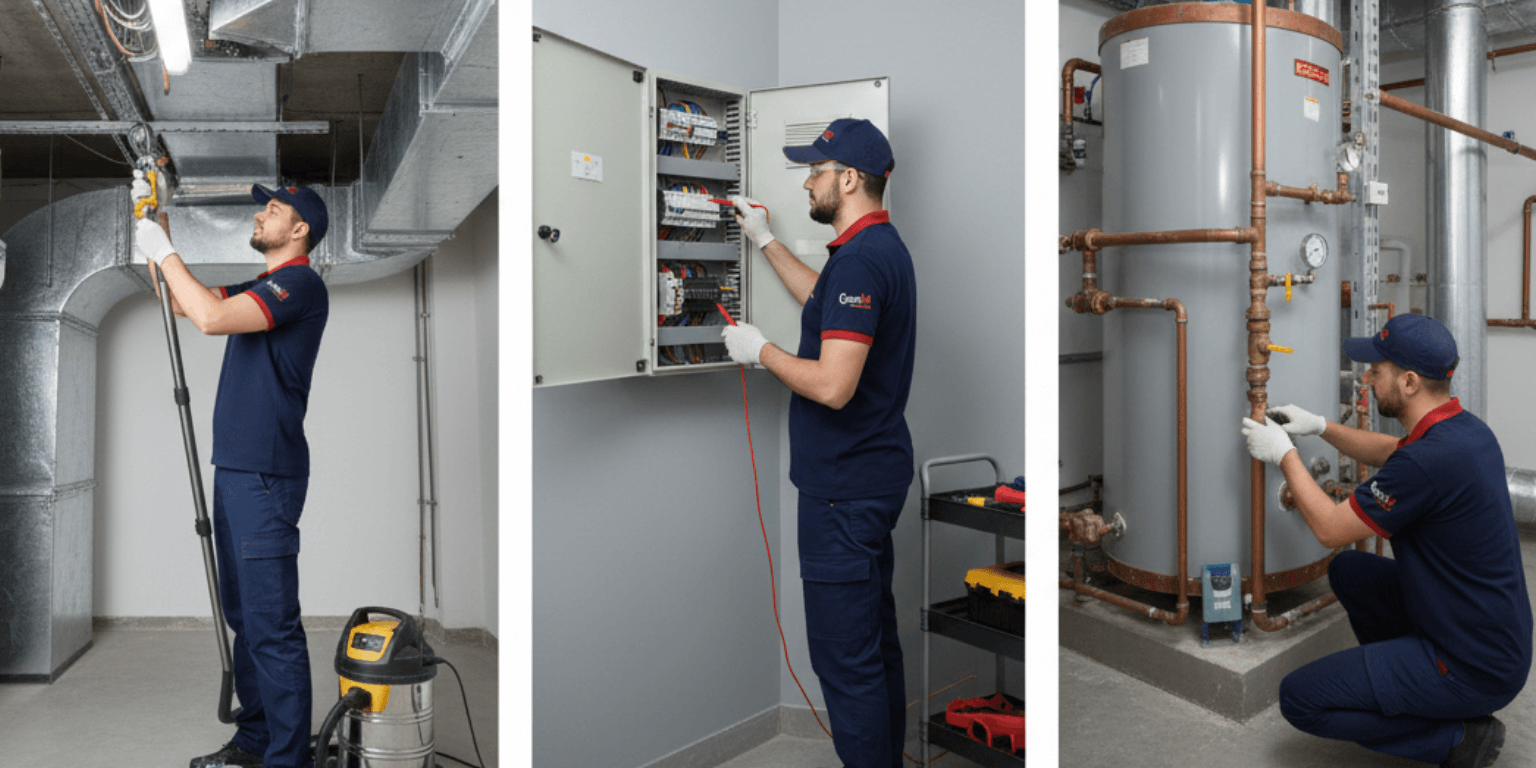
Not all maintenance companies deliver equal service quality or value. Here is what to look for when selecting an MEP partner:
Essential Qualifications and Certifications
Your MEP provider should hold relevant approvals from Dubai Municipality, Dubai Civil Defence, and DEWA. These certifications demonstrate compliance with local standards and legal authorization to perform regulated work.
ISO certifications including ISO 9001 (quality management), ISO 14001 (environmental management), and ISO 45001 (occupational health and safety) indicate systematic processes and professional standards.
Insurance coverage protects you from liability if accidents occur during maintenance. Verify your provider carries adequate insurance before allowing work on your property.
At GeeM Home, we maintain all required certifications and approvals, ensuring every technician who works on your property meets Dubai's professional standards.
Technical Expertise and Multi-Discipline Capability
Effective MEP maintenance requires specialists in mechanical systems, electrical infrastructure, and plumbing networks. Look for providers with certified technicians in all three disciplines rather than general handymen attempting complex technical work.
Experience with your property type matters significantly. Villa maintenance differs from commercial building service, which differs from industrial facility needs. Choose providers with proven expertise in your property category.
Modern diagnostic equipment enables accurate problem identification and efficient repairs. Thermal imaging cameras, refrigerant analyzers, pressure gauges, and electrical meters are all essential tools that professional providers use routinely.
Service Capabilities and Availability
24/7 emergency availability is non-negotiable for critical properties. System failures do not wait for convenient business hours, and your maintenance provider should not either.
Response time guarantees provide accountability. At GeeM Home, we commit to 60-minute emergency response times across Dubai for our AMC clients, ensuring problems get addressed quickly before they escalate.
Geographic coverage affects response times. Choose providers with technicians distributed across Dubai rather than operating from a single distant location.
Multi-language support helps ensure clear communication, particularly important in Dubai's diverse environment where property owners, facility managers, and technicians may speak different primary languages.
Track Record and Client Retention
Years of operation in Dubai demonstrate stability and local expertise. Companies that have successfully operated for decades understand Dubai's unique environment and regulatory landscape.
Client retention rates reveal service quality better than marketing materials. High retention means customers are satisfied enough to continue contracts year after year.
Case studies and client references provide insight into how providers handle situations similar to yours. Do not hesitate to request references and contact them to learn about their experience.
Our 20+ years serving Dubai properties and 15,000+ satisfied clients demonstrate the quality and reliability that makes GeeM Home a trusted partner for comprehensive property maintenance.
Technology and Transparency
Digital service tracking through mobile applications enables convenient scheduling, real-time technician tracking, and complete service history access. These features provide transparency and control that traditional clipboard-based service cannot match.
Automated scheduling and reminders ensure maintenance happens on schedule without requiring constant oversight from property managers.
Complete maintenance documentation creates valuable records for property sales, regulatory compliance, and insurance purposes.
The GeeM mobile app puts complete control in your hands, allowing instant service booking, live technician tracking, and full maintenance history access from anywhere.
Clear Contract Terms and Pricing
Transparent pricing with detailed service scope prevents surprises. Your contract should clearly specify what services are included, what constitutes additional charges, and how pricing may change over time.
Response time commitments in Service Level Agreements define accountability during emergencies. Ambiguous promises are worthless; specific commitments can be enforced.
Exclusions should be clearly stated so you understand what falls outside normal maintenance coverage. Major component replacements, extensive repairs beyond normal wear, or modifications typically cost extra even with comprehensive contracts.
Cancellation terms matter even though you hope never to use them. Understanding how to exit the agreement if circumstances change protects your flexibility.
MEP Maintenance Cost Guide for Dubai Properties
Understanding typical MEP maintenance costs helps with budgeting and evaluating provider proposals. Actual costs vary based on property specifics, but these ranges provide useful guidance:
Factors Affecting MEP Maintenance Costs
Property size is the primary cost driver. Larger properties have more equipment requiring maintenance, more space to cover, and longer service times.
System complexity affects costs significantly. Basic split AC units cost less to maintain than VRF systems or chiller plants. Simple electrical panels require less time than complex distribution systems with generators and UPS backup.
Equipment age influences maintenance needs. Newer systems generally require less frequent service, while aging equipment needs more attention and replacement parts.
Usage intensity determines maintenance frequency. Residential properties with moderate use need less frequent service than commercial properties operating 24/7 or industrial facilities with heavy equipment loads.
Service level selection impacts costs. Basic preventive maintenance costs less than comprehensive contracts with unlimited emergency coverage and parts inclusion.
Residential Property AMC Pricing
For villas and apartments, annual maintenance contract costs typically range based on property size and included services:
- Studio and 1-bedroom apartments: AED 1,500-3,000/year
- 2-3 bedroom apartments: AED 2,500-5,000/year
- Townhouses: AED 4,000-8,000/year
- 3-5 bedroom villas: AED 6,000-12,000/year
- Luxury villas and mansions: AED 12,000-25,000+/year
These ranges typically include scheduled preventive maintenance visits, emergency callouts (unlimited or capped), basic parts and consumables, labor costs, and digital tracking and reporting.
Commercial Property AMC Pricing
Commercial properties typically pay based on square footage and complexity:
- Small offices (1,000-3,000 sq ft): AED 5,000-15,000/year
- Medium offices (3,000-10,000 sq ft): AED 15,000-40,000/year
- Retail shops: AED 8,000-20,000/year
- Restaurants and cafés: AED 12,000-30,000/year
- Large facilities: Custom pricing based on scope
Some providers quote around AED 20-30 per square foot as a benchmark for comprehensive AMC coverage including HVAC, plumbing, electrical, and emergency call-out services.
What is Typically Included
Most comprehensive annual maintenance contracts include scheduled preventive maintenance visits at frequencies appropriate for your property type, unlimited or generously capped emergency call-outs with guaranteed response times, parts and consumables like filters, belts, and minor components, labor costs for routine maintenance and covered repairs, and digital tracking with service reports and history.
What Typically Costs Extra
Even comprehensive contracts usually exclude certain items: major component replacements like compressors, motors, or large pumps, system upgrades or modifications beyond maintenance, extensive repairs from accidents or misuse, and specialized services like duct deep cleaning or water tank sanitization beyond basic cleaning.
Cost-Saving Strategies
Several approaches can reduce MEP maintenance expenses without sacrificing quality:
Annual prepayment often earns discounts compared to monthly payments. Multi-property owners may negotiate volume discounts. Bundling services (combining MEP maintenance with handyman, painting, or other property services) may reduce overall costs.
Scheduling non-urgent work during provider's slower periods sometimes earns better rates. Maintaining good equipment through timely preventive care prevents expensive emergency repairs and premature replacements.
Energy Efficiency Through MEP Optimization
Properly maintained MEP systems deliver substantial energy savings, reducing operating costs while supporting environmental sustainability.
How Maintenance Reduces Energy Consumption
Clean AC filters improve airflow, allowing systems to cool effectively without working harder. Dirty filters force systems to run longer to achieve the same temperature, wasting energy. Studies show clean filters can reduce AC energy consumption by 20-30%.
Proper refrigerant levels maintain design efficiency. Low refrigerant forces compressors to run longer and work harder, increasing energy use while providing less cooling.
Sealed ductwork prevents cooled air from leaking into unconditioned spaces. Even small duct leaks waste 20-40% of cooling capacity, directly increasing energy costs.
Calibrated thermostats prevent overcooling. Even one degree of unnecessary cooling significantly increases energy consumption. Proper calibration ensures you pay to cool to your desired temperature, not colder.
Electrical system optimization through power factor correction, load balancing, and efficient lighting reduces overall electrical consumption and may lower DEWA charges.
Plumbing leak repairs stop water waste. A single dripping faucet can waste hundreds of liters monthly, driving up water bills unnecessarily.
Quantifying Energy Savings
Research indicates well-maintained MEP systems use 30-40% less energy than neglected infrastructure. For an average Dubai villa with monthly DEWA bills around AED 1,500, this represents AED 450-600 monthly savings or AED 5,400-7,200 annually.
Commercial properties see even larger absolute savings. An office building spending AED 20,000 monthly on utilities could save AED 6,000-8,000 monthly through proper MEP maintenance, totaling AED 72,000-96,000 annually.
These savings often exceed annual maintenance contract costs, meaning preventive maintenance literally pays for itself through reduced energy consumption alone, before considering other benefits like extended equipment life and avoided emergency repairs.
Sustainability and Green Building Benefits
Beyond cost savings, energy efficiency supports Dubai's Clean Energy Strategy 2050 and helps properties achieve green building certifications like LEED or Estidama.
Reduced energy consumption lowers carbon footprint, supporting corporate environmental, social, and governance objectives increasingly important to businesses and investors.
Well-maintained properties with documented energy efficiency command premium rents and sales prices, as environmentally conscious tenants and buyers seek sustainable buildings.
Common MEP Problems in Dubai Properties and Solutions
After maintaining thousands of Dubai properties, we consistently see certain problems. Understanding these helps property owners recognize warning signs and take early action.
AC Not Cooling Efficiently
Symptoms: Rooms staying warm despite AC running constantly, uneven cooling across spaces, or weak airflow from vents.
Common Causes:
Dirty filters block airflow, the most frequent cause we encounter. Low refrigerant from leaks reduces cooling capacity. Duct leaks allow cooled air to escape. Undersized systems cannot handle Dubai's extreme heat, particularly in properties where AC was installed years ago for smaller cooling loads.
Solution: Regular filter replacement, annual refrigerant level checks, duct sealing, and in some cases, system upgrades to match current cooling demands.
Prevention: Quarterly professional maintenance catches these problems before they impact comfort.
High Energy Bills Despite Normal Usage
Symptoms: DEWA bills increasing without obvious usage changes, or bills significantly higher than similar properties.
Common Causes:
Inefficient systems working harder than necessary, poor insulation allowing heat infiltration, thermostat issues causing overcooling, aging equipment consuming excess power, or refrigerant leaks forcing systems to run continuously.
Solution: Energy audit identifying specific problems, followed by targeted repairs, efficiency improvements, or equipment replacement when justified by savings.
Prevention: Annual efficiency testing catches declining performance before it dramatically impacts bills.
Frequent Circuit Breaker Trips
Symptoms: Breakers tripping repeatedly, inability to run multiple appliances simultaneously, or specific circuits failing regularly.
Common Causes:
Overloaded circuits from too many devices, old wiring insufficient for modern electrical demands, short circuits from damaged wiring or faulty appliances, or worn breakers that trip at lower loads than designed.
Solution: Load balancing across circuits, circuit additions for heavy-demand areas, wiring upgrades when necessary, or breaker replacement.
Prevention: Annual electrical safety audits identify overloaded circuits before they cause problems. Our electrical maintenance services address these issues systematically.
Low Water Pressure
Symptoms: Weak flow from taps and showers, appliances not filling properly, or pressure varying significantly between floors.
Common Causes:
Clogged pipes from hard water mineral buildup, tank supply problems, pump failures, or pressure regulation issues.
Solution: Pipe descaling, pump maintenance or replacement, pressure regulator adjustment, or water treatment systems to prevent future buildup.
Prevention: Regular tank cleaning and water quality monitoring prevent most pressure problems.
Frequent Drain Clogs
Symptoms: Sinks draining slowly, recurring blockages, gurgling sounds from drains, or foul odors.
Common Causes:
Hair and debris accumulation, grease buildup in kitchen drains, hard water sediment deposits, or inadequate drain slope allowing standing water.
Solution: Professional drain cleaning, grease trap maintenance for commercial kitchens, and in severe cases, pipe replacement.
Prevention: Monthly drain treatments and proper disposal practices minimize clog frequency.
Water Leaks
Symptoms: Water stains on ceilings or walls, damp spots, unexpectedly high water bills, or visible dripping.
Common Causes:
Aging fixtures, high water pressure damaging connections, poor initial installation, or pipe corrosion from hard water.
Impact: Water leaks cause property damage, mold growth, structural problems, and waste expensive water.
Solution: Leak detection using specialized equipment, fixture replacement, pipe repairs, or pressure reduction.
Prevention: Annual comprehensive plumbing inspections identify developing leaks before they cause damage.
Flickering or Dimming Lights
Symptoms: Lights flickering randomly, dimming when AC starts, or inconsistent brightness.
Common Causes:
Loose electrical connections creating resistance, undersized electrical systems struggling with AC loads, voltage fluctuations from grid issues, or failing fixtures.
Solution: Connection tightening, electrical system upgrades, surge protection installation, or fixture replacement.
Prevention: Regular electrical inspections identify loose connections before they create serious hazards.
MEP Technology and Innovation
Modern technology transforms MEP maintenance from reactive crisis management to proactive system optimization.
IoT Sensors and Remote Monitoring
Smart sensors installed on critical equipment monitor temperature, vibration, energy consumption, and operational parameters in real time. These sensors transmit data to central monitoring systems that analyze patterns and detect anomalies before failures occur.
For large facilities, IoT monitoring enables predictive maintenance scheduling based on actual equipment condition rather than arbitrary time intervals. Systems alert maintenance teams when parameters drift outside normal ranges, enabling intervention before complete failure.
Predictive Maintenance Using AI
Artificial intelligence analyzes historical performance data, environmental conditions, and usage patterns to forecast when components are likely to fail. This enables scheduling repairs during convenient times rather than responding to emergency breakdowns.
AI-driven predictive maintenance reduces unexpected failures by up to 70% while optimizing maintenance frequency. Equipment receives attention when needed rather than on fixed schedules that may be too frequent or not frequent enough.
Digital Documentation and Automation
Cloud-based maintenance management platforms eliminate paper logs and manual record-keeping. Digital work orders track every service visit, creating comprehensive property maintenance history accessible instantly for audits, property sales, or insurance claims.
Mobile applications enable property managers to request service, track technician arrival, view completed work, and access complete maintenance records from anywhere. This transparency builds trust and ensures accountability.
Our digital platform provides complete visibility into your property's maintenance history, upcoming scheduled service, and real-time service request status.
Energy Monitoring and Management
Modern energy monitoring systems track consumption patterns across HVAC, lighting, and equipment, identifying inefficiencies and opportunities for improvement. Property managers see exactly where energy is consumed and how maintenance affects utility costs.
Integration with Building Management Systems enables automated optimization, adjusting HVAC schedules based on occupancy patterns, outdoor conditions, and energy rates to minimize costs while maintaining comfort.
Taking Action: Your Next Steps for MEP Excellence
Understanding MEP maintenance is the first step. Taking action to protect your Dubai property investment is next.
If your property currently lacks professional MEP maintenance, you are gambling with expensive equipment, playing compliance roulette with regulatory authorities, and leaving money on the table through wasted energy and premature equipment failures.
If you experience frequent breakdowns, rising energy bills, or compliance concerns, your current maintenance is insufficient. Property owners deserve better than emergency-to-emergency crisis management.
We at GeeM Home invite you to experience the difference that professional, comprehensive MEP maintenance delivers. Our certified technicians, proven processes, and commitment to customer satisfaction have earned trust from 15,000+ property owners across Dubai over 20+ years.
Whether you own a villa in Arabian Ranches, manage apartments in Dubai Marina, operate a restaurant in JBR, or oversee a commercial facility in Business Bay, we provide the expertise and service your property deserves.
Ready to protect your property investment and ensure regulatory compliance?
Contact GeeM Home today for a free MEP assessment. Our team will evaluate your property's current condition, identify opportunities for improvement, and design a comprehensive maintenance solution tailored to your specific needs.
Call us at 800 4336 or complete our online contact form to schedule your complimentary property assessment.
Your property's MEP systems work 24/7 to keep you comfortable, safe, and compliant. They deserve professional care that keeps them operating reliably year-round.
Join thousands of satisfied Dubai property owners who trust GeeM Home for complete property maintenance excellence.
FAQs: MEP maintenance in Dubai
.svg)
MEP maintenance is the ongoing inspection, servicing, testing, and repair of mechanical (HVAC), electrical, and plumbing systems to keep a property safe, comfortable, and reliable.
For most Dubai homes, AC needs regular filter attention and periodic professional servicing because dust and long run-times can reduce performance faster than in cooler climates. For professional HVAC servicing, you can book: GeeM Home AC service.
We do not recommend it. Distribution boards can carry serious shock and fire risk. Use qualified electricians.
Common reasons include circuit overload, faulty appliances, loose connections, or wiring issues. Repeated tripping should be inspected by an electrician. If you need help: GeeM Home electrical services.
Look for damp patches, ceiling stains, persistent musty smells, peeling paint, and unexpected water use changes. If you suspect a leak, a professional inspection can prevent larger damage.
Many villas use tanks and pumps, so inspection and preventive servicing can help reduce overflow incidents, contamination concerns, and pressure problems. If you need plumbing support that includes tank-related issues: GeeM Home plumbing services.
At minimum: visible checks, cleaning where needed, functional tests, and documentation of readings and findings. The exact scope depends on your property type, equipment, and usage.
An Annual Maintenance Contract is a yearly agreement for scheduled servicing and support for essential systems such as AC, electrical, plumbing, and general maintenance.
It depends. If you want predictable planning, scheduled preventive checks, and priority support, an AMC can be a practical option. If your property has very low usage and minimal issues, on-demand may be enough.
Yes. We support offices, commercial spaces, and facilities through AMC and facility management services.
Table of content
- Extreme Heat and Overworking
- Poor Maintenance and Dirty Filters
- Incorrect Sizing of AC Units
- Low Refrigerant Levels
Recent Posts

Download our App







© 2026 GeeM.
.svg)