Common Area Maintenance for Malls & Commercial Properties in Dubai
Post Details
Key Takeaways
- Common Area Maintenance (CAM) covers every shared space and system in a commercial property: lobbies, corridors, lifts, parking areas, HVAC infrastructure, lighting, fire safety systems, landscaping, and pest control
- In Dubai, service charges and CAM budgets for jointly owned properties are governed by RERA through the Dubai Land Department, and service charges are calculated per square foot with rates approved annually
- Under Article 25 of Dubai Law No. 6 of 2019, each owner in a jointly owned property is legally obligated to pay service charges to the management entity, with amounts calculated by reference to the location and standard of services
- For malls specifically, CAM scope is broader and more technically demanding than in standard commercial buildings, because of the high footfall, longer operating hours, and complexity of shared infrastructure
- A Common Area AMC structures all planned maintenance, compliance documentation, and emergency response under a single managed contract, giving property managers and OA committees cost predictability and operational continuity
- The line between common area responsibility and individual unit responsibility is a frequent source of dispute. Getting that boundary clearly defined in the contract prevents expensive grey areas
There's a version of common area maintenance that most tenants and owners don't think much about until it fails. The lift that stops working on a busy Friday afternoon. The car park lighting that's been flickering for two weeks. The lobby air conditioning that can't keep up in August. These aren't big dramatic failures. They're the slow erosion of a property's standard, and they happen when CAM isn't properly managed.
Common area maintenance is one of those things that runs quietly in the background when it's done well, and becomes impossible to ignore when it isn't. For mall operators, building managers, and OA committees in Dubai, getting it right is both an operational responsibility and a regulatory one.
This post explains what CAM actually covers in malls and commercial properties, how the charge structure works in Dubai, and how a structured AMC approach delivers better outcomes than reactive management.
What Is Common Area Maintenance?
Put simply, CAM covers everything outside individual unit boundaries. A common area maintenance charge is an additional cost, charged on top of base rent, mainly composed of maintenance fees for work performed on the common area of a property. Each tenant pays their pro-rata share based on the percentage of their rented square footage relative to the total rentable area.
In a mall or large commercial building, that common area is substantial. It includes:
- Lobbies, corridors, and common circulation routes
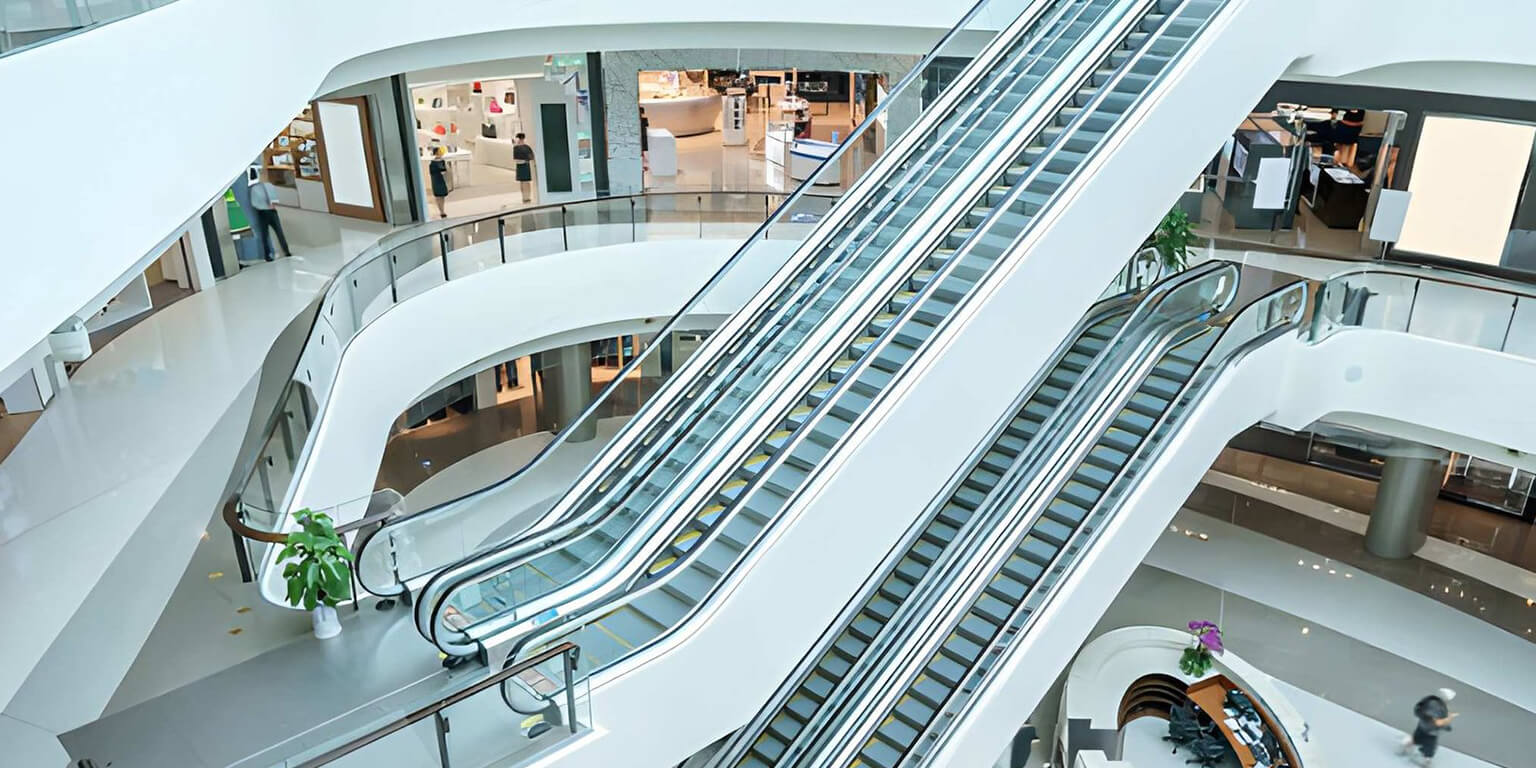
- Lifts, escalators, and staircases
- Car parks and access control infrastructure
- Shared HVAC systems, common area lighting, and electrical distribution
- Fire safety systems covering all shared spaces
- Water tanks and shared plumbing infrastructure
- Landscaping and external areas
- Cleaning, waste management, and pest control
- Security systems including CCTV and access control
So what separates common area responsibility from individual unit responsibility? In most cases, the boundary sits at the unit entrance. Systems that serve only one tenant, such as internal split AC units, in-unit plumbing, or individual retail fit-out components, typically fall outside the CAM scope. But shared infrastructure feeding multiple units sits inside it.
That boundary is where disputes tend to arise.
How CAM Charges Work in Dubai
Dubai's approach to common area maintenance charges is structured around the RERA service charge framework, which is administered through the Dubai Land Department.
Service charges are mandatory annual fees collected from property owners to cover the management, operation, and maintenance of common areas and shared facilities. These typically include general maintenance of elevators, HVAC systems, lobbies, corridors, and building structures; cleaning and waste management; security services including CCTV monitoring; landscaping; utilities for shared spaces; and management fees paid to the facility management company or owners' association manager appointed under RERA oversight.
Service charges for properties in Dubai are calculated based on the area of the property, ranging from AED 3 to AED 30 per square foot based on the location and purpose of the property. The DLD service charge index is accessible through the Dubai REST app.
For malls and larger commercial developments, the service charge budget also feeds a reserve fund. RERA requires management companies to include a mandatory reserve contribution in every annual budget. This fund covers major capital expenditures such as lift replacements, façade repairs, fire suppression system upgrades, and roof works.
This is the financial architecture behind common area maintenance. But knowing the structure doesn't automatically mean the maintenance gets done well. And in a mall environment, the gap between a well-managed and a poorly managed CAM programme is visible every single day.
What Makes Mall CAM Different From Standard Commercial Buildings
Managing common areas in an office building or residential tower is a relatively contained operation. A mall is not.
A mall handles thousands, often hundreds of thousands, of people daily. This relentless flow puts extreme strain on civil infrastructure, from flooring and facades to washrooms and car parks. The constant movement accelerates the depreciation cycle for all common area assets.
And the technical systems are more complex too. A central chiller plant serving dozens of retail units, a fire suppression network covering multiple floors and tenancy configurations, CCTV infrastructure across hundreds of cameras, automatic doors and car park barriers operating continuously from opening to close. Each of these requires a specific maintenance regime that goes well beyond a standard building checklist.
Front-of-house zones require coordinated HVAC stability, washroom hygiene, lighting, and floor care. Back-of-house zones need drainage, grease management, electrical reliability, pest control, and service corridor cleanliness.
If you're managing common area maintenance in a mall context and treating it like a standard commercial building job, the gaps will show.
Core Components of a Well-Managed CAM Programme
HVAC and Climate Systems
In Dubai, air conditioning in common areas isn't a comfort amenity. It's a safety and operational requirement. Shared cooling systems serving public corridors, car parks, and common zones need regular filter changes, AHU servicing, and coil cleaning, at intervals that reflect local dust loading rather than generic OEM schedules.
Our AC and HVAC maintenance service covers common area cooling systems as part of structured CAM and facility AMC programmes.
Electrical Common Areas
Common area electrical maintenance covers shared lighting circuits, emergency and exit lighting, car park lighting, distribution boards serving common infrastructure, and DEWA metering for common area utilities. Annual thermographic inspection of electrical panels is a meaningful risk-reduction step that's often missing from lower-tier CAM contracts. It identifies developing faults before they become failures affecting the entire property.
Lifts and Escalators
These are high-visibility, high-consequence assets. A lift that's out of service in a commercial building immediately draws tenant complaints. In a mall, it affects accessibility, circulation, and in some configurations, the ability of certain tenant units to operate. OEM-aligned preventive maintenance schedules and daily operational checks are standard practice. Documentation of servicing history also matters for liability reasons.
Plumbing, Drainage, and Water Systems
Water tank cleaning is a Dubai Municipality requirement for commercial buildings, on a semi-annual basis with certified documentation. Beyond that, shared plumbing maintenance covers booster pumps, water supply pressure monitoring, and drainage jetting for common area and food court waste lines. Water leaks in common areas don't stay contained. They affect tenants, create slip hazards, and in some cases create electrical hazards if the leak reaches a distribution area.
Our plumbing and drainage services are included within our common area maintenance programmes for commercial properties.
Fire and Life Safety in Common Areas
Fire systems serving common areas fall within the CAM scope. That means the alarm network, sprinkler systems, emergency lighting, fire doors in shared corridors, and the Hassantuk system connection required by Dubai Civil Defence. These need regular servicing with documented compliance records. A fire safety system that hasn't been properly maintained isn't just a safety risk. It's a DCD compliance failure that can affect the building's operating certificate.
Pest Control for Shared Spaces
In common areas adjacent to food courts or external zones, pest control isn't a reactive measure. It's a scheduled programme with documented service records. Dubai Municipality compliance for commercial properties requires proper pest management documentation, and gaps in that record create regulatory exposure for the building owner.
Car Parks and Access Control
Parking barriers, RFID systems, CCTV cameras in car park areas, and entry and exit point equipment all require regular maintenance. Gate barrier system maintenance is a component that's easy to overlook in a CAM budget until a barrier jams during peak hours and the queue backs up into the street.
The CAM AMC: Why Structure Matters
Reactive management of common areas works fine until it doesn't. And when it fails, it tends to fail in ways that are visible to every tenant and visitor in the building simultaneously.
A Common Area AMC structures the full maintenance programme with scheduled visits, defined response times for reactive work, and built-in compliance documentation. It converts what is otherwise a series of ad-hoc decisions into a managed, accountable programme.
For OA committees and property managers, this also simplifies the service charge justification. When CAM charges are backed by a documented maintenance programme with service records, it's much easier to demonstrate to owners that the money is being spent properly.
Our common area maintenance service in Dubai covers the full scope described in this post for residential towers, commercial buildings, and mixed-use retail developments. And as part of our broader facilities management in Dubai, we can extend that coverage across all hard and soft services under a single managed contract. With 50-plus certified technicians, 20-plus years in the Dubai market, and 24/7 emergency support, GeeM provides the kind of structured, transparent CAM delivery that property managers and OA committees can account for clearly to owners.
Let's Talk About Your Property's CAM Programme
Whether you're managing a mall, a commercial tower, or a mixed-use development, the structure and quality of your common area maintenance has a direct impact on tenant satisfaction, asset value, and regulatory standing.
Contact the GeeM team to discuss your property's requirements. We'll assess your shared facilities and recommend a CAM structure that fits your operational setup and service charge framework.
FAQ
.svg)
Common area maintenance in a Dubai mall typically covers lifts and escalators, shared HVAC and cooling systems, common area lighting and electrical distribution, plumbing and water tanks, fire safety systems in shared zones, car park infrastructure and access control, CCTV and security systems, cleaning and waste management, pest control, and landscaping. The exact scope varies depending on the property configuration and the terms of the management contract or AMC.
In Dubai, service charges for common area maintenance are calculated per square foot of the property and approved annually by RERA through the Dubai Land Department. Rates vary by property type, location, and the standard of services provided. Property owners can check approved rates through the DLD Service Charge Index on the Dubai REST app. For jointly owned properties, each owner pays a pro-rata share based on their unit's floor area relative to the total rentable area.
Common area maintenance is the responsibility of the building owner, the management company, or the Owners' Association (OA), depending on the property's legal structure. In jointly owned properties governed by RERA, the OA or appointed management entity is responsible for managing and funding common area upkeep through the service charge budget. Individual tenants or unit owners are not responsible for shared infrastructure, though they may share costs through their service charge contributions.
A Common Area Annual Maintenance Contract (AMC) is a service agreement that covers all planned preventive maintenance, regular inspections, and reactive support for a property's shared facilities throughout the year. It defines what gets serviced, how often, who responds to emergencies, and what documentation is produced. For property managers and OA committees, it converts unpredictable reactive spend into a budgeted, structured programme with clear accountability and compliance documentation.
Yes, significantly. Malls handle much higher daily footfall, operate for longer hours, and have more complex shared infrastructure, including central chiller plants, food court drainage systems, escalators, and extensive fire safety networks across multiple tenant configurations. The depreciation rate for common area assets is higher, maintenance windows are narrower (typically overnight), and the compliance requirements are more detailed. Generic residential building CAM approaches don't translate well to a retail mall environment.
Several regulatory frameworks apply. RERA, through the Dubai Land Department, governs service charge budgets and CAM charge structures for jointly owned properties under Law No. 6 of 2019. Dubai Municipality sets requirements for water tank cleaning (semi-annual certification), indoor air quality in commercial buildings, and pest control compliance. Dubai Civil Defence mandates ongoing fire safety system maintenance with an AMC held by an approved contractor and current documentation for all DCD-required certificates.
Poorly managed CAM creates multiple compounding problems: tenant complaints, accelerated equipment wear leading to expensive early replacement, compliance failures with DM and DCD that can result in fines or operational restrictions, and erosion of the property's market position over time. In a mall context, visible deterioration of common areas also directly affects footfall, tenant confidence in renewing leases, and the asset owner's ability to maintain occupancy at competitive rent levels.
Table of content
- Extreme Heat and Overworking
- Poor Maintenance and Dirty Filters
- Incorrect Sizing of AC Units
- Low Refrigerant Levels
Recent Posts


Download our App






© 2026 GeeM.
.svg)