Common Gate Barrier Problems in Dubai & How to Fix Them
Post Details
Key Takeaways
- Dubai's extreme heat, dust, and high traffic cycles are the main reasons gate barrier systems fail earlier than expected.
- Motor failure, sensor misalignment, boom arm damage, and power faults are the most reported issues across residential and commercial properties.
- Most problems can be prevented with scheduled servicing every 6 to 12 months, depending on usage intensity.
- Ignoring early warning signs, like slow movement or unusual noise, almost always leads to higher repair costs.
- Professional diagnosis is essential before replacing components, as the root cause isn't always obvious.
A gate barrier works quietly in the background, day after day, until the day it doesn't. And when it stops working, it usually does so at the worst possible moment: during a busy morning rush, with vehicles queued up, access blocked, and a frustrated security team trying to figure out what went wrong.
We've seen this scenario play out at apartment buildings, office compounds, warehouses, and villa communities across Dubai. And in most cases, the breakdown didn't come out of nowhere. There were signs, weeks or even months earlier, that something wasn't right. A slight delay in the arm lifting. A grinding noise that someone chalked up to the wind. A sensor that seemed to need a second try before detecting a vehicle.
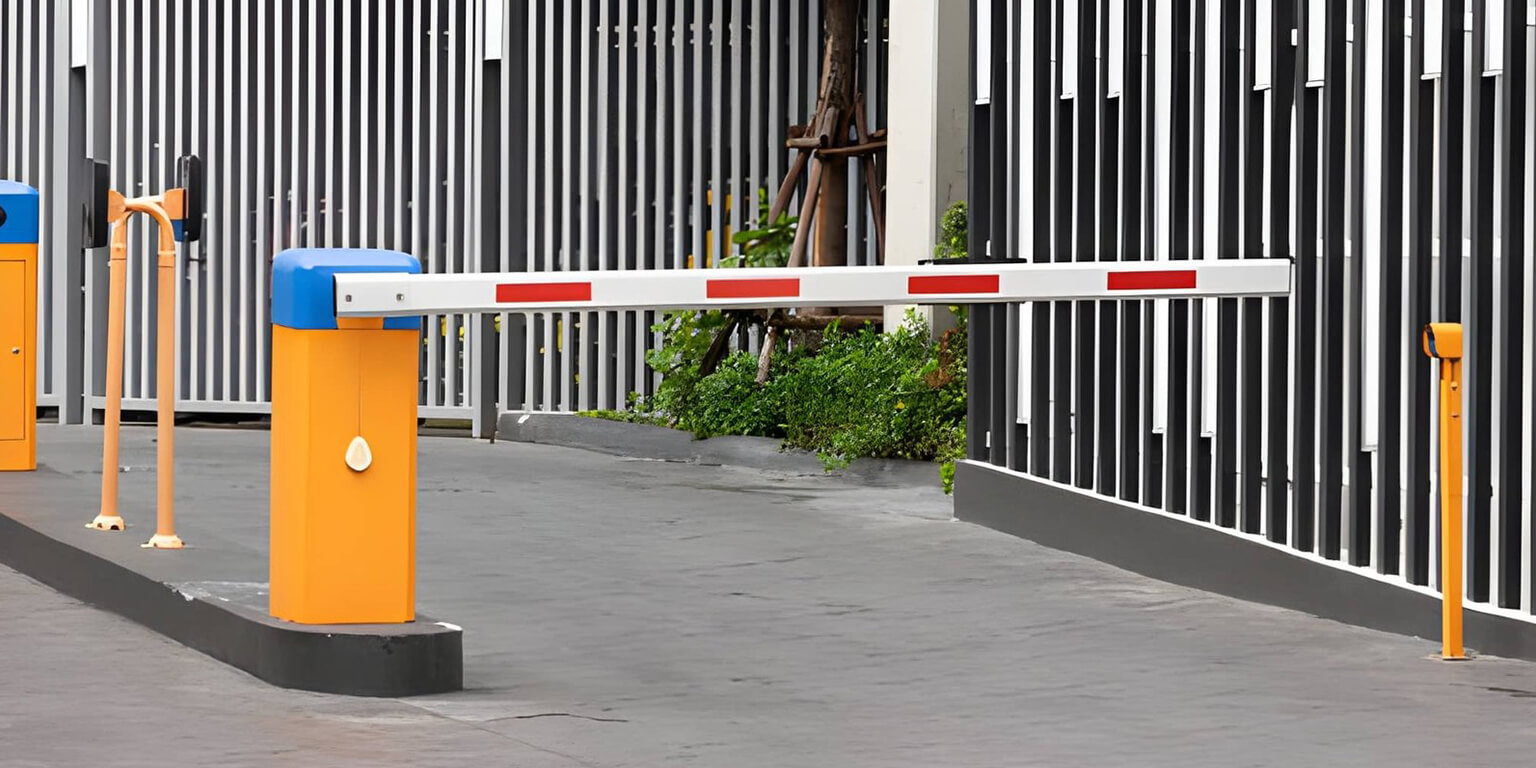
This post covers the problems we see most often when we're called in for gate barrier repair or maintenance in Dubai, why they happen in the UAE's environment specifically, and what the right fix actually looks like.
Why Dubai Is Particularly Hard on Gate Barrier Systems
Before getting into individual faults, it's worth understanding the environment these systems operate in. Dubai's climate is genuinely tough on mechanical and electronic equipment. Summer temperatures regularly push past 45°C, and that kind of sustained heat accelerates wear on motors, degrades lubricants, and causes electrical components to expand and contract in ways that eventually break connections or crack housings.
Dust is the other major factor. Dubai's fine desert sand infiltrates everything. It gets into sensors, coats RFID readers, clogs motor housings, and builds up on tracks and mechanical joints. A system that might last eight to ten years in a cooler, cleaner climate might start showing serious wear within three to four years here if it isn't serviced properly.
High-traffic properties compound both problems. A boom barrier at a busy commercial car park might cycle hundreds of times a day. That's a lot of mechanical stress, and it adds up faster than most property managers anticipate.
The 6 Most Common Gate Barrier Problems We Encounter
1. Motor Failure or Sluggish Motor Performance
This is the most common call we receive. The barrier arm stops lifting entirely, or it moves noticeably slower than it used to. In most cases, the motor hasn't completely burned out. It's more often a combination of heat-related wear, dried-out lubrication, and dust contamination in the motor housing.
A motor running under continuous load in 45°C+ heat is working much harder than its rated conditions assume. Over time, the internal components degrade. Without periodic lubrication and cleaning, that degradation speeds up considerably.
The fix depends on what the diagnostic shows. Sometimes the motor can be serviced and restored. Other times, particularly in older units or those running at high-cycle rates, replacement is the more reliable path. Either way, don't skip the diagnosis. Swapping a motor without identifying why it failed usually means the replacement fails too.
2. Sensor Misalignment or Sensor Failure
The safety sensors on a boom barrier, typically infrared or loop-based vehicle detectors, are what stop the arm from coming down on a car or a person. When these fall out of alignment or stop functioning correctly, you'll notice the barrier behaving erratically: lowering when a vehicle is still underneath, not detecting vehicles reliably, or staying stuck in the open position as a failsafe.
In Dubai, sensors are particularly vulnerable to dust accumulation and heat-related drift. According to technical guidance from the International Electrotechnical Commission (IEC), electronic sensors operating in high-temperature environments need to be verified and recalibrated as part of any routine maintenance cycle, not just when something visibly goes wrong.
Sensor problems are easy to misdiagnose. What looks like a control board fault is often a dirty or misaligned sensor. We always check sensors first during any fault investigation.
3. Boom Arm Damage
The arm itself is physically vulnerable, and Dubai properties see a lot of boom arm damage. It happens from direct vehicle impact (a lorry that underestimates its height, a driver who moves before the arm is fully raised), or from repeated minor knocks over time that gradually weaken the arm or its mounting bracket.
Damaged arms don't just look bad. A bent or cracked arm changes the balance of the mechanism, which puts additional strain on the motor and the gearbox. If you've noticed the arm wobbling slightly or the system making unusual sounds during the lift cycle, that's worth investigating before it leads to a full motor failure.
Arm replacement is usually straightforward when handled promptly. Waiting too long often means replacing the arm plus addressing the secondary damage it caused.
4. Electrical Faults and Power Supply Issues
Electrical problems show up in a few different ways: the barrier doesn't respond to commands, the control panel displays an error code, the remote stops working, or the system goes completely unresponsive. In a city built on construction, with electrical infrastructure that varies significantly between properties, power supply issues are more common than people expect.
Voltage fluctuations, loose wiring connections (particularly in outdoor cabinets exposed to heat cycling), and corroded terminals all affect barrier performance. Some electrical faults are obvious. Others appear intermittently, which makes them genuinely tricky to diagnose without the right equipment.
This is one area where we'd caution against DIY troubleshooting. Barrier control panels involve both low-voltage and mains-level electrical components. Incorrect handling can damage the control board entirely or create a safety hazard. A certified technician with proper diagnostic tools will resolve it faster and more safely.
5. RFID and Access Control Integration Problems
Many automatic gate barrier systems in Dubai are integrated with RFID card readers, vehicle loop detectors, or ANPR (Automatic Number Plate Recognition) cameras. When these integrations break down, the barrier either won't respond to valid credentials or responds to everything, which defeats the purpose of access control entirely.
RFID failures in Dubai are often environmental. Dust-coated tags read poorly. Heat affects the reader's antenna performance. Interference from nearby electrical equipment causes inconsistent detection. And when firmware updates on one part of the system aren't matched by updates elsewhere, compatibility problems can appear without warning.
The solution usually involves cleaning, reconfiguration, or a firmware update, rather than hardware replacement. But getting there requires understanding the full system, not just the barrier unit itself.
6. Slow Movement and Inconsistent Cycling
Sound familiar? The barrier lifts, but takes twice as long as it should. Or it cycles properly in the morning and sluggishly by the afternoon when temperatures peak.
Slow operation is almost always mechanical: insufficient lubrication in the gearbox or pivot points, worn drive belts, or a motor that's working against more resistance than it should. In Dubai's heat, lubricants dry out or degrade faster than the manufacturer's standard maintenance intervals assume. We generally recommend lubrication checks every three to four months for high-traffic barriers here, rather than the six to twelve-month intervals that might apply in cooler climates.
Left untreated, slow movement places extra load on the motor and shortens its lifespan. It's one of those problems that feels minor until it suddenly isn't.
What Happens When You Delay Repairs
It's tempting to leave a partially working system running. If the barrier opens, eventually, most properties keep using it while waiting to "find a good time" to get it looked at.
But barrier problems don't stabilise on their own. A motor under strain from a misaligned arm continues to degrade. A dirty sensor that's giving intermittent false readings will eventually stop reading at all. An electrical connection that's loose enough to cause occasional dropouts will eventually fail completely. The repair cost at that stage is almost always higher than if the problem had been addressed early.
There's also the security dimension. A barrier that can't reliably detect vehicles or that stays stuck open is actively undermining the access control purpose it was installed to serve.
The Role of Preventive Maintenance
For most Dubai properties, gate barrier systems should be serviced at minimum every six to twelve months, and quarterly for high-traffic commercial locations. A proper service visit covers motor function and lubrication, sensor cleaning and calibration, arm and mounting hardware inspection, control panel and wiring checks, and a full cycle test.
Properties covered by a comprehensive annual maintenance contract in Dubai generally experience fewer emergency breakdowns and lower cumulative repair costs. That's not a pitch. It's just what the pattern shows when you're servicing properties regularly and can see the comparison.
Our AMC packages include scheduled gate barrier servicing as part of broader property maintenance coverage, which makes sense for villas, apartment buildings, and commercial properties that want predictable upkeep rather than reactive repairs.
When to Call a Professional vs. What You Can Check Yourself
There are a few things a property manager or facilities team can reasonably check before calling for service:
- Power supply: confirm the unit is receiving power and that no circuit breakers have tripped.
- Remote batteries: an embarrassingly common cause of "barrier won't respond" calls.
- Visible obstructions: anything physically blocking the sensor beam or the arm's path.
- Dust on sensors: a gentle wipe with a dry cloth can sometimes restore sensor function temporarily.
If none of those resolve it, the issue is almost certainly internal, and it needs a trained technician. Attempting to open the motor housing or access the control board without proper knowledge risks making the problem worse or creating a safety issue.
We also pair gate barrier servicing with CCTV system checks where relevant, since both systems often share the same access control infrastructure and problems in one can affect the other.
Choosing the Right Provider for Gate Barrier Repair in Dubai
Not every maintenance company has the experience or equipment to handle barrier systems properly. When evaluating a provider, it's worth asking whether their technicians are familiar with the specific brand installed on your property (FAAC, CAME, BFT, and similar), whether they carry common replacement parts for same-day repairs, and whether they can provide a written diagnostic report before recommending any parts replacement.
As noted in technical maintenance guidance from FAAC Group, proper maintenance of automated barrier systems should follow a structured inspection protocol that covers both mechanical and electronic components, not a generic checklist applied to all equipment types.
We bring that same discipline to every service call we handle across villa maintenance, commercial properties, and facilities management.
Get Your Gate Barrier Inspected or Repaired Today
If your barrier is showing any of the symptoms covered here, don't wait for a full breakdown to deal with it. Our certified technicians are available for same-day emergency response and scheduled servicing across Dubai.
We handle the full scope of gate barrier installation in Dubai, from new installations and system upgrades to boom barrier repair, sensor recalibration, and parking barrier maintenance. And we'll tell you honestly what the system needs, not what generates the biggest job.
Reach out to the GeeM team today to book an inspection or discuss a maintenance plan for your property. Contact Us | Toll Free: 8004336
Frequently Asked Questions
.svg)
For most properties, servicing every six to twelve months is the baseline. High-traffic commercial locations, such as multi-storey car parks or busy office compounds, generally benefit from quarterly maintenance. Dubai's heat and dust conditions accelerate wear on both mechanical and electronic components, so the standard intervals recommended by manufacturers in cooler climates may not be sufficient here.
Slow or hesitant arm movement, unusual grinding or clicking noises during operation, inconsistent response to RFID cards or remotes, the barrier staying open or closed unexpectedly, and visible damage to the boom arm are the most frequently reported warning signs. Any of these should be investigated promptly, as they typically indicate a developing problem rather than an isolated glitch.
In most cases, experienced technicians who are familiar with barrier automation systems can service a wide range of brands. That said, for control board diagnostics, firmware updates, and genuine parts replacement, it's worth confirming that the provider has experience with your specific installed brand, whether that's FAAC, CAME, BFT, Nice, or another manufacturer.
The most straightforward cause is a flat remote battery, which is worth checking first. Beyond that, interference from nearby electronic equipment, a damaged or de-programmed remote, or a fault in the receiver inside the control panel can all cause the same symptom. A technician can quickly determine which it is using a signal test.
For properties where the barrier is a critical access point, an AMC generally makes financial sense. Scheduled servicing prevents the kind of accumulated wear that leads to expensive emergency repairs, and it keeps the system operating within its designed performance parameters. For properties managing multiple systems, an integrated maintenance contract that covers barriers alongside other building systems often provides better value and simpler coordination.
Most barrier systems include a manual override function, typically a key-operated release on the motor housing, that allows the arm to be raised manually in an emergency. The exact method varies by model, so it's worth familiarising your on-site team with this procedure when the system is first installed. After using the manual override, contact a technician to diagnose the underlying fault before restoring automated operation.
With proper maintenance, a quality gate barrier system generally operates reliably for eight to fifteen years, depending on the brand, usage intensity, and how consistently it has been serviced. In Dubai's conditions, systems that aren't maintained regularly tend to show significant degradation within four to six years. The motor and control electronics are typically the first components to require replacement in older systems.
Table of content
- Extreme Heat and Overworking
- Poor Maintenance and Dirty Filters
- Incorrect Sizing of AC Units
- Low Refrigerant Levels
Recent Posts

Download our App







© 2026 GeeM.
.svg)