Gate Barrier Systems for Commercial Properties Dubai
Post Details
Key Takeaways
- Commercial properties in Dubai have significantly higher vehicle volumes and more complex access requirements than residential sites, which directly affects which barrier system is appropriate
- Heavy-duty motors rated for intensive or continuous duty cycles are essential for high-traffic commercial entrances, not the standard residential-grade systems that some suppliers quote regardless of context
- ANPR camera systems are particularly well-suited to commercial properties because they handle visitor-heavy environments without requiring physical tag management
- Paid parking integration, occupancy tracking, and revenue management software can be connected directly to barrier systems for retail centres and mixed-use commercial developments
- Access control integration with RFID, face recognition, and intercom systems creates a complete security layer rather than a standalone barrier at the entry point
- Dubai's climate places additional demands on commercial barrier systems operating under continuous use, making component quality and maintenance frequency more important than for lower-traffic sites
- A proper site assessment covering traffic volume, lane configuration, and integration requirements is essential before specifying any commercial barrier system
Commercial properties in Dubai don't all look the same, and neither do their access control requirements. An office building in Business Bay has a very different entry management challenge than a logistics warehouse in Al Quoz or a retail centre in JBR. What they share is the need for a barrier system that can handle serious daily vehicle volumes without breaking down, causing queues, or creating security gaps.
Getting this right matters more for commercial sites than most property managers initially appreciate. A residential barrier failing during peak hours is frustrating. A commercial barrier failing during morning rush at an office tower or during a busy weekend at a retail centre has immediate operational and reputational consequences.
Why Commercial Barrier Requirements Differ From Residential
Start with volume. A residential compound might process a few hundred vehicle movements on a busy day. A commercial car park, office building, or retail centre can see that in a single hour during peak periods. The motor duty cycle, arm speed, and control board processing all need to be rated for that kind of sustained throughput.
And then there's the visitor question. Commercial properties tend to have a much higher proportion of visitors relative to registered vehicles than residential communities do. Staff with RFID tags are the minority of daily vehicle traffic at many commercial sites. Most vehicles arriving are visitors, delivery drivers, contractors, or customers, none of whom have pre-registered credentials. Managing that access flow without creating bottlenecks requires a different approach than issuing tags to a known vehicle list.
The integration requirements are also more complex. Commercial sites often need barrier systems that talk to parking management software, CCTV platforms, building access control systems, and in the case of paid parking, payment processing hardware. A standalone barrier unit that simply opens and closes isn't adequate for most serious commercial applications.
Barrier System Types for Commercial Applications
Heavy-Duty Automatic Boom Barriers
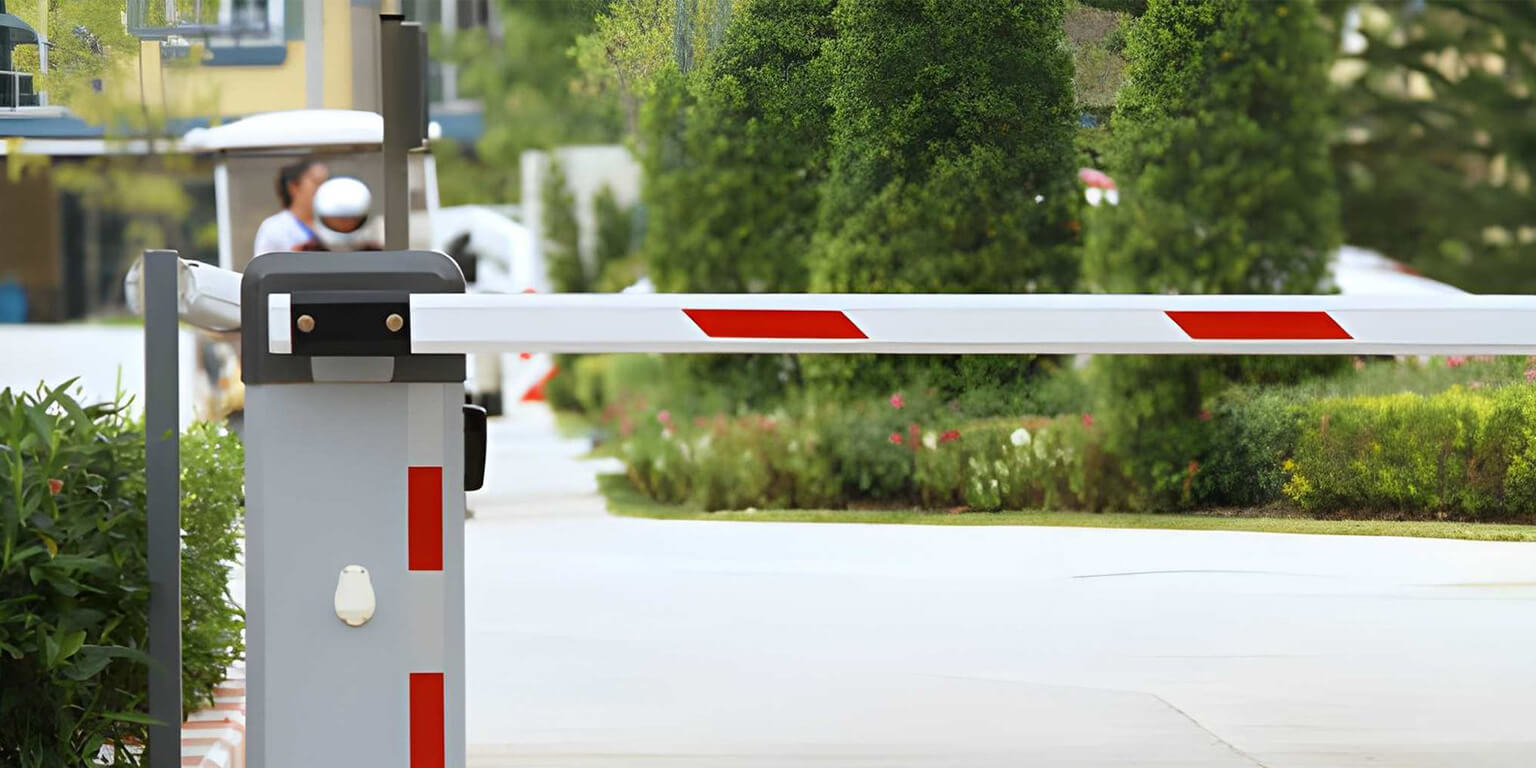
For most commercial entry points, an automatic boom barrier is the right hardware choice. But not all boom barriers are built for commercial use.
Motor duty cycle is the key specification. Residential-grade barriers are typically rated for a limited number of cycles per hour before needing a rest period. Commercial and industrial-grade systems are rated for intensive or continuous use, meaning they can handle hundreds of open and close cycles per hour without overheating or reducing operational speed.
Arm speed matters too. A standard residential barrier takes three to five seconds to open fully. High-speed commercial barriers designed for busy lanes can open in under two seconds. During peak entry periods, that difference compounds across every vehicle and directly affects whether queues build up or traffic flows freely.
FAAC's commercial barrier range includes systems specifically rated for intensive commercial use, with duty cycles and operating speeds designed for high-traffic applications. We install and maintain FAAC systems as part of our automatic gate barrier installation service in Dubai across commercial properties of all sizes.
ANPR-Based Access Control
For commercial properties where visitor volume is high and pre-registering vehicle tags isn't practical, ANPR is the most operationally sound access technology.
Visitor plates can be pre-registered by tenants, reception teams, or building management before the vehicle arrives. When the visitor drives up, the camera reads the plate, checks it against the approved list, and opens the barrier automatically. No intercom call needed, no guard intervention, no delay. For a busy office tower where multiple visitors are arriving simultaneously, that automation makes a measurable difference to entry queue management.
ANPR also creates a complete entry and exit log. Every vehicle that passes through is recorded with a timestamp, which is useful for security investigations, tenancy management, and in paid parking applications, calculating parking duration accurately.
So what does that look like for a typical commercial installation? An office building might use ANPR for the main visitor lane with RFID for staff parking, giving authorised employees fast lane entry while visitor management runs through the ANPR system. That split-lane approach handles both vehicle populations without either compromising the other.
Paid Parking and Revenue Management Integration
Retail centres, mixed-use developments, and standalone commercial car parks often need more than access control. They need a full parking management system where barrier operation is just one component of a broader revenue and occupancy management setup.
In these applications, the barrier integrates with ticket dispensers, payment kiosks, ANPR cameras for duration tracking, and parking management software that handles billing, reporting, and occupancy monitoring in real time. When a vehicle enters, a ticket is issued or the plate is logged. When it exits, the parking duration is calculated, payment is processed, and the barrier opens.
This kind of setup requires considerably more planning than a basic access control installation. Lane configuration, payment point positioning, software selection, and network infrastructure all need to be worked through before any hardware is specified. Getting the site assessment right at the beginning saves significant time and cost later.
Choosing the Right Access Technology for Your Commercial Property
Not sure which access method fits your situation? Here's a practical breakdown by commercial property type.
Office Buildings and Business Centres
In most cases, a combination of RFID for staff and ANPR for visitors works well. Staff get smooth, contactless entry without stopping. Visitors are managed through pre-registration by tenants or reception, with the barrier opening automatically on arrival. Intercom backup handles any vehicles that don't match the approved list.
For multi-tenant buildings, access control can be configured so each tenant manages their own visitor list through a software portal, removing the burden from building management for day-to-day visitor registration.
Retail Centres and Shopping Malls
High-speed barriers rated for continuous duty cycle are essential here. Visitor volume during weekends and public holidays can be significant, and any barrier-related bottleneck during peak trading hours creates customer experience problems.
ANPR for entry logging, combined with paid parking ticketing and exit payment integration, is the standard approach for large retail environments. Occupancy management software connected to the barrier system allows real-time monitoring of car park capacity and, in more advanced setups, dynamic signage that directs drivers to available levels.
Warehouses and Industrial Facilities
Security takes priority here, and the vehicle population is generally more predictable than at commercial or retail sites. RFID access for registered staff and contractor vehicles, combined with intercom or guard-controlled access for irregular visitors, handles most industrial access control requirements.
Heavy-duty barrier hardware is important for industrial sites where large trucks, forklifts, and heavy goods vehicles are part of the daily traffic. Arm length, motor power, and housing durability all need to account for the type of vehicles and operating conditions specific to the site.
Hospitals and Healthcare Facilities
Healthcare sites have a specific access challenge: they need to separate emergency vehicle access from general visitor and staff traffic, and they need the system to work reliably around the clock without any tolerance for failure.
Priority access lanes for emergency vehicles, separate staff and visitor barriers, and reliable 24/7 operation with battery backup are all standard requirements for healthcare barrier installations. ANPR works well for visitor management given the high and varied visitor volume at most hospital sites.
Integration With CCTV and Building Security Systems
A gate barrier operating in isolation from the rest of your security infrastructure is a missed opportunity.
When barrier systems are integrated with CCTV, every vehicle entry and exit is recorded with video evidence alongside the access log data. Camera footage at the barrier point captures plate numbers, driver images, and any incidents at the entry point in full detail. This integration is increasingly expected by commercial tenants and building insurers as part of a coherent property security setup.
Integration with wider building access control systems means vehicle access at the car park barrier and pedestrian access through building entry points are managed from a single platform. Access rights, visitor logs, and security alerts are consolidated rather than fragmented across separate systems.
Our CCTV installation service works alongside our gate barrier installations for exactly this reason. Coordinating both from a single team means the systems are specified to work together from the start, rather than trying to integrate them retroactively after separate installation.
Maintenance for Commercial Barrier Systems
Commercial barriers work harder than residential ones, and they need more frequent attention as a result.
A system handling hundreds of vehicle movements daily in Dubai's summer heat is under considerably more stress than a residential barrier processing a few dozen. Motor lubrication breaks down faster. Photocell sensors accumulate dust more quickly. Control board components cycle through more temperature stress in a given period.
In practice, commercial barrier systems in Dubai benefit from quarterly maintenance visits rather than the twice-yearly schedule that's adequate for most residential installations. Each visit should cover motor health and lubrication, photocell cleaning and alignment, detection loop testing, control board diagnostics, arm and pivot inspection, and full operational testing under load.
The British Security Industry Association notes in its access control guidance that maintenance frequency should reflect operational intensity, not just elapsed time since installation. For high-traffic commercial sites, that's an important distinction.
Our Annual Maintenance Contract covers commercial gate barrier systems with service frequencies matched to actual traffic volumes. For facilities managers looking after multiple building systems, our commercial AMC packages combine barrier maintenance with electrical, HVAC, and general building maintenance under a single contract, which is more cost-effective and simpler to manage than separate service agreements for each system.
As a property maintenance company in Dubai with over 20 years of experience across commercial and industrial properties, we've maintained barrier systems across all of the property types discussed here. The pattern is consistent: well-maintained commercial barriers have lower total maintenance costs and significantly less unplanned downtime than those serviced reactively.
Plan Your Commercial Gate Barrier System With Our Team
Get a Free Site Assessment for Your Commercial Property
Whether you're specifying a new installation, upgrading an existing system, or looking to bring your commercial barrier maintenance under a proper service contract, we're ready to help.
Contact GeeM today to arrange a free site assessment for your commercial property. Call us toll-free on 800 4336 or reach us directly on WhatsApp. We cover all commercial districts across Dubai and can typically arrange a visit within 24 to 48 hours of your enquiry.
Frequently Asked Questions
.svg)
For most commercial properties, an automatic boom barrier with heavy-duty motor rated for intensive duty cycle is the right hardware. Access technology depends on your visitor volume: RFID works well for staff-heavy environments with registered vehicle populations, while ANPR is better for high-traffic or visitor-heavy commercial sites where pre-registering individual tags isn't practical.
Commercial and industrial-grade barrier systems can handle several hundred to over a thousand vehicle movements per day depending on the model and duty cycle rating. Standard residential-grade barriers are not suitable for high-traffic commercial applications. Always specify a motor duty cycle that exceeds your expected daily volume with a reasonable margin.
Yes. Gate barrier systems can be integrated with ticket dispensers, payment kiosks, ANPR cameras for duration tracking, and parking management software that handles billing and occupancy monitoring. This is standard for retail centres, commercial car parks, and mixed-use developments that operate paid parking facilities.
Commercial barrier systems in Dubai benefit from quarterly maintenance visits due to the combination of high daily vehicle volume and demanding climate conditions. Motor lubrication, photocell maintenance, detection loop testing, and control board diagnostics all need more frequent attention on high-traffic commercial systems than on residential installations.
RFID systems use tags or cards carried by vehicles and work best when the authorised vehicle list is known and relatively stable, such as staff parking. ANPR uses cameras to read license plates automatically and is better for commercial properties with high visitor volume, since visitor plates can be pre-registered without issuing physical tags. Many commercial properties use both in a split-lane configuration.
Yes. Gate barrier systems can be integrated with CCTV cameras so that every vehicle entry and exit is recorded with video evidence alongside the access log. This integration is increasingly standard for commercial properties and provides a useful audit trail for security incidents, tenancy disputes, and general access management.
A barrier failure during business hours at a commercial property creates immediate access problems and potential security gaps. Commercial barrier systems should include manual override capabilities and, for critical access points, battery backup to maintain operation during power interruptions. An Annual Maintenance Contract with priority breakdown response minimises both the likelihood of failure and the time taken to restore operation when a fault does occur.
Table of content
- Extreme Heat and Overworking
- Poor Maintenance and Dirty Filters
- Incorrect Sizing of AC Units
- Low Refrigerant Levels
Recent Posts



Download our App







© 2026 GeeM.
.svg)