Types of Water Heaters in Dubai: Storage, Instant, Central and Solar
Post Details
Key Takeaways
- The four main types of water heaters in Dubai are storage tank heaters, instant (tankless) heaters, central hot water systems and solar water heaters.
- Electric storage heaters are the most common in apartments. Solar is common on newer villas and townhouses, partly because Dubai Municipality calls for it in new villas.
- Instant heaters save space but need a strong electrical supply, so they suit single outlets better than whole homes.
- Central systems serve a whole building from one plant, so residents usually don't maintain the heater itself.
- The right choice depends on the property, the number of bathrooms, how many people use hot water at once and what the building already supports.
What Are the Main Types of Water Heaters?
The main types of water heaters in Dubai are storage heaters, which keep a tank of water hot and ready; instant or tankless heaters, which heat water only as it flows; central systems, which heat water for a whole building from one plant; and solar water heaters, which use rooftop collectors with an electric backup.
Most people never choose their water heater. It comes with the apartment or villa, and nobody thinks about it until it fails or the hot water runs out halfway through a shower.
But when it's time to replace one, renovate a bathroom or buy a property, the choice matters. Each type behaves differently, costs differently to run and suits a different kind of home. Here's how they compare, with the Dubai details most general guides leave out.
The Four Types at a Glance
The US Department of Energy's guide to choosing a water heater puts typical lifespans at 10 to 15 years for storage heaters and about 20 years for tankless and solar systems. Real lifespans in Dubai depend heavily on water quality and servicing, which we cover in our article on how long water heaters last in Dubai.
Storage Water Heaters
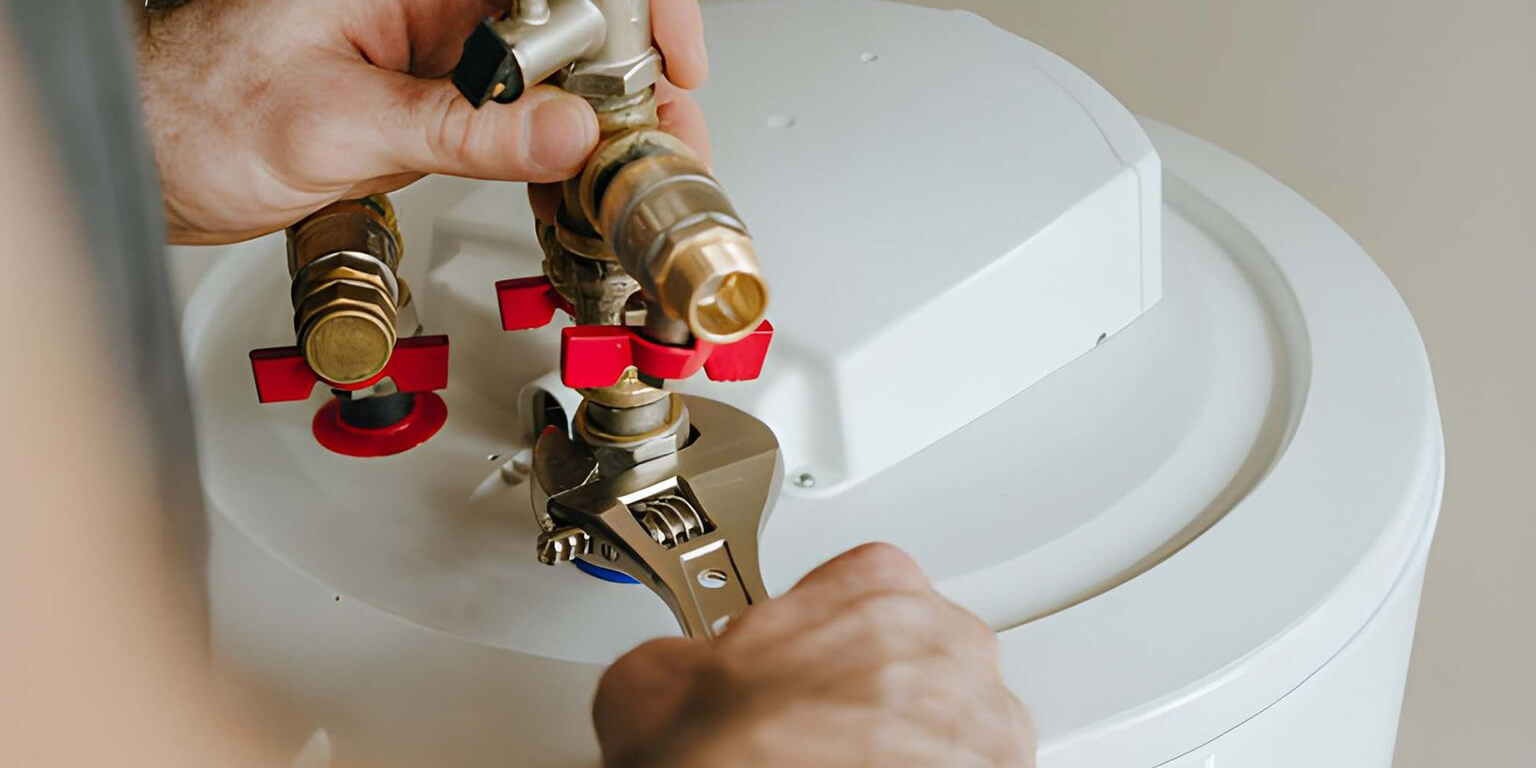
A storage heater is what most people picture when they say "geyser". It's an insulated steel tank, usually with an electric element and thermostat, that heats water and keeps it hot until you need it.
In Dubai apartments, you'll typically find one per bathroom, often mounted horizontally above the false ceiling or on a wall in the bathroom or kitchen. Villas may have larger units serving several bathrooms. Gas-fired storage heaters exist too, but electric is far more common in homes here.
What's good about them:
- Simple, familiar and widely available, with plenty of brands and spare parts in Dubai
- Several taps can run at once, up to the tank's capacity
- Easy to replace like for like
What to watch for:
- Once the tank's used up, you wait for it to reheat
- Stored water loses some heat over time, especially in poorly insulated tanks
- Dubai's hard water builds scale on the element and at the bottom of the tank, so yearly flushing and anode checks matter
Capacity is the big decision. A tank that's too small runs out during busy mornings, while one that's far too big wastes energy keeping water hot that nobody uses. We size by the number of people and bathrooms, and how many showers tend to run back to back.
Instant (Tankless) Water Heaters
Instant heaters, also called tankless or on-demand heaters, have no storage tank. When you open the tap, water flows over a powerful heating element and comes out hot. When you close it, the heater switches off.
They're compact, which is why you'll see them under kitchen sinks, beside basins or in small apartments where there's no room for a tank.
What's good about them:
- No waiting for a tank to heat up, and no running out
- Small and easy to fit in tight spaces
- No standing heat loss from stored water
What to watch for:
- Flow is limited. The Department of Energy notes typical tankless output of around 2 to 5 gallons per minute, and that more than one unit may be needed where demand is high.
- Electric instant heaters draw a lot of power while running, so they often need a dedicated circuit, and an electrician should confirm the supply can take it before installation
- Water temperature can drop if two outlets run at once on the same unit
In our view, instant heaters work best for single points of use, such as a kitchen sink, a guest washroom or a small studio. For a family bathroom with a rain shower, a storage heater or a larger system is usually the better fit.
Central Hot Water Systems
Central systems heat water in one place and pipe it to every outlet. In Dubai, you'll find them in hotels, serviced apartments, some residential towers, and larger villas or palaces with many bathrooms.
The heart of the system is usually a calorifier or large storage cylinder, heated by electric elements, a boiler, a heat pump or a combination, with a pump circulating hot water around the building so it reaches taps quickly.
What's good about them:
- No individual heaters in each flat or bathroom
- Hot water capacity shared across many outlets
- Maintenance is handled centrally by building or facility management
What to watch for:
- If the plant fails, the whole building can lose hot water
- Residents can't adjust the system themselves, and repairs depend on building management
- Larger systems need proper water hygiene management
That last point matters. Dubai Municipality's technical guidelines for Legionella control in water systems call for hot water to be stored at a minimum of 60°C in the buildings they cover, and for water heaters and calorifiers to be cleaned and disinfected at least twice a year. That's why central systems need planned maintenance rather than call-outs only.
If you're a tenant in a building with central hot water and it's not working, the fix sits with building management, not inside your flat.
Solar Water Heaters
Solar water heaters use rooftop collectors, either flat plate panels or evacuated tubes, to heat water using sunlight. The hot water is stored in an insulated tank, and an electric backup element tops it up on cloudy days, winter mornings or at times of heavy use.
They're very common on Dubai villas and townhouses. Dubai Municipality's circular on solar water heating systems calls for solar water heating in new residential villas and many other building types, sized to supply at least 75% of the building's hot water demand.
What's good about them:
- Much of the heating comes from the sun, so the backup element works far less
- Long lifespan with good maintenance
- Well suited to Dubai's strong sunshine for most of the year
What to watch for:
- Needs suitable roof space, so it isn't practical for most individual apartments
- Dust on the collectors cuts performance, so they need regular cleaning
- More parts to maintain: collectors, valves, sometimes pumps and controllers, plus the backup element
Our comparison of solar and electric water heaters in Dubai goes deeper into running costs and payback.
Which Type Suits Your Property?
A few questions help narrow it down:
- How many people use hot water, and how many showers run at the same time?
- Is there roof space, and does the building or community allow rooftop equipment?
- Can the electrical supply handle an instant heater, if that's what you're considering?
- Is there physical space for a tank, and safe access for maintenance?
- In a rented property, what does the landlord or building allow?
Gas Water Heaters: A Short Note
Some Dubai homes and buildings use gas, either from a piped LPG network or individual supply. Gas storage and instant heaters heat water quickly, but they need correct flues, ventilation and gas connections, and should only ever be installed and serviced by qualified gas technicians. They also need servicing more often than electric units.
How We Help
We install, repair and replace electric, gas and solar water heaters across Dubai, and we work with the brands most commonly fitted here, including Ariston, Bosch, Rheem, AO Smith, Ferroli, Atlantic, Midea, Super General, Siemens, Zenith and Green Thermal. Before we recommend anything, we look at the property, the number of bathrooms, how the household uses hot water and what the building supports.
If you're replacing an old heater or planning a renovation, our water heater installation and repair team can advise on type and size, with free, no-obligation estimates. Villa and townhouse owners looking at solar can find more on our solar water heater services. Or get advice on the right water heater from GeeM. You can also call us on 800 4336.
Disclaimer: This article is general guidance for homeowners, tenants, landlords and property managers. It isn't plumbing, electrical or gas engineering advice. Water heater installation involves mains electricity, pressurised hot water and, for gas units, fuel supplies, and should only be carried out by appropriately qualified and licensed professionals. Building and community rules may also affect which systems you can install.
Frequently Asked Questions

Electric storage water heaters are the most common type in Dubai apartments, usually one per bathroom. Solar water heaters with electric backup are common on newer villas and townhouses.
An instant water heater is better for single outlets and tight spaces because it heats water on demand without a tank. A storage heater is usually better for family bathrooms, because instant units have limited flow and need a strong electrical supply.
Usually not, because solar water heaters need roof space for the collectors and individual apartments rarely have it. Some buildings use shared solar systems that serve several units.
A central hot water system heats water in one plant, such as a calorifier or boiler, and pipes it to every outlet in a building. It's common in hotels, serviced apartments and some residential towers, and it's maintained by building management.
The right water heater size depends on how many people use hot water and how many showers run at the same time. A technician can size it properly by looking at your bathrooms and household, so the tank neither runs out nor wastes energy.
Table of content
- Extreme Heat and Overworking
- Poor Maintenance and Dirty Filters
- Incorrect Sizing of AC Units
- Low Refrigerant Levels
Recent Posts

Download our App






© 2026 GeeM.
