How Long Does a Water Heater Last in Dubai, and When Should You Replace It?

Post Details
Key Takeaways
- Storage water heaters typically last 10 to 15 years, and solar water heaters around 20, according to the US Department of Energy. Real lifespans in Dubai depend heavily on water quality and servicing.
- Hard water, high summer temperatures and skipped maintenance are the main reasons heaters here wear out early.
- Some parts wear faster than the tank. Thermostats, relief valves, elements and anodes are designed to be replaced during the heater's life.
- A leaking tank, rusty hot water and repeated breakdowns on an older heater are the clearest signs it's time to replace.
- Winter is the easiest time to plan a replacement, before a failure forces one.
How Long Do Water Heaters Last?
Most storage water heaters last 10 to 15 years, while solar water heaters typically last around 20, based on US Department of Energy figures. In Dubai, a well-maintained heater can reach the upper end of that range, but hard water and skipped servicing can shorten it considerably.
Those numbers come with a big "it depends". Two identical heaters, installed on the same day, can have very different lives. One gets flushed every year, has its anode checked and runs at a sensible temperature. The other gets switched on, forgotten about and only noticed when the ceiling below it turns brown.
Here's what decides which one yours turns out to be, and how to tell when it's reaching the end.
Typical Lifespan by Heater Type
The US Department of Energy's comparison of water heater types gives these general lifespans:
Chart suggestion: a simple horizontal bar chart comparing typical lifespan ranges by heater type, using the table above. Electric or gas storage 10 to 15 years, tankless 20 years, heat pump 10 to 15 years, solar 20 years.
Chart alt text: Bar chart comparing typical lifespans of storage, tankless, heat pump and solar water heaters, with solar and tankless lasting around 20 years and storage heaters 10 to 15 years.
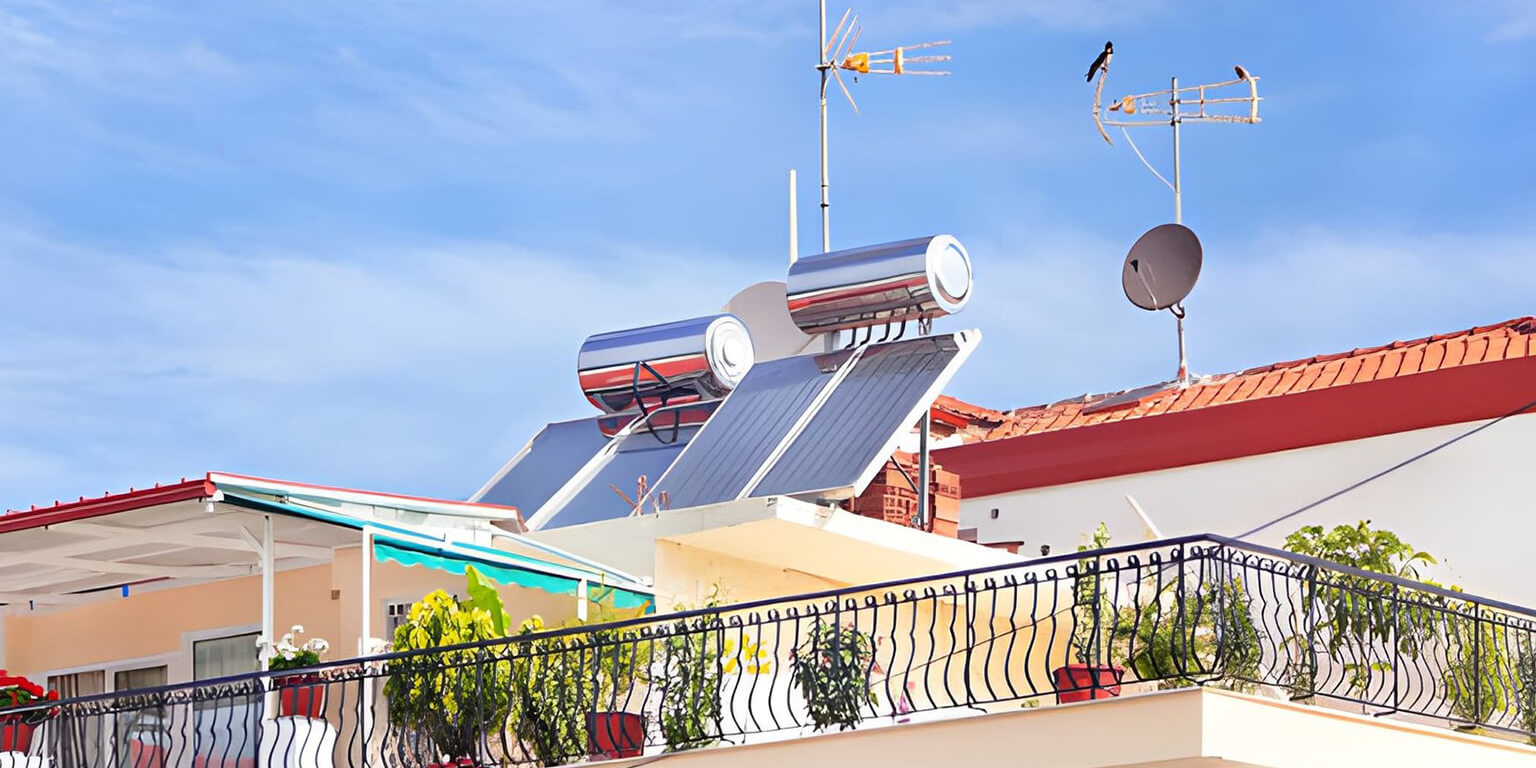
For solar systems specifically, we'd expect 10 to 20 years with proper maintenance, as set out on our solar water heater service page. The collectors often outlast the storage tank, which faces the same scale and corrosion as any other tank.
Why Water Heaters Wear Out Faster in Dubai
Hard water and scale
This is the big one. Minerals in the water settle at the bottom of the tank and build up on the heating element. Scale insulates the element from the water, so it runs hotter and works longer to heat the same amount. Elements burn out sooner, and sediment at the base of the tank traps heat against the steel.
In direct solar systems, where household water runs through the collectors, scale also narrows the collector channels over time.
Corrosion and the anode
Most steel storage tanks have a glass or enamel lining and a sacrificial anode rod. The anode corrodes so the tank doesn't. Once it's used up, corrosion moves on to the tank itself.
That's why anode checks matter so much. A worn anode costs very little to replace. A tank that's corroded through costs a whole new heater.
Heat and how the heater is used
Solar tanks run very hot in summer, and roof-mounted tanks and pipes sit in direct sun for months. Insulation cracks, valves work harder and seals age faster.
Usage plays a part too. A heater in a five-person villa cycles far more than one in a studio apartment. And heaters set much hotter than they need to be put extra stress on the tank and the safety parts.
Skipped servicing
Of all the factors, this is the one you control. A yearly service that flushes sediment, checks the anode and tests the thermostat and relief valve can add years to a heater. Our guide to water heater and geyser maintenance covers what that service should include.
Parts That Wear Out Before the Tank
A water heater isn't one thing that lasts one length of time. Several parts are designed to be replaced during its life.
How to Find Out How Old Your Heater Is
Most owners and tenants have no idea. It's easy to check.
- Look at the rating plate. It's a sticker or metal plate on the side of the tank, and many show the manufacture date directly.
- Decode the serial number. If there's no date, the first few digits of the serial number often encode the month and year. The manufacturer's website or customer service can confirm the format.
- Check your documents. Handover packs, previous invoices or the landlord's records may show when it was installed.
- Ask a technician. During a service, we'll note the age and condition so you have it on record.
In apartments where the heater sits above a bathroom false ceiling, you'll usually need to open the access panel to see the plate. Switch the heater off first and don't reach near the connections.
Signs It's Time to Replace
Age alone doesn't mean a heater needs replacing. A 12-year-old heater in good condition can keep going. But these signs, especially in combination, say it's reaching the end:
- Water leaking from the tank body. This means the lining has corroded through, and it can't be reliably repaired.
- Rusty or discoloured hot water, when the cold water is clear, even after the anode has been checked.
- Heavy corrosion on the outside of the tank, especially at the base or around connections.
- Repeated element failures caused by scale that can't be cleared.
- Several repairs in a short time on a heater over 10 years old.
- Not enough hot water for the household any more, whether through scale reducing capacity or simply a bigger family.
A failed element, thermostat or valve on its own, in an otherwise sound heater, is usually a repair rather than a replacement. If you're unsure, our team handles water heater repairs and replacements in Dubai and can tell you honestly which makes more sense.
When to Replace: Timing Matters
The worst time to replace a water heater is when it's just failed. You're without hot water, you take whatever's in stock, and nobody has time to think about the right size or type.
So if your heater is over 10 years old and showing wear, plan ahead. In Dubai, the cooler months are the easier time for villa owners in particular: roof work is more comfortable, solar systems can be swapped while demand is lower, and you've got time to weigh up options such as moving from electric to solar. Apartment heaters can be replaced at any time of year, but planning still lets you choose the right capacity and brand.
How to Make Your Heater Last Longer
- Service it once a year. Flush the sediment, check the anode, test the thermostat and relief valve.
- Set a sensible temperature. Around 60°C for storage is a common benchmark that balances hygiene and wear. Dubai Municipality's technical guidelines for Legionella control set 60°C as the minimum hot water storage temperature for the buildings they cover.
- Replace the anode before it's gone. It's the cheapest way to protect the tank.
- Keep solar collectors clean so the backup element isn't doing all the work.
- Fix small leaks quickly. A dripping connection can corrode fittings and the tank around it.
- Switch off when you're away for long periods, as the Trakhees alert also recommends.
How We Help
When we service or inspect a water heater, we check its age, the condition of the tank, element, anode, thermostat and valves, and how much scale has built up. Then we tell you plainly how much life we think it has left, and whether a repair, a part replacement or a planned replacement makes most sense.
We work on electric, gas and solar water heaters across Dubai, including the brands most commonly fitted here, and we provide documented service records. If your heater's getting on, book a water heater condition check with GeeM. You can also call us on 800 4336.
Disclaimer: This article is general guidance for homeowners, tenants and landlords. It isn't plumbing, electrical or gas engineering advice. Lifespans are typical figures and vary by model, installation and use. Water heater work involves mains electricity, pressurised hot water and, for gas units, fuel supplies, and should only be carried out by appropriately qualified and licensed professionals.
Frequently Asked Questions

Storage water heaters generally last 10 to 15 years and solar water heaters around 20, according to US Department of Energy figures. In Dubai, hard water and missed servicing can shorten that, while yearly maintenance helps heaters reach the upper end of the range.
A solar water heater typically lasts around 20 years, and 10 to 20 years is a realistic range in Dubai with proper maintenance. The storage tank and parts such as pumps and valves usually need attention before the collectors do.
You can usually find the manufacture date on the heater's rating plate, or work it out from the serial number using the manufacturer's format. Installation invoices, handover documents or a technician's inspection can also confirm it.
Not necessarily, because a 10-year-old heater in good condition can keep working well. Replace it if the tank leaks, the hot water is rusty, the tank is heavily corroded or repairs are becoming frequent.
Yes, hard water shortens a water heater's life by building up scale on the element and at the bottom of the tank. Regular flushing, descaling and anode checks reduce the damage.
Table of content
- Extreme Heat and Overworking
- Poor Maintenance and Dirty Filters
- Incorrect Sizing of AC Units
- Low Refrigerant Levels
Recent Posts

Download our App


© 2026 GeeM.
