Solar Water Heater Not Heating? Problems and Fixes
Post Details
Key Takeaways
- The most common reasons a solar water heater isn't heating are dusty or shaded collectors, a switched-off or failed electric backup, scale build-up, circulation faults and a faulty mixing valve.
- Lukewarm water from a hot tank often points to the mixing valve, not the solar side.
- Hot water in the afternoon but cold water in the morning is normal in winter, and can also mean the tank is losing heat overnight.
- A few safe checks need no tools: the backup isolator, the panels from ground level, and when the problem happens.
- Roof work, valves, pumps and electrical parts belong with a technician.
Why Isn't My Solar Water Heater Heating?
A solar water heater that isn't heating is usually caused by one of five things: collectors covered in dust or newly shaded, an electric backup that's switched off or has failed, scale inside the tank or collectors, a circulation problem such as a failed pump or an air lock, or a faulty thermostatic mixing valve. Most of these can be diagnosed in a single visit.
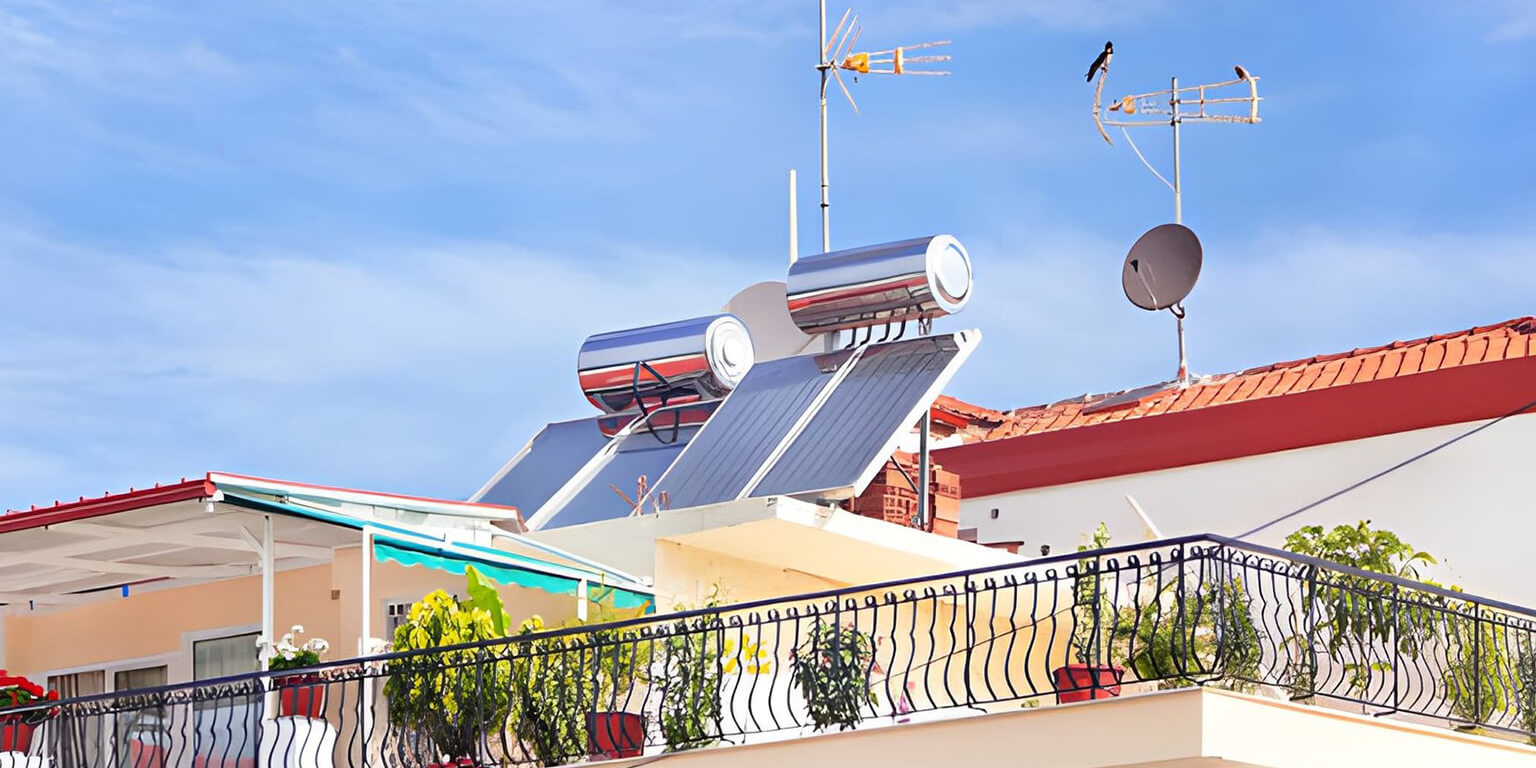
Solar water heaters are simple machines. The sun heats the collectors, the heat moves to the tank, and an electric element tops up the temperature when the sun can't. When hot water disappears, the fault is almost always in one of those three stages.
The trick is working out which one.
In Dubai, you'll find these systems on the roofs of many villas, townhouses and low-rise buildings, partly because Dubai Municipality's circular on solar water heating systems calls for solar water heating in new villas and many other building types, sized to supply at least 75% of hot water demand. So plenty of owners inherit a system they've never had to think about, until one morning the shower runs cold.
Match the Symptom to the Likely Cause
Start here. The pattern of the problem tells you a lot.
The Common Causes, Explained
1. Dusty or shaded collectors
Dust is the number one reason solar water heaters underperform in Dubai. A fine layer on flat plate glass or evacuated tubes cuts how much sunlight reaches the absorber, and after a sandstorm the drop can be sharp.
Shading is the sneaky one. A neighbour's extension, a new pergola, a growing tree or even a newly installed AC condenser can cast a shadow across the panels for part of the day. If your hot water got worse at a specific point, think about what changed around the roof.
The fix is cleaning with plain water and a soft cloth, early in the morning while the glass is cool, or having a technician do it if the roof isn't safely accessible.
2. The electric backup is off or has failed
Every solar system in Dubai has an electric backup element for cloudy days, winter mornings and heavy use. The US Department of Energy notes that solar water heaters may need a backup system for cloudy days or times of high demand, and that's exactly the role it plays.
Many households switch the backup off in summer, when the sun does all the work. Then the weather cools, nobody switches it back on, and the morning showers go cold. Check the isolator switch first. It's often near the tank or outside a bathroom, sometimes with an indicator light.
If the switch is on and you're still getting nothing on cloudy days or early mornings, the element, its thermostat or the controller may have failed. That's a job for a technician, because it involves mains electricity.
3. Scale in the tank or collectors
Dubai's water leaves mineral deposits, and solar systems run hot, which speeds the process up. Scale coats the backup element, settles at the bottom of the tank and, in direct systems where household water flows through the collectors, narrows the collector channels.
The result is slower heating, less usable hot water and sometimes rumbling or popping noises from the tank. Descaling restores performance, and it's one of the core jobs in our solar water heater repair and maintenance service.
4. Circulation problems
Heat has to move from the collectors to the tank. How it does that depends on your system.
- Thermosiphon systems, with the tank on the roof above the collectors, rely on hot water rising naturally. An air lock, a kinked pipe or heavy scale can stop that flow.
- Pumped systems, with the tank indoors, use a small pump, a controller and temperature sensors. A failed pump, a faulty sensor or a controller error stops the transfer completely.
- Closed-loop systems circulate a separate heat transfer fluid. If the fluid leaks or loses pressure, the collectors can sit in full sun without delivering heat.
A clue for pumped systems: if the collectors are very hot to the touch on a sunny afternoon but the tank isn't warming, circulation is the first suspect.
5. A faulty thermostatic mixing valve
Here's the cause most guides miss.
Solar tanks can get far hotter than is safe at a tap, so most systems have a thermostatic mixing valve that blends hot water with cold before it reaches your bathroom. When that valve sticks or fails, it can let through too much cold water. The tank is hot, the system is working, but the shower is lukewarm.
If the pipe coming out of the tank is hot and the water at the tap isn't, the mixing valve is the likely culprit. It can fail the other way too, letting through water that's dangerously hot, which is why it needs a technician rather than a guess.
6. The tank loses heat overnight
If the water's hot in the evening but noticeably cooler by morning, even before anyone's used it, the tank may be losing heat. Common reasons include damaged insulation on the tank or the roof pipes, or a faulty non-return valve that allows warm water to circulate back up to the collectors overnight, where it cools.
Pipe insulation on Dubai roofs takes a beating from UV and heat, and it cracks and falls away over time. It's a cheap fix that makes a real difference.
7. Winter and timing
Some cold water isn't a fault at all.
From December to February, days are shorter and the sun is lower, so solar output drops. A family that showers early, before the collectors have warmed, will rely on the backup element in winter far more than in summer. That's normal. Setting the backup properly, rather than switching it off entirely, solves most winter complaints.
Safe Checks You Can Do Yourself
Before calling anyone, try these. None of them involve climbing onto the roof or opening anything.
- Check the backup isolator is switched on, and that the breaker at your distribution board hasn't tripped.
- Look at the panels from a safe spot. Heavy dust, broken tubes or new shading are often visible from the ground or a terrace.
- Note when it happens. Mornings only, all day, or after heavy use? It narrows the cause down quickly.
- Feel the pipe leaving the tank, if it's safely reachable indoors. Hot pipe and lukewarm tap suggests the mixing valve.
- Look for leaks around the tank, valves and any pipes you can see.
- Check your DEWA bill. A rise in electricity use can mean the backup is covering for a weak solar side.
Our guide to troubleshooting a water heater that isn't heating covers the electric side in more detail, including tripping RCDs and failed elements.
When to Call a Technician
Call a professional for anything involving the roof, pressurised hot water or electricity. In particular:
- Steam at a tap, very hot water or a relief valve that sprays or drips constantly
- Leaks from the tank, collectors or roof pipework
- A breaker or RCD that trips when the backup comes on
- Broken evacuated tubes or cracked collector glass
- Pump or controller error codes
- No improvement after cleaning the panels and checking the backup
Solar tanks can hold water at very high temperatures, and draining or opening them without the right procedure risks scalds.
Repair, or Is It Time to Replace?
Most solar water heater faults are repairable: cleaning, descaling, replacing a valve, pump, sensor, element or section of insulation. Collector damage and tank leaks are bigger decisions. A leaking storage tank usually means the tank needs replacing, and on an older system it can make sense to look at the whole set-up. Our comparison of solar and electric water heaters in Dubai is useful if you're weighing up your options.
How We Fix Solar Water Heaters
We start by finding out which stage has failed: collection, circulation or storage and backup. A technician checks the collectors, the flow between collector and tank, the pump and controller on pumped systems, the backup element and thermostat, the mixing and relief valves, and the insulation.
Before we replace anything significant, such as a collector, we explain what we've found and get your approval on the cost. We service and repair the brands commonly fitted in Dubai, including Ariston, Zenith, VERA, MEGASUN, Kaltech and Green Thermal, on villas, townhouses, low-rise buildings and shared systems, and we provide documented service records, which help with warranty claims.
If your hot water's let you down, book a solar water heater repair with GeeM. You can also call us on 800 4336.
Disclaimer: This article is general guidance for homeowners, landlords and property managers. It isn't engineering advice. Solar water heaters involve pressurised hot water, mains electricity and rooftop work, which carry risks of scalds, electric shock and falls. Repairs should only be carried out by trained, appropriately licensed professionals, and you should always follow your manufacturer's instructions.
Frequently Asked Questions

A solar water heater usually stops heating because of dusty or shaded collectors, a switched-off or failed electric backup, scale build-up, a circulation fault such as a failed pump or air lock, or a faulty mixing valve. Checking the backup switch and the panels is the best first step.
Solar water heaters are often cooler in the morning because the collectors haven't warmed yet and the tank has been used or has lost heat overnight. Setting the electric backup to boost before morning use usually fixes it, but rapid overnight cooling can point to poor insulation or a faulty non-return valve.
Yes, solar water heaters work in Dubai's winter, but output is lower because of shorter days and a lower sun. The electric backup covers the shortfall, so it should be switched on and working from roughly December to February.
If you have hot water on cloudy days or early mornings with the backup switched on, the element is working. If the water stays cold in those conditions, the element, its thermostat or the controller may have failed and should be checked by a technician.
A solar water heater in Dubai should be serviced at least once a year, with collectors cleaned more often because of dust. Heavily used systems, or those in areas with hard water, may need more frequent checks and descaling.
Table of content
- Extreme Heat and Overworking
- Poor Maintenance and Dirty Filters
- Incorrect Sizing of AC Units
- Low Refrigerant Levels
Recent Posts


Download our App


© 2026 GeeM.
