7 Signs Your Boom Barrier Needs Immediate Repair
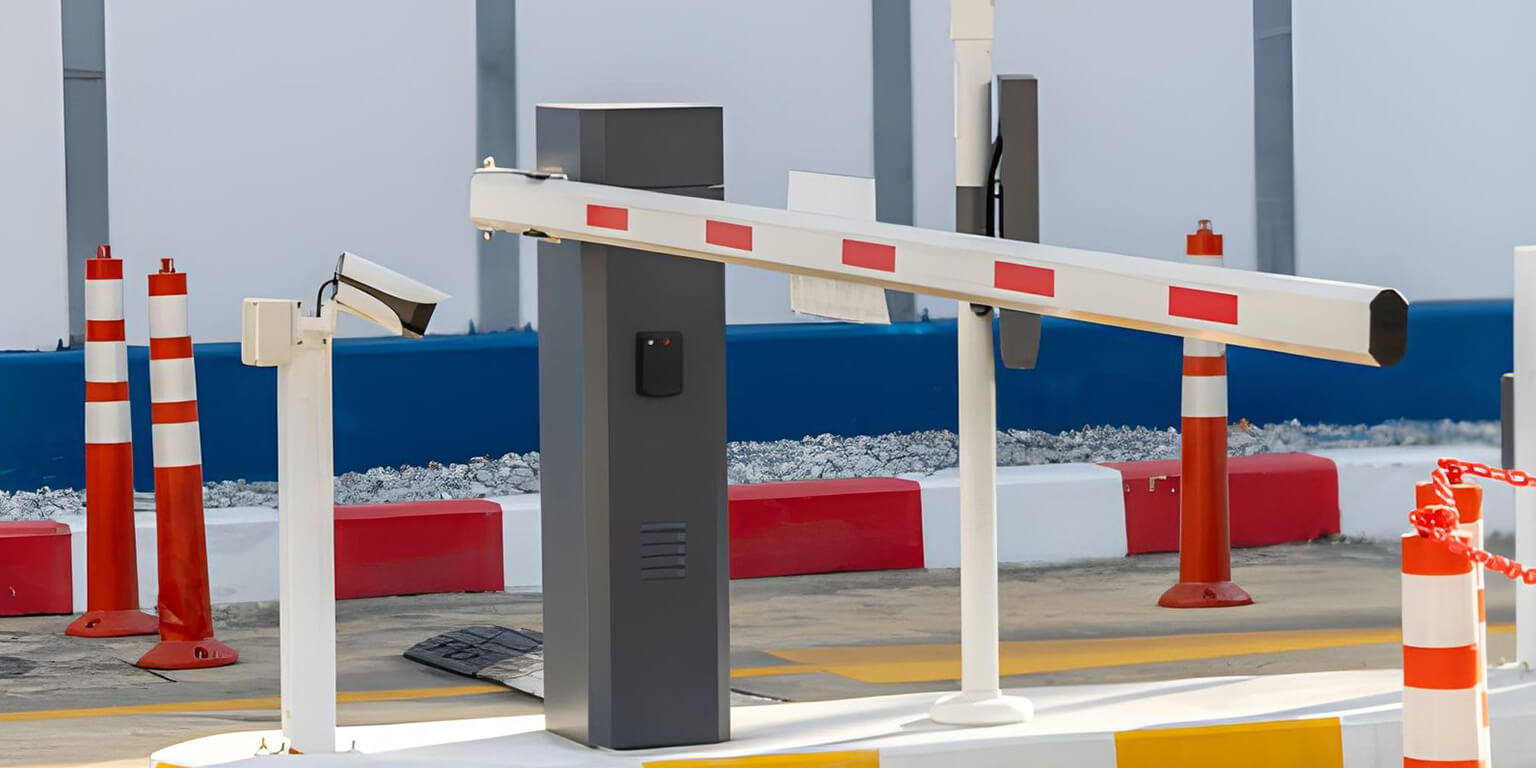
Post Details
Key Takeaways
- Boom barriers rarely fail without warning. Most serious breakdowns are preceded by early signs that something is developing underneath
- Slow arm movement, unusual sounds, inconsistent responses to access credentials, and frequent stopping are all signs that need attention rather than repeated manual resets
- Dubai's heat and dust environment accelerates the wear on barrier components, which means warning signs can develop faster here than property managers might expect
- Ignoring early warning signs almost always leads to more expensive repairs than addressing them promptly would have cost
- Some signs point to specific components: motor, control board, photocells, detection loops, or mechanical joints. Knowing which helps an engineer diagnose faster
- A boom barrier that strikes a vehicle because its safety sensors have failed is both a safety incident and a potential liability issue
- If your barrier is showing more than one of these signs at the same time, treat it as urgent rather than something to monitor
Most boom barrier failures don't arrive without warning. The arm that stops working completely on a busy Thursday morning usually spent the previous few weeks showing signs that something wasn't right. The problem is that those signs are easy to dismiss, especially when the barrier is still opening and closing and daily operations seem fine on the surface.
By the time the system stops entirely, the underlying fault has usually progressed well beyond what it would have cost to fix earlier. That's the pattern we see repeatedly across Dubai properties of all sizes. And it's avoidable, if you know what to watch for.
Here are seven signs your boom barrier needs repair now, not when it's convenient.
Sign 1: The Arm Is Moving Noticeably Slower Than Usual
Speed change is one of the earliest and most reliable indicators of a developing problem, and it's one of the easiest to overlook because the barrier is still working.
A boom arm that used to open in two to three seconds and is now taking five or six is telling you something. In most cases, slowing comes from one of three causes: motor wear or insufficient lubrication increasing mechanical resistance, a counterweight or arm balance issue that's making the motor work harder than it should, or a power supply delivering lower voltage than the motor requires.
Any of these, left unaddressed, will progress. A motor working against increased resistance runs hotter, wears faster, and draws more current than it was designed for. Slowness that's barely noticeable today becomes a barrier that can't complete a full cycle within a few months.
If the arm speed has changed and nobody adjusted the settings, that's a repair call, not a wait-and-see situation.
Sign 2: Unusual Sounds During Operation
Boom barriers should operate quietly. A low motor hum during operation is normal. Grinding, clicking, scraping, or any mechanical sound that wasn't there before is not.
Grinding typically points to lubrication failure in the mechanical components, either the motor's internal gearing, the arm pivot, or both. Metal-on-metal contact without adequate lubrication causes wear that compounds quickly. A grinding sound that goes unaddressed for a few weeks can mean the difference between a lubrication service and a component replacement.
Clicking or snapping sounds during arm movement often indicate a worn pivot joint or a loose component in the arm assembly. In some cases, it can mean the arm itself has a hairline crack that's flexing under load, which is a structural issue that needs addressing before the arm fails completely.
Electrical humming or buzzing that wasn't present before can indicate control board issues or electrical connection problems. Don't ignore it just because the barrier is still operating.
Sign 3: The Barrier Stops Mid-Cycle and Reverses
A barrier that regularly stops mid-operation and reverses is doing exactly what it's designed to do when it detects a fault or obstruction. But when it's doing this consistently without an obvious cause, the detection system itself is the problem.
Photocells with dirty or misaligned lenses generate false obstruction readings. The barrier interprets the weak signal as something being in the path of the arm and stops as a safety measure. Vehicle detection loops with developing faults can also generate false presence signals that prevent the arm from completing its cycle.
Sound familiar? If your barrier reverses consistently in the same position, or at the same time of day when sun angle changes the way light hits the sensor lenses, that's a strong indicator of a sensor issue rather than an actual obstruction. Clean photocell lenses are a quick check. If cleaning doesn't resolve it, the alignment or sensitivity needs professional adjustment.
Repeated cycling through incomplete operations also puts additional wear on the motor. Every unnecessary reversal and restart is an unplanned load cycle on a component that has a finite duty life.
Sign 4: Inconsistent Response to Access Credentials
When authorised vehicles are getting inconsistent results, sometimes the barrier opens immediately and sometimes it doesn't respond at all, the access control system has a fault that needs diagnosis.
RFID reader issues can stem from antenna degradation, connection problems between the reader and the controller, or software faults in the access control database. Long-range readers that used to authenticate vehicles from eight metres away and are now only working at two metres are showing antenna or power supply degradation.
For ANPR systems, inconsistent plate reads can come from camera lens issues, lighting changes at the entry point, or software configuration drift. A camera that's reading plates correctly 70% of the time isn't an acceptable security situation for a commercial or residential property. It means 30% of legitimate vehicles are being delayed or denied access, and the error log is masking the scale of the problem.
The British Security Industry Association's guidance on access control system reliability is clear that inconsistent authentication performance is a maintenance issue requiring investigation, not a normal operational variation to accept.
Sign 5: The Arm Doesn't Stop When It Should
This one is the most serious on the list. A boom barrier arm that doesn't stop when a vehicle is detected underneath it means the safety system has failed.
Vehicle detection loops that aren't registering vehicle presence, photocells that aren't detecting obstructions in the arm's path, or a control board that isn't processing safety sensor inputs correctly can all produce this failure mode. When any of these fails, the arm can descend onto a vehicle that hasn't cleared the barrier, causing vehicle damage and potential injury.
Don't keep operating a barrier that you've seen close on a vehicle or nearly close on one. This is a shut-down-and-call-an-engineer situation, not a reset-and-continue one.
FAAC's technical safety documentation for their barrier systems emphasises that safety sensor function must be verified as part of any maintenance visit precisely because sensor failure in this mode has direct safety consequences. A barrier with failed safety detection isn't just a maintenance problem. It's a liability.
Sign 6: The Control Board Is Showing Error Codes
Many modern boom barrier control boards display error codes through indicator lights, a small display panel, or via a connected software interface. If your barrier has been throwing codes that get manually reset without anyone recording or investigating what they mean, you have an unresolved fault hiding behind a reset button.
Error codes are diagnostic information. A code that appears once and never recurs after a reset might be a transient event worth monitoring. A code that keeps returning, or that's being cleared regularly by a guard or building manager without a qualified engineer reviewing it, is almost always pointing to an ongoing problem that's getting worse.
Control board faults in particular can be difficult to diagnose without specialist equipment. And control boards for specific barrier models aren't always immediately available from local stock, which means a board failure that could have been caught early becomes a waiting-for-parts situation that leaves your entry point non-functional for days.
Sign 7: Visible Physical Damage to the Arm or Housing
Cracks in the boom arm, dents in the motor housing, bent pivot components, or any visible structural damage to the barrier unit are signs that need prompt attention even if the system appears to be working.
A cracked boom arm is the clearest example. A crack in the arm structure will propagate under the repeated mechanical stress of normal operation. What starts as a hairline crack becomes a partial fracture, and a partial fracture eventually becomes a boom arm that fails under load, either dropping suddenly or requiring complete replacement when a controlled repair would have been a fraction of the cost.
Housing damage matters too. Dents or cracks in the barrier unit housing compromise the environmental sealing that protects internal components from Dubai's dust and occasional moisture. Once that seal is compromised, the internal environment of the barrier unit starts resembling the external one, and electronic components don't last long in those conditions.
And if the damage came from a vehicle strike, the internal components may have absorbed more impact than is visible from the outside. A barrier that was hit by a vehicle should be inspected by an engineer even if it appears to be functioning normally after the incident.
What to Do If Your Barrier Is Showing These Signs
Don't keep resetting a barrier that's showing warning signs and hoping it stabilises. That approach delays the inevitable repair while allowing the underlying fault to develop into something more expensive and disruptive.
Note what you're seeing: which sign, how often it occurs, whether it's getting worse, and any error codes that appear. That information helps our engineers arrive with the right diagnostic approach and, where possible, the parts most likely to be needed.
Our boom barrier repair service in Dubai covers all of the fault types described above across all major barrier brands. We carry common replacement parts for the most widely installed systems in Dubai, which reduces the time between diagnosis and resolution for the most frequent repair scenarios.
For properties where barrier reliability is critical and reactive repairs are disruptive, our Annual Maintenance Contract provides scheduled servicing that catches most of these warning signs during routine visits before they develop into failures. For facilities management teams looking after multiple systems, combining barrier maintenance with broader building maintenance under one contract simplifies the whole process considerably.
As a property maintenance company in Dubai with over 20 years of experience, we've seen what happens when warning signs get ignored and what happens when they don't. The properties with the most reliable barrier systems aren't the ones with the newest equipment. They're the ones with the most consistent maintenance.
Don't Wait for a Full Breakdown
Book a Barrier Inspection Today
If your boom barrier is showing any of the signs described above, the right move is an inspection now rather than an emergency callout later.
Contact GeeM today to book a barrier inspection or report a fault. Call us toll-free on 800 4336 or reach us directly on WhatsApp. We cover all areas across Dubai and aim to respond to urgent barrier faults as quickly as possible.
Frequently Asked Questions
.svg)
The most common warning signs include the arm moving slower than usual, unusual grinding or clicking sounds during operation, the barrier stopping mid-cycle and reversing without an obvious obstruction, inconsistent response to RFID cards or ANPR cameras, the arm failing to stop when a vehicle is detected underneath, recurring error codes on the control board, and visible physical damage to the arm or housing.
Slow arm movement usually indicates motor wear, insufficient lubrication in the mechanical components, a counterweight or balance issue making the motor work harder than it should, or a power supply delivering lower voltage than required. All of these causes will worsen over time if not addressed and can lead to complete motor failure if ignored.
A barrier that consistently stops and reverses without an obvious obstruction has a sensor fault that needs professional diagnosis. It's generally safe to continue using it while keeping vehicle operators aware of the inconsistency, but the fault should be investigated promptly. If the barrier is reversing because the arm is actually closing on vehicles, it should be taken out of service immediately and inspected.
Error codes on a barrier control board are diagnostic indicators pointing to a specific fault category. A code that returns after being manually reset is pointing to an unresolved problem that needs engineer investigation. Repeatedly resetting error codes without diagnosis allows the underlying fault to develop and often results in a more expensive repair when the system eventually fails.
Yes. A boom arm with an existing crack or structural damage can fail under the repeated mechanical stress of normal operation. Cracks that are visible should be treated as urgent repair items rather than cosmetic issues. Arm replacement before failure is significantly cheaper and less disruptive than dealing with a sudden structural failure at a busy entry point.
Any fault that affects safety sensor operation, including the arm not stopping for vehicles, should be addressed immediately by taking the barrier out of service until it can be inspected. Other faults such as slow operation, unusual sounds, or inconsistent access responses should be investigated within a few days rather than monitored indefinitely. Dubai's climate means faults that develop slowly in milder environments can progress quickly here.
Scheduled maintenance is the most effective prevention. A proper maintenance programme covering motor servicing, photocell cleaning and alignment, detection loop testing, control board diagnostics, and mechanical lubrication catches developing faults before they cause operational failures. An Annual Maintenance Contract provides this on a scheduled basis and includes priority response when something does occur between visits.
Table of content
- Extreme Heat and Overworking
- Poor Maintenance and Dirty Filters
- Incorrect Sizing of AC Units
- Low Refrigerant Levels
Recent Posts

Download our App







© 2026 GeeM.
.svg)