What Is a Gate Barrier System and How Does It Work?
Post Details
Key Takeaways
- A gate barrier system is an automated device that controls vehicle access to a property by raising and lowering a horizontal boom arm
- Most systems consist of a barrier unit, motor, control board, vehicle detection loops, and an access method such as RFID, remote control, or ANPR cameras
- Boom barriers are the most widely used type in Dubai across residential compounds, office buildings, parking facilities, and industrial sites
- Access technology varies: remote controls suit simple setups, RFID works well for registered vehicle populations, and ANPR is better for high-traffic or visitor-heavy locations
- Dubai's climate places specific demands on barrier hardware, making component quality and regular maintenance more important than in milder environments
- Professional installation, including proper foundation work, electrical connections, and system calibration, directly affects long-term reliability
- Gate barrier systems can be integrated with CCTV, intercoms, access control panels, and parking management software for a complete security setup
Most people have used a gate barrier system without giving it much thought. You pull up, something reads your tag or plate, the arm lifts, you drive through. Simple enough on the surface. But the hardware and logic behind that interaction is worth understanding properly, especially if you're responsible for choosing, installing, or maintaining one for a property in Dubai.
So let's go through it properly, from the basic components to how the different access technologies work and what actually goes into a good installation.
What Is a Gate Barrier System?
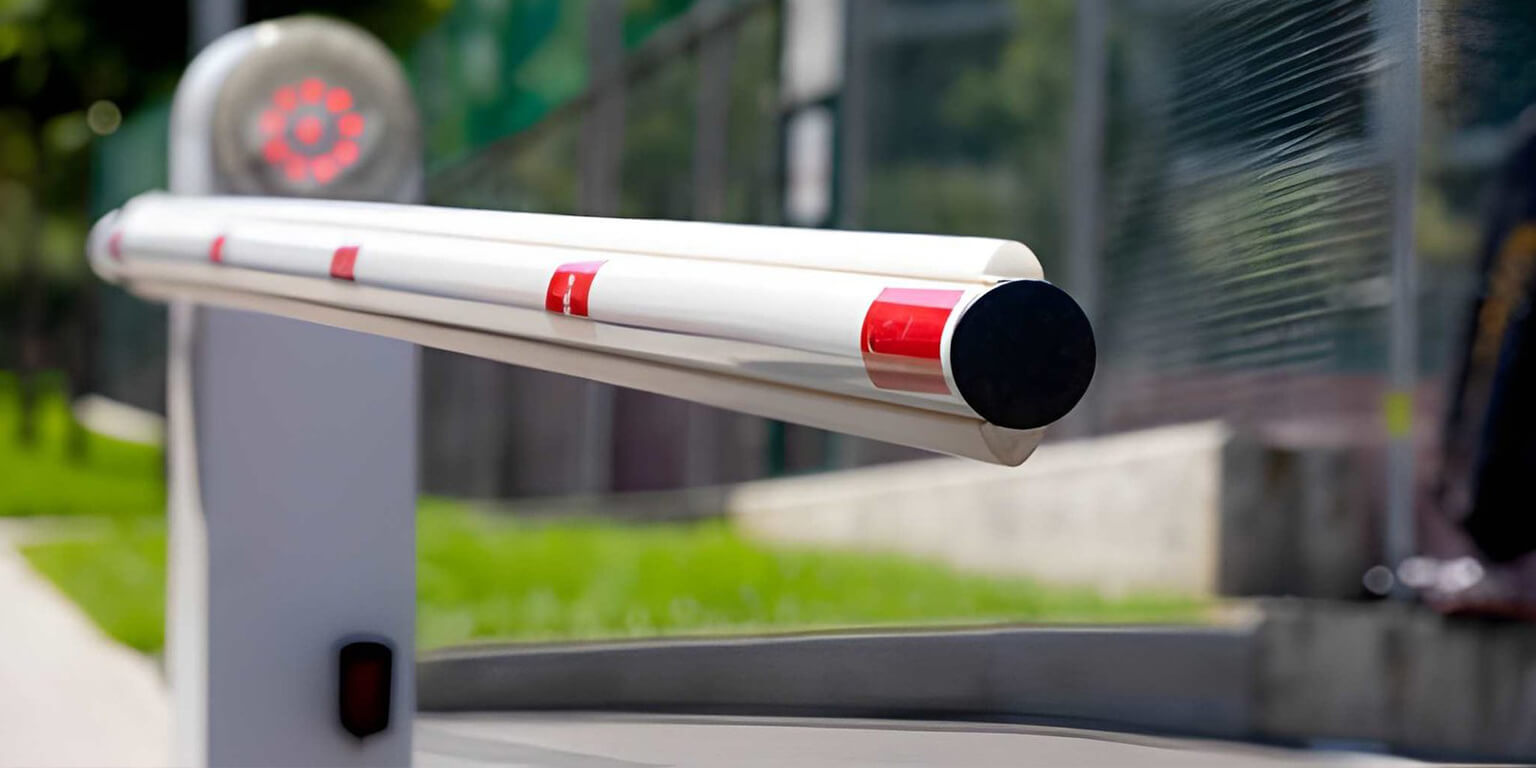
A gate barrier system is an automated device that controls vehicle entry and exit at a specific point. At its core, it's a motorised boom arm mounted on a post that rises to allow a vehicle through and lowers to block access. When a vehicle is authenticated as authorised, the arm lifts. When it isn't, it stays down.
That's the simple version. But the actual system doing that job includes several components working together, and understanding each one helps you make better decisions when you're specifying or reviewing a system for your property.
The Main Components of a Gate Barrier System
The Barrier Unit and Boom Arm
The barrier unit is the housing that contains the motor and mechanical components. It sits at the side of the access point, and the boom arm extends horizontally across the lane when closed. Boom arm lengths typically range from 3 metres for standard vehicle lanes up to 6 metres or more for wide industrial or commercial entrances.
Arm material matters more than it might seem. Aluminium arms are lighter and reduce motor load, extending motor life in high-cycle applications. Some arms include integrated LED lighting for visibility at night and to signal open or closed status to approaching drivers.
The Motor and Control Board
The motor is what physically raises and lowers the arm. Control boards manage the logic: when to open, how long to stay open, what to do if a vehicle is detected underneath when the arm tries to close, and how to communicate with the access control system.
Motor duty cycle is an important specification that's often overlooked. A system rated for standard residential use might open and close a few dozen times per day comfortably. A barrier at a busy commercial car park entrance might need to handle hundreds of cycles daily, which requires a heavy-duty motor rated for continuous or intensive use. Specifying the wrong duty cycle for your traffic volume is one of the more common mistakes we see, and it leads to premature motor failure.
Vehicle Detection Loops
Installed beneath the road surface at the entry and exit points, inductive loop detectors sense the presence of a vehicle by detecting the metal mass above them. They tell the control board when a vehicle is waiting, when it has cleared the barrier, and when it's safe to lower the arm again.
Without properly functioning loops, the system can't reliably prevent the arm from closing on a vehicle that hasn't fully passed through. This is a safety function, not just a convenience one.
Safety Sensors and Photocells
Photocells, which are infrared sensors positioned on either side of the boom arm path, detect any obstruction as the arm descends. If anything breaks the beam, the arm stops and reverses. Combined with vehicle detection loops, these form the safety layer that prevents the barrier from striking a vehicle or pedestrian.
Safety standards for automated vehicle barriers require these protective features as part of any properly installed automated access system.
How Does a Gate Barrier Open? The Access Methods
This is where systems differ most significantly. The barrier hardware is fairly consistent across most installations. The access method is what changes based on your property type and how you manage vehicle access.
Remote Control
The simplest method. Authorised users carry a handheld remote, press a button, and the barrier opens. Works well for very small residential applications or where only a handful of vehicles need access. Not practical for larger properties where issuing and managing individual remotes becomes operationally complex.
RFID Access
RFID (Radio Frequency Identification) uses a tag mounted in or on the vehicle and a reader installed at the barrier. When the vehicle approaches within range, the reader detects the tag's signal, checks it against the authorised list, and triggers the barrier to open.
Long-range RFID readers can authenticate vehicles from several metres away, which means the barrier can begin opening before the vehicle has fully stopped. For residents of a compound or staff at an office building, this is smooth and fast. Every authorised vehicle needs a registered tag, which makes visitor management slightly more involved for high-traffic locations.
ANPR Cameras
ANPR, or Automatic Number Plate Recognition, uses cameras to photograph and read each vehicle's license plate in real time. The plate is checked against a database, and access is granted or denied automatically. No physical tag is needed. The vehicle's plate is the credential.
This works particularly well for properties with high visitor volumes, where pre-registering plates is more practical than issuing RFID tags. Hotels, hospitals, and large commercial complexes often use ANPR for exactly this reason. ANPR technology is now widely used across commercial vehicle access applications globally and performs reliably when cameras are correctly specified and positioned.
Intercom and Push-Button Systems
For visitor management at smaller properties, an intercom allows a visitor to announce themselves to a guard or resident who then triggers the barrier remotely. Push-button systems give security personnel direct manual control. These are often used alongside RFID or ANPR rather than as standalone access methods.
Where Gate Barrier Systems Are Used in Dubai
Across Dubai, you'll find gate barriers in a wider variety of locations than most people initially consider.
Residential compounds and villa communities use them to control entry and exit for residents and log visitor access. Office buildings rely on them for staff parking management and visitor vehicle control. Shopping malls and retail centers use high-speed, heavy-duty barriers to handle large vehicle volumes efficiently. Hospitals need them to separate emergency vehicle lanes from general visitor access. Industrial facilities and warehouses use them to restrict entry to authorised vehicles only.
And that variety matters when specifying a system. A barrier suited to a quiet villa compound is not the same product as one installed at a busy commercial car park entrance handling hundreds of vehicles per day. Getting the duty cycle, access technology, and integration requirements right for your specific use case is what determines whether the system performs reliably over the long term.
Our gate barrier system installation in Dubai covers all of these property types, and we carry out a site assessment before specifying any system to make sure the recommendation fits the actual requirements of the site.
What Makes a Good Gate Barrier Installation?
The hardware is only part of the answer. How it's installed has a direct effect on how well it performs and how long it lasts.
Foundation work comes first. The barrier post needs a properly prepared concrete foundation to sit level and stable. A post that shifts or settles over time affects arm alignment and puts stress on the motor. Getting this right at installation avoids problems that are expensive to fix later.
Electrical connections need to be properly rated, weatherproofed, and routed to protect against Dubai's heat and occasional humidity. Loop detectors need to be installed at the correct depth and loop geometry to function reliably. Photocells need to be aligned precisely. And the whole system needs to be calibrated and tested under realistic traffic conditions before handover.
None of this is complicated when it's done by engineers who install these systems regularly. But cutting corners on any of it creates reliability problems that take months to properly diagnose and fix.
How Gate Barriers Integrate With Other Security Systems
A gate barrier operating as a standalone device does one job: it controls vehicle access at that point. But most modern property security setups connect barrier systems with other technologies to create a more complete picture.
CCTV integration means cameras at the barrier point are recording every entry and exit, providing visual records alongside the access log from the barrier controller. This is useful for investigating incidents and for general security monitoring.
Intercom integration allows two-way communication between a visitor at the barrier and a guard or resident inside the property. Combined with a camera at the intercom unit, this gives reception or security personnel visual confirmation of who is requesting access before granting it.
Access control panel integration means the barrier is part of a broader access management system covering both vehicle and pedestrian entry points. For larger commercial properties and residential developments, this kind of centralised management is increasingly standard.
Parking management software integration enables paid parking operations, occupancy tracking, overstay reporting, and revenue management. This is most common in commercial car parks, malls, and hospitality properties.
What Dubai's Climate Means for Gate Barrier Systems
This is worth its own section because it genuinely affects both product selection and maintenance planning.
Dubai's summer temperatures regularly exceed 45°C. UV exposure is intense for most of the year. Sand and dust intrusion into mechanical and electronic components is a constant factor. And the combination of daytime heat and cooler overnight temperatures creates thermal cycling stress on materials and electrical connections over time.
Not every gate barrier system on the market is built to handle this. Control boards that work reliably in a European climate may struggle with sustained heat exposure. Motor windings rated for standard ambient temperatures may overheat under continuous use in summer months. Housing that isn't properly sealed against dust ingress will have problems over time.
When we specify and install automatic gate barriers in Dubai, component selection accounts for UAE operating conditions specifically. And our maintenance programs through AMC packages include summer checks designed around the additional stress the climate places on these systems.
As a property maintenance company in Dubai with over 20 years of experience across residential, commercial, and industrial sites, we've seen the difference between systems that are properly specified for UAE conditions and those that aren't. It shows up clearly in the maintenance records over the first two or three years of operation.
Book Your Gate Barrier Assessment Today
Talk to Our Engineers Before You Commit to Anything
Whether you're planning a new installation, replacing an existing system, or trying to understand what's right for your property, a free site assessment is the most useful starting point. Our engineers evaluate your access points, traffic volumes, and integration requirements before recommending any specific system or technology.
Contact GeeM today to book your assessment or request a quotation. Call us toll-free on 800 4336 or reach us directly on WhatsApp. We cover all areas across Dubai and can arrange a site visit within 24 to 48 hours of your enquiry.
Frequently Asked Questions
.svg)
A gate barrier system controls vehicle access to a property by raising and lowering a motorised boom arm. It's used in residential compounds, office buildings, car parks, shopping malls, hospitals, industrial facilities, and any location where vehicle entry needs to be restricted or managed.
A gate barrier system consists of the barrier unit, motor, control board, boom arm, vehicle detection loops embedded in the road surface, safety photocells, and an access method such as RFID readers, ANPR cameras, remote controls, or an intercom. All these components work together to detect, authenticate, and process vehicle access.
When an authorised vehicle is detected by the access system (via RFID tag, license plate recognition, remote control, or manual trigger), the control board signals the motor to raise the boom arm. Once the vehicle has fully cleared the barrier and the loop detector registers the lane is clear, the arm lowers automatically.
These terms are often used interchangeably. A boom barrier (also called a boom gate) refers specifically to the horizontal arm-based barrier design. Gate barrier is a broader term that covers boom barriers and similar vehicle access control systems. In Dubai, boom barriers are the most commonly installed type for parking and access control applications.
A quality gate barrier system that's properly installed and regularly maintained can last ten years or more in UAE conditions. Systems that aren't suited to the local climate or that go without maintenance typically fail significantly earlier. Motor duty cycle rating, component quality, and maintenance frequency are the biggest factors affecting lifespan.
Yes. Gate barrier systems can be integrated with CCTV cameras, intercoms, access control panels, face recognition systems, and parking management software. Integration is handled at the control board level and allows all access events to be logged, monitored, and managed from a central system.
Yes. Regular maintenance covers motor health checks, loop detector testing, photocell alignment, control board inspection, lubrication of mechanical components, and software updates. In Dubai's climate, summer servicing is particularly important due to the heat and dust exposure that accelerates component wear. An Annual Maintenance Contract provides scheduled servicing and priority breakdown support throughout the year.
Table of content
- Extreme Heat and Overworking
- Poor Maintenance and Dirty Filters
- Incorrect Sizing of AC Units
- Low Refrigerant Levels
Recent Posts


Download our App







© 2026 GeeM.
.svg)