Water Heater Repair vs Replacement: How to Decide
Post Details
Key Takeaways
- Repair a water heater when the tank is sound and the fault is a replaceable part, such as an element, thermostat, relief valve or connection.
- Replace it when the tank itself leaks, the heater is near the end of its typical life, or repairs keep coming back.
- A leaking tank body can't be patched reliably. That's almost always a replacement.
- Dubai's hard water speeds up wear, so a heater here may reach "old" sooner than the age on its label suggests.
- Safety comes first. A heater with a failed thermostat and no working cut-out or relief valve shouldn't be kept running while you decide.
The Short Answer
Repair your water heater if the tank is in good condition and the problem is a single replaceable part, like a heating element, thermostat, relief valve or leaking connection. Replace it if the tank is leaking or badly corroded, the heater is close to the end of its expected life, or you're paying for repeated repairs that don't last.
Most decisions fall clearly on one side. A failed element in a five-year-old heater? Repair. Water seeping from the tank body of a twelve-year-old one? Replace.
It's the cases in between that cause the hesitation, and that's what this guide is for.
We'll walk through the five things we look at when we give this advice: the type of fault, the age of the heater, its repair history, its condition inside, and whether it still suits how you live. If your heater has simply stopped heating and you're not sure why, start with our guide to troubleshooting a water heater that isn't heating, then come back here.
Repair or Replace: Quick Comparison
1. What Exactly Has Failed?
Start with the fault, because it decides more than anything else.
A storage water heater is a tank with parts attached to it. The parts wear out and can be swapped. The tank can't.
Parts that are usually worth replacing:
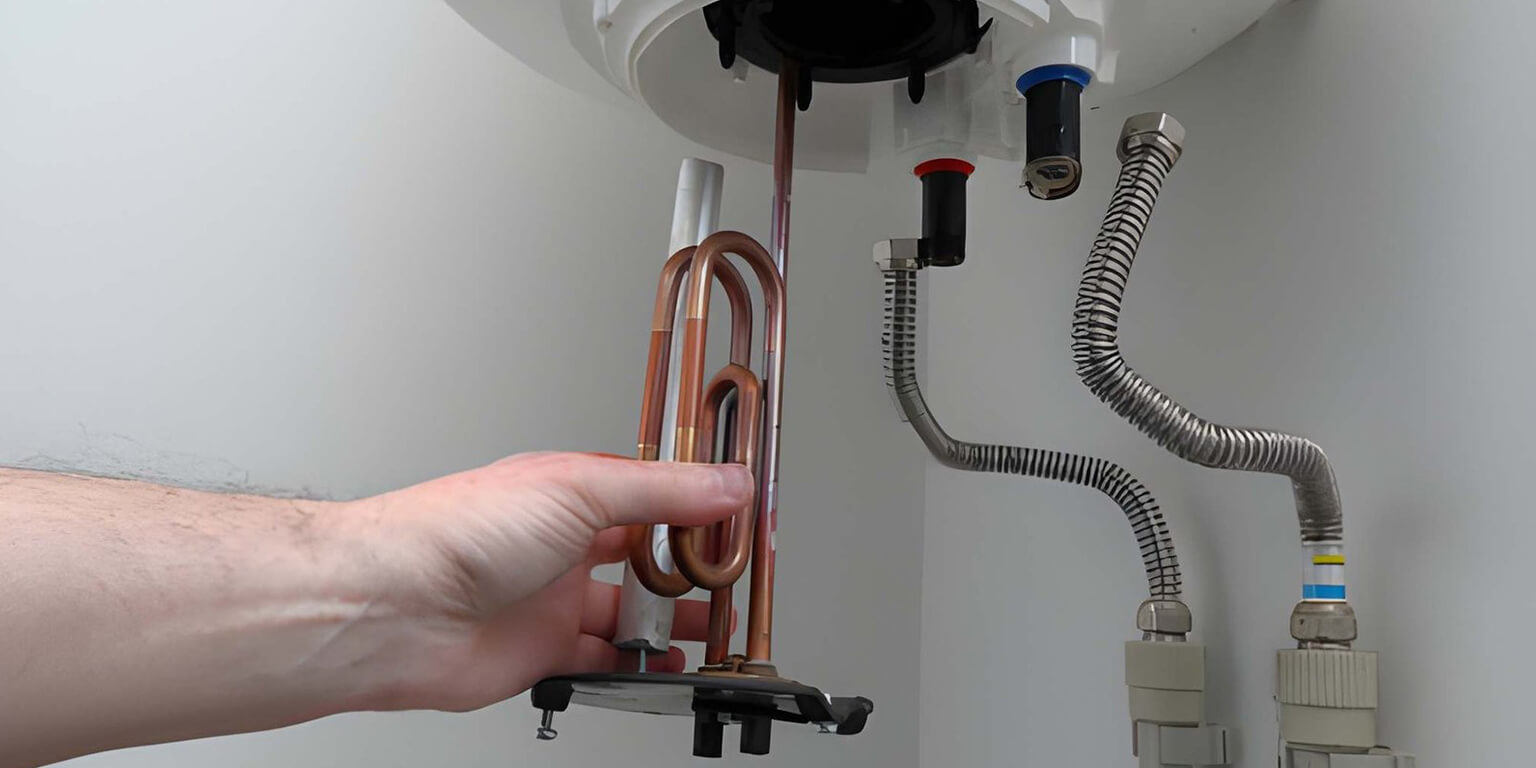
- Heating element. The most common failure in electric heaters, often caused by scale. A straightforward swap.
- Thermostat. Causes water that's too cold, too hot or inconsistent. Replaceable.
- Thermal cut-out. The safety switch that cuts power if water overheats. Must work, and can be replaced.
- Temperature and pressure relief valve. Drips, sticks or won't reseat. Replaceable, and it shouldn't ever be capped.
- Anode rod. The sacrificial rod that protects the tank lining. Replacing it on time can extend the tank's life.
- Connections and valves. Inlet, outlet and drain valve leaks are normally simple repairs.
These parts matter for safety as well as comfort. A safety alert from Trakhees, the regulator for Dubai's Ports, Customs and Free Zone Corporation, recommends regular inspection of the thermostat and relief valve, and replacing them every two years, with certified components. So swapping these parts isn't a sign your heater is failing. It's part of keeping it safe.
Faults that usually mean replacement:
- Water leaking from the tank body or seams
- Heavy corrosion on the tank, especially around the base
- A tank so full of scale that elements keep burning out
A leaking tank means the inner lining has corroded through. There's no reliable way to patch it, and it'll only get worse.
2. How Old Is the Heater?
Age doesn't decide on its own, but it changes the maths.
According to the US Department of Energy, storage water heaters typically last 10 to 15 years, while solar water heaters last around 20. Those are general figures. Water quality, usage and maintenance push real lifespans up or down.
In Dubai, the pressure is mostly downwards. Mineral deposits build up on elements and at the bottom of the tank, which makes the heater work harder and wears the anode faster. A heater that's never been flushed or had its anode checked can age well ahead of its years. Our article on hard water in Dubai explains why.
You'll usually find the manufacture date on the rating plate or in the serial number. As a rough guide:
3. How Often Has It Needed Fixing?
One repair in a few years is normal wear.
Three call-outs in a year is a pattern. Usually it means scale or corrosion is attacking the heater from the inside, and each new part fails for the same underlying reason. At that point, you're paying to delay a replacement, not avoid it.
A simple test: add up what you've spent on the heater in the past couple of years, then add the repair you're being quoted. If that total is getting close to the cost of a new, installed heater, replacement is usually the better use of the money. Many technicians use a rough rule that a repair costing more than about half the price of a new heater, on an older unit, isn't worth it. It's a rule of thumb, not a law, but it's a sensible place to start.
4. What Does the Inside Tell You?
A technician can learn a lot from what comes out of the tank.
When we drain or flush a heater, we look at the amount of sediment, the condition of the element and the state of the anode. A heavily crusted element and an anode that's almost gone on a heater that's never been serviced tell us the tank lining may already be under attack. Rusty water from the hot tap only, but not the cold, points the same way.
Light sediment and a healthy anode, on the other hand, suggest a heater with plenty of life left once the faulty part is replaced.
5. Does It Still Suit Your Home?
Sometimes the heater works fine. It's just the wrong heater.
If the family's grown, the hot water runs out halfway through the second shower, or you've added a bathroom, no repair will fix that. A failure is a good moment to rethink capacity rather than replacing like for like.
It's also a chance to think about the type. Villa and townhouse owners replacing an old electric heater sometimes look at solar, which Dubai Municipality's circular on solar water heating systems already calls for in new villas and many other new buildings. Our comparison of solar water heaters in Dubai covers running costs, payback and suitability.
Access matters too. Many Dubai apartments have the heater above a bathroom false ceiling. Replacing a ceiling-mounted unit takes more work than a wall-mounted one, which is worth factoring in, but it's rarely a reason to keep a failing tank.
When Safety Makes the Decision for You
Some situations don't leave room for weighing up costs.
Switch the heater off and get it checked straight away if you see steam from a tap, a relief valve spraying, scorch marks or a burning smell at the switch, or water leaking near electrical fittings. Until a technician confirms the thermostat, cut-out and relief valve all work, the heater shouldn't run. If the safety parts can be replaced and the tank is sound, a repair is fine. If not, replace it.
Landlords and Tenants
In a rented home, the tenant should report the fault and the landlord normally decides whether to repair or replace, depending on what the tenancy contract says. Landlords often lean towards repair to keep costs down, which makes sense on a young heater. On an older one with a corroding tank, a replacement now usually costs less than a string of call-outs, a flooded ceiling and an unhappy tenant.
How We Help You Decide
We don't start with a recommendation. We start with a diagnosis.
Our technician checks the power supply, element, thermostat, safety valve, anode and connections, looks at the tank's condition and asks about its age and history. Then we explain what we found and give you a clear, no-obligation estimate for both options where both make sense, so you can choose with the full picture.
If replacement is the right call, we install electric, gas and solar water heaters from brands including Ariston, Bosch, Rheem, AO Smith and Ferroli, and same-day replacement is available on popular models we keep in stock. You can read more about our water heater repair and replacement service in Dubai, or book a water heater inspection with GeeM and we'll help you make the call. You can also reach us on 800 4336.
Disclaimer: This article is general guidance for homeowners, tenants and landlords. It isn't plumbing, electrical or gas engineering advice. Water heater repairs and installations involve mains electricity, pressurised hot water and, for gas units, fuel supplies, and should only be carried out by appropriately qualified and licensed professionals. Prices are indicative and depend on the heater, the fault and the installation.
Frequently Asked Questions

It's better to repair a water heater when the tank is sound and only a part like the element, thermostat or valve has failed. It's better to replace it when the tank leaks, the heater is near the end of its life, or repairs keep recurring.
Storage water heaters generally last 10 to 15 years, according to the US Department of Energy, but Dubai's hard water can shorten that if the heater isn't flushed and its anode isn't checked. Regular servicing helps a heater reach the upper end of its expected life.
No, a leak from the tank body itself can't be repaired reliably, because it means the inner lining has corroded through. Leaks from pipes, valves or connections, on the other hand, are usually simple to fix.
Water heater repairs in Dubai typically cost around AED 200 to AED 1,200, depending on the fault and the type of heater. A new heater including installation usually costs around AED 800 to AED 4,500, with electric units at the lower end and solar systems at the higher end. We give a clear estimate after inspecting your heater.
The main signs are water leaking from the tank, rusty water from the hot tap, heavy corrosion on the tank, repeated element failures and a heater that's over 10 years old. Not having enough hot water for your household is also a reason to replace with a better-sized unit.
Table of content
- Extreme Heat and Overworking
- Poor Maintenance and Dirty Filters
- Incorrect Sizing of AC Units
- Low Refrigerant Levels
Recent Posts
Download our App


© 2026 GeeM.
