Solar Water Heater Maintenance Checklist and Schedule for Dubai
Post Details
Key Takeaways
- A solar water heater in Dubai needs light checks every month, a collector clean after dust storms, a pre-summer safety check and a full professional service at least once a year.
- Dust and hard water are the two main enemies. Dust cuts how much heat the collectors absorb, and scale builds up in the tank and on the backup element.
- Summer brings very high tank temperatures, so the relief valve and the thermostatic mixing valve need checking before the hot months.
- The electric backup element can hide a failing solar side. Rising DEWA bills are often the first clue.
- Keep a dated service record. Many manufacturers expect regular professional maintenance to keep a warranty valid.
How Often Does a Solar Water Heater Need Maintenance?
A solar water heater in Dubai should get a full professional service at least once a year, with simple owner checks every month, collector cleaning after dust storms or every few months, and a safety check on the relief and mixing valves before summer. Homes with hard water, heavy use or systems over five years old may need servicing more often.
That's the short version. The rest of this post breaks it down into a checklist you can actually follow.
Solar water heaters have a reputation for being "fit and forget". On a mild climate rooftop, they nearly are. Dubai is different. Fine dust settles on the collectors within weeks, summer roof temperatures push the system hard, and the mineral content in the water slowly coats everything inside the tank. None of that is dramatic. But it adds up, and a system that's quietly lost half its solar output will still give you hot water, because the electric backup element takes over.
You just pay for it.
We've written this for villa and townhouse owners, landlords and property managers. It works for most common set-ups, whether you have flat plate panels or evacuated tubes, a thermosiphon tank on the roof or a pumped system with the tank indoors. Always check your own system's manual too, as intervals vary by brand.
Why Solar Water Heaters Need More Care in Dubai
Plenty of homes in Dubai have one, and not by accident. Dubai Municipality's circular on solar water heating systems calls for solar water heating in new residential villas and many other building types, sized to supply at least 75% of the building's hot water demand. So if you live in a newer villa or townhouse, there's a good chance one is on your roof.
Three things make maintenance here different from the brochures.
Dust. Fine sand coats the glass of flat plate collectors and the outside of evacuated tubes. A dusty collector absorbs less sunlight, and after a sandstorm the drop can be significant.
Hard water. Mineral deposits build up in the storage tank, on the heating element and, in direct systems, inside the collector channels. Scale insulates surfaces that are meant to transfer heat. If you've seen white crust on your taps, you'll have it in the tank as well. Our article on why Dubai's water causes scale explains where it comes from.
Summer heat. From June to September, collectors can drive the tank to very high temperatures, especially when the family's away and nobody's drawing hot water. That's when the temperature and pressure relief valve does its job, and when a worn mixing valve becomes a scalding risk at the tap.
The Complete Solar Water Heater Maintenance Checklist
Here's the full checklist, grouped by how often each task should happen. The owner tasks need no tools and no roof access beyond what's safe for you. Everything marked for a technician should be left to one.
Monthly checks you can do yourself
Start with the easy stuff. Walk past the tank and look at the floor beneath it. Check joints and valves for drips or green and white crusting, which usually points to a slow leak.
Then run a hot tap. You know roughly how hot your water usually gets at a given time of day, so notice if it changes. A slow drop in afternoon temperature on a clear day often means the collectors are dirty or circulation isn't working properly.
And look at the bill. If electricity use climbs while your habits haven't changed, the backup element may be doing the solar side's job.
Collector cleaning
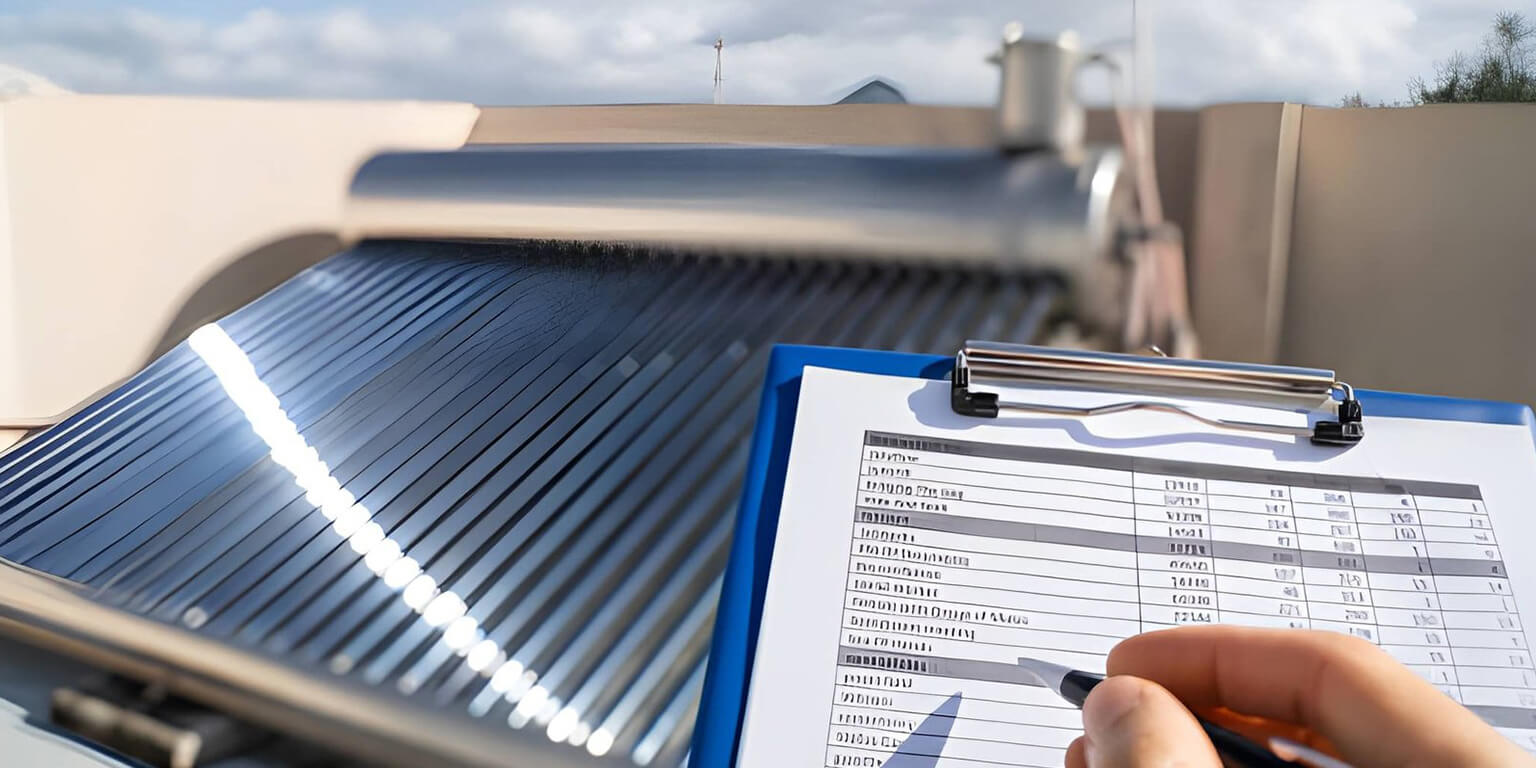
Clean the collectors after any dust storm, and every two to three months otherwise. Do it early in the morning, when the glass is cool. Cold water on hot glass in the middle of a Dubai afternoon can crack it.
Plain water and a soft cloth or sponge are enough. Skip abrasive pads and strong detergents, which can scratch the glass or damage coatings. For evacuated tubes, take care not to knock or twist them.
If your system is on a pitched or high roof, don't climb up yourself. A technician can clean the collectors as part of a routine visit.
Pre-summer safety check
This is the one we'd never skip.
Before June, a technician should test the temperature and pressure relief valve, which releases water if the tank gets too hot or the pressure climbs too high. A valve that's stuck with scale can't do that. A valve that drips constantly may be worn, or may be signalling that the tank is regularly overheating.
The thermostatic mixing valve deserves the same attention. Solar tanks can store water far hotter than is safe at a tap, and the mixing valve blends it down. When it fails, outlet temperatures can climb without warning, which matters most in homes with children or older family members.
Going away for the summer? Tell your technician. Long periods with no hot water use mean more time at high temperatures, and some systems have a holiday mode or need a cover over the collectors.
Pre-winter check
Dubai's winter is mild, but December to February brings shorter days and the odd cloudy spell. The backup element runs more, so make sure it's working and its thermostat is set sensibly.
Temperature matters for hygiene too. Dubai Municipality's technical guidelines for Legionella control in water systems set hot water storage at a minimum of 60°C for the buildings they cover. That's a useful benchmark for any home. Turning the backup thermostat right down to save electricity in winter can leave stored water sitting in a lukewarm range for long periods, which isn't what you want.
What Happens During a Professional Annual Service
A yearly service should be thorough, not a quick look from the ladder. Here's what we'd expect it to include.
- Collector inspection and cleaning. Glass, tubes, seals, frames and mounting bolts, plus a check for shading from new structures or plants.
- Tank inspection. Outer casing, insulation, connections and signs of corrosion or seepage.
- Sediment flushing. Draining sediment from the bottom of the tank to restore capacity and protect the element.
- Anode check. Inspecting the sacrificial anode that protects the tank lining, and replacing it if it's heavily worn.
- Valve testing. Relief valve, mixing valve, non-return and isolation valves.
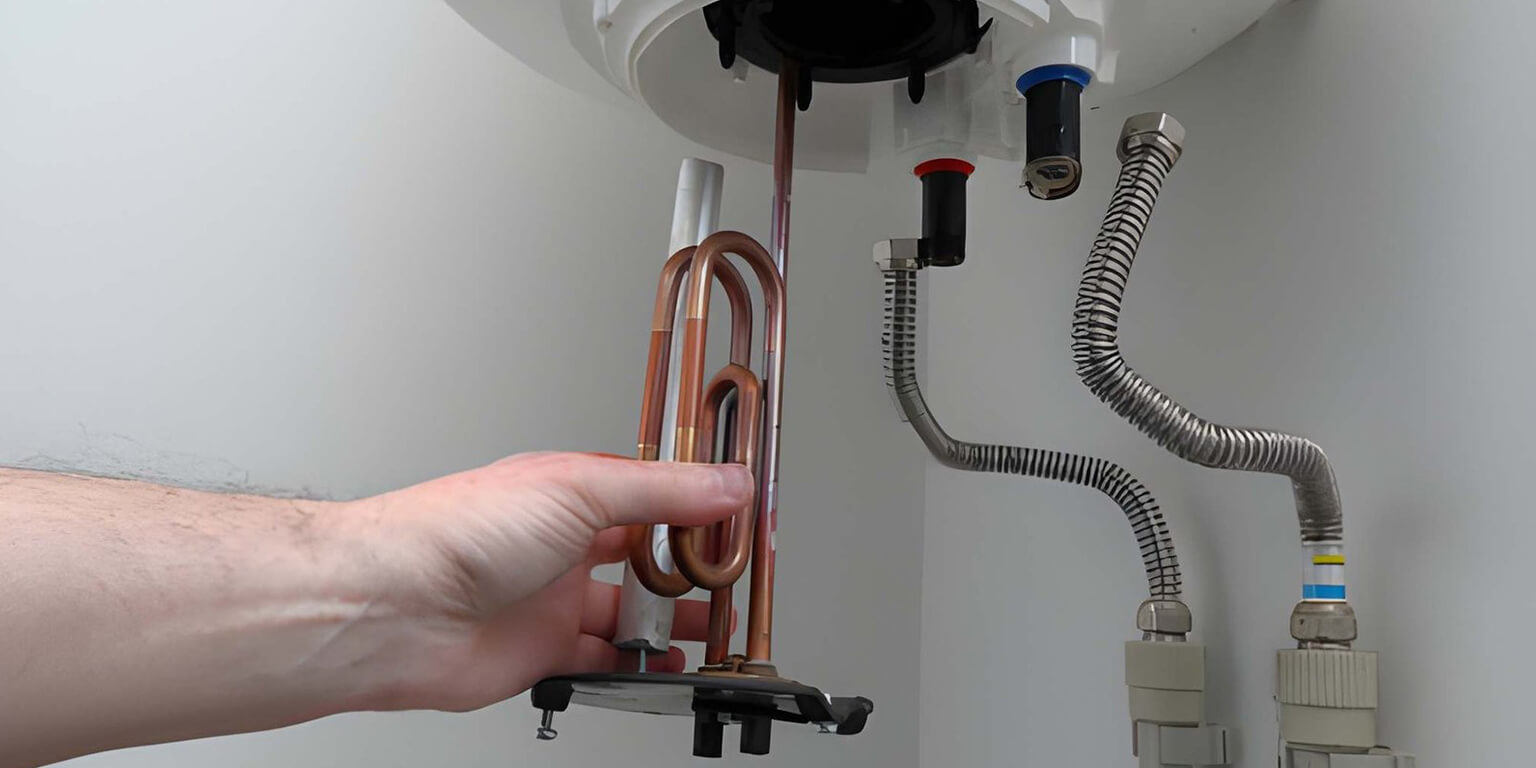
- Backup element and thermostat. Checking element condition, scale build-up and thermostat accuracy.
- Circulation. Pump, controller and sensors on pumped systems, and flow between collector and tank on thermosiphon systems.
- Pipework and insulation. Roof pipe runs, insulation condition and any UV damage.
- Fluid check. On indirect, closed-loop systems, the condition and pressure of the heat transfer fluid.
- Report. A dated record of what was checked, what was found and what's recommended.
Our solar water heater repair and maintenance service covers inspection, tank descaling, collector cleaning, insulation checks, pump servicing and leak repair, and we work on the brands commonly installed in Dubai, including Ariston, Zenith, Kaltech and Green Thermal. We provide documented service records, which help if you ever need to make a warranty claim.
Checks That Depend on Your System Type
Not every item applies to every system. Use this to see which ones matter for yours.
Warning Signs Between Services
Don't wait for the next scheduled visit if you notice any of these:
- No hot water, or water that's only lukewarm on sunny days
- Water that's suddenly much hotter than usual at the tap
- A relief valve that drips constantly or discharges often
- Rusty, brown or smelly hot water
- Banging, knocking or hissing from the tank
- Leaks, damp patches or stains on the ceiling below a roof tank
- Cracked collector glass or broken tubes
- A breaker that trips when the backup element switches on
- A DEWA bill that keeps rising with no change in use
Most of these have simple fixes when they're caught early. For a deeper look at the electric side, our guide to water heater and geyser maintenance covers tank flushing, anodes and thermostats in more detail.
Can You Do It Yourself?
Some of it, yes. Monthly checks, keeping an eye on bills and gentle collector cleaning from a safe spot are all reasonable owner jobs.
The rest isn't. Relief valves, mixing valves, the backup element and anything involving draining a pressurised tank of very hot water carry real risk of scalds, electric shock and water damage. Roof work adds a fall risk on top. Those jobs belong with trained technicians.
How We Keep Solar Water Heaters Running
We service solar water heaters in villas, townhouses, low-rise buildings and shared residential and commercial systems across Dubai. Every visit follows the same idea: find the small problems before they turn into a failed tank or a summer of electric-only heating.
If you'd like it handled on a schedule rather than remembered, solar water heater checks can be added to a home maintenance contract alongside your AC, plumbing and electrical. Or, if it's been a while since your system was last looked at, book a solar water heater service with GeeM. You can also call us on 800 4336.
Disclaimer: This article is general guidance for property owners and managers. It isn't engineering advice, and maintenance intervals vary by manufacturer, so always follow your system's manual. Work on pressurised hot water systems, electrical elements and rooftop equipment carries risk of scalds, electric shock and falls, and should only be carried out by trained, appropriately licensed professionals.
Frequently Asked Questions

A solar water heater in Dubai should be professionally serviced at least once a year. Systems with heavy use, hard water or high dust exposure may need checks more often, and collectors usually need cleaning every few months between services.
Clean solar water heater panels with plain water and a soft cloth or sponge, early in the morning while the glass is cool. Avoid abrasive pads and strong chemicals, and don't climb onto a high or pitched roof; leave that to a technician.
The most common causes are dirty collectors, scale in the tank or collector, a failed backup element or thermostat, a circulation or pump fault, or an air lock in the pipework. If cleaning the collectors doesn't help within a day or two of sunshine, it's worth booking an inspection.
Yes, most solar water heaters in Dubai need descaling every few years because of the mineral content in the water. Direct systems, where household water runs through the collectors, usually need it more often than indirect systems.
A well-maintained solar water heater typically lasts 10 to 20 years. Regular cleaning, descaling, anode replacement and valve checks are what push a system towards the top of that range.
Table of content
- Extreme Heat and Overworking
- Poor Maintenance and Dirty Filters
- Incorrect Sizing of AC Units
- Low Refrigerant Levels
Recent Posts
Download our App


© 2026 GeeM.
