How AMC Contracts Reduce Mall Operating Costs in Dubai
Post Details
Key Takeaways
- A well-structured Annual Maintenance Contract (AMC) reduces total mall maintenance costs through a combination of lower energy consumption, fewer emergency repairs, and extended asset lifespan
- Preventive maintenance through an AMC can reduce total property maintenance costs by 30 to 40% compared to reactive pay-per-visit repairs
- HVAC is the biggest cost lever in any Dubai mall. A poorly maintained chiller plant or AHU system can drive up energy consumption significantly, and a single summer failure can cost more to resolve than an entire year of preventive servicing
- AMCs convert unpredictable reactive repair spend into a fixed, budgeted cost, which is particularly valuable for mall operators managing multiple systems and dozens of tenants
- Dubai Municipality and Dubai Civil Defence compliance documentation is a built-in output of a properly structured AMC, removing the risk of regulatory penalties
- Choosing the wrong contract model (particularly a labour-only AMC for critical assets) transfers financial risk back to the asset owner and undermines the cost-reduction logic entirely
Let's be honest about how most mall operators handle maintenance budgets. They set a figure for planned servicing, plan for some reactive repair spend on top of that, and then absorb whatever emergencies come up during the year. And in Dubai's climate, emergencies do come up.
The problem isn't that the budget is wrong. It's that the model is wrong. Reactive maintenance, even when partially anticipated, is consistently more expensive than a properly structured preventive programme delivered under a managed AMC. And the gap tends to be largest in exactly the assets that matter most: chiller plants, electrical distribution systems, and the plumbing infrastructure running through a building that sees tens of thousands of visitors every day.
This post explains specifically where AMCs generate cost savings for mall operations, how those savings work in practice, and what to look for in a contract structure to make sure you actually capture them.
The Core Financial Case: Predictability vs. Volatility
Reactive maintenance has one hidden cost that rarely appears in the line-item comparison between it and an AMC: volatility. When you're managing a large retail asset, budget volatility is expensive on its own. It affects cash flow planning, creates friction with asset owners and management companies, and forces internal teams into fire-fighting mode rather than strategic oversight.
An AMC converts that volatility into a fixed annual cost. Planned services happen on schedule. Emergency callouts are covered within the contract rather than invoiced separately at premium rates. And the documentation comes with the service, which matters for DM and DCD compliance reviews.
A well-structured AMC is a strategic instrument for building operational resilience and controlling total cost of ownership, not simply a cheaper way to buy the same service. A common procurement failure is mismatching the contract model to the mall's operational requirements.
That last point is worth sitting with. The cost savings an AMC delivers aren't automatic. They depend on choosing the right contract structure for each asset category.
Where AMCs Actually Save Money in a Mall
HVAC and Energy Bills
This is where the numbers get meaningful fast.
A structured PPM programme can reduce HVAC-related energy consumption by 5 to 15% annually. For large commercial assets, this translates into substantial OPEX reduction. In a mall running dozens of AHUs, a central chiller plant, and hundreds of FCUs across multiple floors, even a 5% efficiency gain represents a significant DEWA saving every month.
The mechanism is straightforward. Dirty coils, clogged filters, and low refrigerant levels force HVAC components to work harder to achieve the same output. Unmaintained HVAC units can consume 15 to 20% more energy than properly serviced systems, which translates directly into higher utility costs each month. In Dubai's summer, where a mall's cooling system runs under near-maximum load for months at a stretch, that inefficiency compounds quickly.
And then there's the failure cost. An unplanned chiller failure during peak summer hours can incur costs in emergency repairs and business disruption that exceed the entire annual preventive maintenance budget for that same asset. One incident. One summer. More than a year of preventive maintenance spend, gone.
Emergency Repair Premium Rates
When systems fail reactively, everything costs more. Emergency callout rates are higher than scheduled service rates. After-hours work in a live retail environment attracts additional premiums. Expedited parts sourcing costs more than standard procurement. And when a failure causes secondary damage, such as a drain blockage backing up into a food court or an electrical fault affecting neighbouring tenant units, the cost multiplies before the first technician even arrives.
Full coverage AMC arrangements are justified where downtime cost is higher than coverage cost. That often applies to central plant, electrical distribution, fire protection interfaces, pumps, and selected vertical transport. In a mall, almost every major system meets that threshold. A lift that's out during peak trading creates congestion and accessibility complaints. A blocked kitchen waste line in the food court isn't a minor plumbing issue; it's a tenant relations and health compliance problem.
Asset Lifespan and Deferred Replacement
Equipment that's properly maintained lasts longer. That's not a marketing claim. It's a straightforward engineering reality, and in a mall context it has real capital implications.
Properly maintained AC systems, water heaters, and other equipment last 40 to 60% longer than neglected systems. An AMC that extends an AC system's lifespan from 8 years to 12 years saves thousands in avoided premature replacement costs. Multiply that across every HVAC unit, pump, escalator drive, and electrical switchboard in a large mall, and the deferred capital expenditure becomes significant.
Reactive maintenance doesn't just cost more per incident. It accelerates the depreciation of every system it touches.
Compliance Costs and Penalty Avoidance
This is a cost category that often doesn't appear in maintenance budget discussions, because the cost only shows up when something goes wrong. But for mall operators in Dubai, the regulatory dimension is real and active.
Commercial buildings must ensure AMCs are in place with authorised fire safety service providers, and a Fire Safety Certificate from Dubai Civil Defence is required to operate legally. Dubai Municipality requires water tanks to be cleaned and certified semi-annually. HVAC systems serving commercial buildings must meet DM indoor air quality standards, with documentation to support it.
A properly structured facility AMC produces all of this documentation as a standard output. Certificates are issued on schedule. Service records are maintained. The property stays audit-ready. Without a structured programme, operators face the cost of remediation under pressure, which is always more expensive than doing it right the first time, plus the potential for fines or operational restrictions.
The Contract Structure Question: Where Operators Get This Wrong
Not all AMCs deliver equal cost savings. The contract model determines who carries financial risk, and in a mall context, choosing the wrong model can undermine the economics entirely.
Applying a low-cost, labour-only contract to a business-critical asset like a central chiller plant transfers nearly all financial risk for parts and major failures to the asset owner, exposing the budget to significant unpredictability. A labour-only AMC can look cheaper on the procurement comparison. In practice, it just defers the cost while removing the incentive for the contractor to prevent failures in the first place.
A full-coverage AMC, which includes labour, parts, and scheduled preventive maintenance for critical systems, aligns the contractor's financial interest with the mall's operational goal. The contractor is motivated to prevent failures because they cover the cost of rectifying them.
For less critical systems, a basic-coverage or labour-plus-parts-cap structure may be appropriate. The key is matching the contract model to the actual downtime cost and risk profile of each asset, not applying a single contract type across everything. Our facility AMC for commercial properties is structured with exactly this risk-matching approach across different asset categories.
What a Cost-Optimised AMC Should Include for a Mall
Not every maintenance task belongs in the same contract or at the same frequency. Cost-efficient AMC design for a mall typically separates assets by criticality, then structures service intervals and coverage levels accordingly.
At minimum, a mall AMC should cover:
- HVAC and chiller plant preventive maintenance with defined visit frequency and scope (not just a number of visits, but what actually gets done at each one)
- Electrical preventive maintenance including annual thermographic inspection of all distribution boards
- Plumbing and drainage scheduled inspections and drain jetting, particularly for food court waste lines
- Fire and life safety system servicing to DCD standards with documentation
- Water tank cleaning to DM semi-annual requirement with issued certificates
- CCTV and security systems periodic checks
- Emergency response with defined SLA response times, not open-ended best-efforts language
Without a properly defined scope of work, ambiguity becomes the asset owner's problem. In shopping mall maintenance in Dubai, a vague or incomplete AMC scope is a primary cause of budget overruns, tenant disputes, and premature asset failure.
SLAs matter too. An SLA that defines response time but not rectification time doesn't protect operations adequately. Both metrics need to be defined, tracked, and reported.
How This Fits Into Broader FM Strategy
An AMC isn't a standalone cost-saving tool. It works best when it's part of a broader facilities management programme in Dubai that covers hard and soft services under coordinated management. When multiple contracts with multiple vendors exist for the same building, coordination gaps create both service failures and cost inefficiencies that eat into any savings a single good AMC might generate.
For more detail on how AMCs fit within the full spectrum of mall maintenance responsibilities, our mall facility management guide covers the strategic layer behind the operational detail.
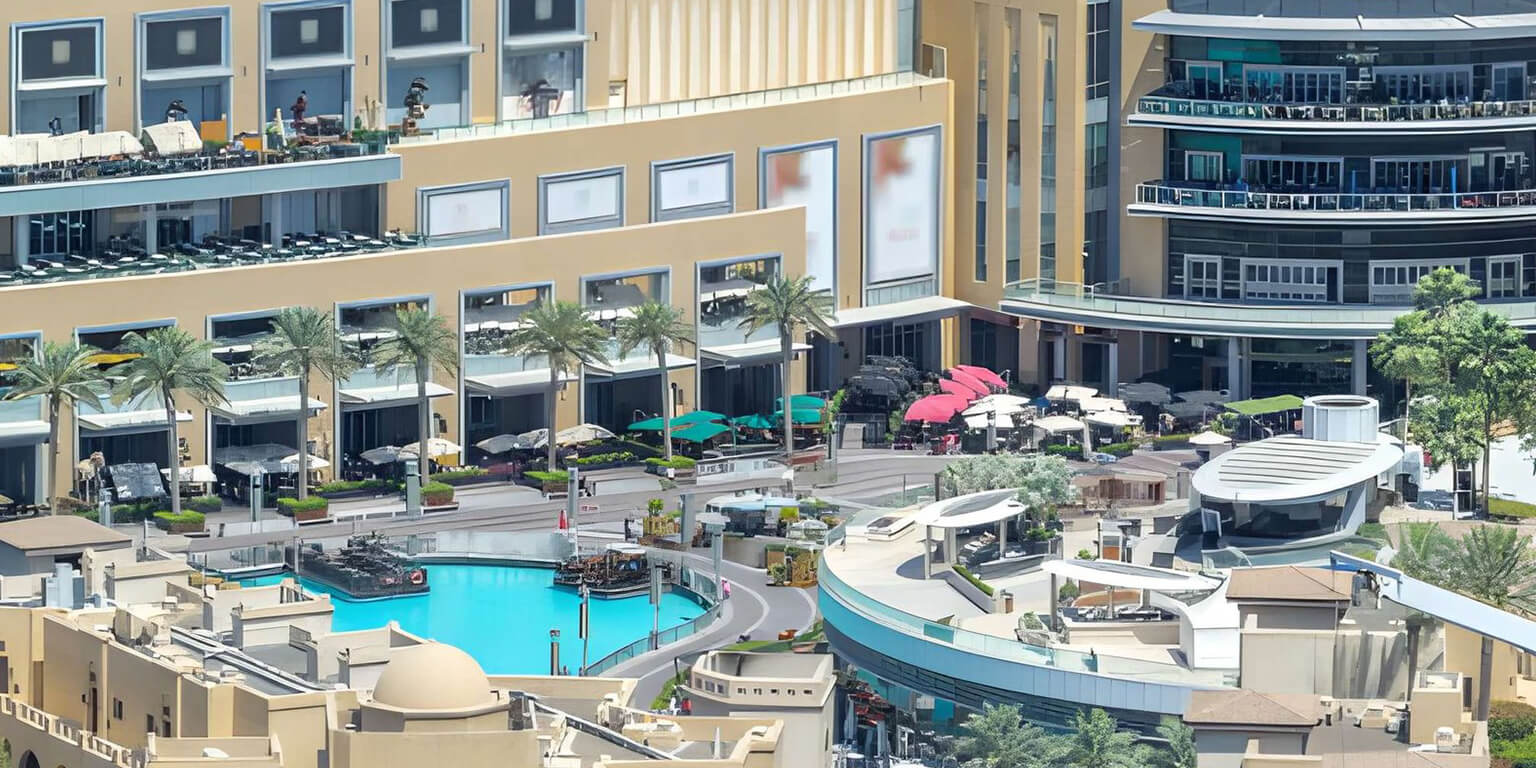
At GeeM, we've completed over 25,000 maintenance jobs across Dubai and have been operating in this market for more than 20 years. Our annual maintenance contracts cover shopping malls and retail destinations across Dubai including Dubai Mall, Mall of the Emirates, Dubai Festival City Mall, and dozens of community retail assets. AMC customers receive a 10% discount on all additional services outside the contract scope, which further reduces ad-hoc repair costs over the contract term.
Talk to Us About Your Mall's AMC
Whether you're renewing an existing contract or building a maintenance programme from scratch, the structure of your AMC has a direct impact on operating costs, compliance standing, and asset longevity.
Contact the GeeM team to discuss your property's requirements. We'll assess your facility, review your current maintenance gaps, and recommend a contract structure that actually protects both your operations and your budget.
FAQ
.svg)
An AMC reduces mall operating costs through several mechanisms: lower energy consumption from well-maintained HVAC systems, elimination of emergency callout premium rates, extended equipment lifespan that defers capital replacement, and compliance documentation that avoids regulatory penalties. The most significant savings in Dubai's context typically come from HVAC efficiency and avoided chiller failure costs during summer peak periods.
In most cases, yes, when the total cost is calculated correctly. Reactive maintenance appears cheaper on individual service comparisons, but accumulates hidden costs in emergency rates, after-hours labour premiums, secondary damage from delayed repair, and accelerated equipment wear. Industry benchmarks for commercial properties in the UAE indicate that structured preventive maintenance through an AMC can reduce total maintenance spend by 30 to 40% compared to a reactive approach over the same period.
A mall AMC should cover, at minimum: HVAC and chiller plant, electrical distribution and switchgear, plumbing and drainage, fire and life safety systems, water tanks, CCTV and access control, escalators and lifts, gate and barrier systems, and pest control. The coverage level for each system should reflect its criticality and the cost of downtime, with full-coverage arrangements for the most business-critical assets.
A labour-only AMC covers the technician's time but not replacement parts, which means the asset owner absorbs the full cost of any component failures. A full-coverage AMC includes labour, parts, and scheduled preventive maintenance for a fixed annual fee. For critical mall systems where failure costs are high, full-coverage arrangements typically deliver better total cost of ownership despite the higher upfront fee. Labour-only contracts may be appropriate for lower-risk, non-critical assets.
A properly structured mall AMC should include all DM and DCD compliance deliverables as standard outputs: semi-annual water tank cleaning certificates, fire system annual servicing records from an approved contractor, HVAC documentation for indoor air quality standards, and any other mandated certifications. If a proposed AMC doesn't explicitly include these as deliverables with documentation issued to the asset owner, that's a gap worth resolving before signing.
SLAs define the response and rectification times a contractor is committed to. In a mall environment, weak SLAs translate directly into longer periods of equipment downtime, which affects tenant operations and visitor experience. Well-defined SLAs for critical systems, such as HVAC, drainage, and electrical, reduce the business disruption cost of any failure and give the asset owner a contractual basis for performance accountability. SLA response times should distinguish between time to site and time to restore, since a contractor arriving quickly but taking hours to resolve the issue still creates extended downtime.
In general, AMC review is warranted when: reactive repair costs are consistently high despite an existing contract, documentation for DM or DCD compliance is frequently incomplete or delayed, response times regularly fall short of agreed SLAs, or when the property undergoes significant changes in system configuration or tenant mix that alter the maintenance scope. Annual contract renewal periods are a practical trigger for reviewing whether the contract structure still matches the property's operational risk profile.
Table of content
- Extreme Heat and Overworking
- Poor Maintenance and Dirty Filters
- Incorrect Sizing of AC Units
- Low Refrigerant Levels
Recent Posts

Download our App







© 2026 GeeM.
.svg)