Stay informed with expert advice, practical tips, and industry insights from Dubai's leading property maintenance professionals. Learn how to maintain your home, save on repairs, and keep your property in top condition year-round.
Thank you! Your submission has been received!
Oops! Something went wrong while submitting the form.
Blog categories
Thank you! Your submission has been received!
Oops! Something went wrong while submitting the form.
Annual Maintenance
September 23, 2026
Plumbing Maintenance Contract in Dubai
What a plumbing AMC in Dubai covers, how plumbing maintenance contracts work, and how to choose the right plan for your property.
5 min read
Key takeaways
A plumbing maintenance contract, or plumbing AMC, keeps your property's water supply, drainage, fixtures and water heaters maintained all year through scheduled visits and priority repairs, instead of waiting for something to leak or block.
Dubai's hard water and heat wear on plumbing faster than milder climates, causing scale, corrosion and pressure problems.
Most damaging leaks happen quietly, behind walls and under floors, which is why scheduled inspection matters more than reactive callouts.
A plumbing AMC usually covers inspections, leak detection, drain clearing, fixture repairs, water pressure checks and water heater servicing.
Water tank cleaning is a Dubai Municipality requirement, and a good provider keeps you compliant and documented.
One team that knows your system beats calling a different plumber every time something goes wrong.
A plumbing maintenance contract in Dubai, often called a plumbing AMC, is an annual agreement that keeps your property's plumbing maintained through scheduled inspections, preventive servicing and priority repairs, rather than paying to fix problems only after they appear. It covers the pipes, drains, fixtures, water heaters and water pressure your property relies on every day.
Most people only think about plumbing when something goes wrong. A tap starts dripping, a drain backs up, or worse, a stain appears on a ceiling that turns out to be a slow leak that's been running for weeks. By then the repair is bigger, messier and more expensive than it needed to be. A plumbing AMC exists to catch those problems earlier, when they're small.
If you'd rather set one up than read about it, you can build plumbing cover into our annual maintenance contract plans in Dubai. If you're weighing it up, here's how a plumbing maintenance contract actually works, what it covers, and when it's worth having.
Why Plumbing Needs Its Own Attention in Dubai
Here's what a lot of owners underestimate. Dubai is genuinely tough on plumbing.
The water is hard, which means it carries a high mineral content that leaves scale inside pipes, water heaters and fixtures over time. That scale narrows pipes, wears out valves, and slowly chips away at water pressure and efficiency. We've written before about how hard water affects Dubai homes, and plumbing systems sit right in the firing line.
Add constant heat, high daily usage, and buildings where pipework runs through walls and slabs you can't see, and you get a system that ages quietly. A small leak inside a wall doesn't announce itself. It just works away at the structure, the paint and your water bill until it becomes obvious, and by then it's a repair job, not a quick fix.
That's the case for scheduled attention. Reactive plumbing waits for failure. Planned plumbing looks for it first.
What a Plumbing AMC Covers
Coverage varies by provider and plan, but a proper plumbing maintenance contract in Dubai usually includes the following.
Scheduled inspections. Regular checks of your pipes, joints, fixtures and visible connections to catch wear, corrosion and early leaks before they spread.
Leak detection. Proactive checks for hidden and surface leaks, including the slow ones behind walls and under floors that cause the most damage. Where a leak is suspected, our water leak detection and repair work locates the source without tearing your property apart.
Drain and blockage clearing. Keeping sinks, showers, toilets and floor drains flowing, and clearing the slow drains that hard water and daily use tend to cause here.
Fixture repairs. Taps, mixers, flush systems, valves and connections that drip, stick or leak get repaired under your plan rather than billed as separate callouts.
Water pressure checks. Testing and adjusting pressure so you're not living with a weak trickle or, at the other extreme, pressure high enough to stress your pipes and fittings.
Water heater servicing. Flushing sediment, checking the anode and testing safety valves to keep your water heater running safely and efficiently, since heaters take a real beating from hard water.
Priority repairs. When something urgent happens, a burst connection or an active leak, AMC clients get priority response with labour covered under the plan.
What's Usually Not Covered
Being clear on the limits matters as much as the coverage. Most plumbing AMCs don't include major replacements like a full re-pipe, a new water heater tank or a complete drainage overhaul, though many cover the labour to fit them. Damage from misuse or unauthorised alterations is charged separately, and larger upgrades or renovation work sit outside a maintenance plan. A good provider walks you through all of this before you sign, so there are no surprises later.
Plumbing Cover by Property Type
Not every property has the same plumbing load, and a sensible plan reflects that.
Apartments usually focus on the fixtures, drains and water heater inside the unit, which fits neatly into a broader apartment AMC plan. Villas carry far more, from multiple bathrooms and kitchens to private water tanks, pumps and often outdoor taps and irrigation, so plumbing is a bigger part of a villa maintenance contract. Buildings and commercial properties add shared risers, pump rooms and higher usage, which is where a facilities maintenance contract coordinates it all under one team.
Signs Your Property Needs a Plumbing Maintenance Contract
Not sure whether it's worth it? A few everyday signs usually answer the question.
Recurring blocked drains. Water pressure that's dropped without explanation. Taps or valves that drip no matter how often they're tightened. Higher water bills with no change in usage. Discoloured water, or a musty smell that hints at moisture somewhere it shouldn't be. And the big one, any stain or damp patch on a wall or ceiling, which almost always means a leak that's already been running a while.
If you're seeing two or three of these, you're past the point where reactive fixes make sense.
Plumbing and Dubai Compliance
Plumbing maintenance isn't only about comfort here. Some of it is a legal requirement.
Dubai Municipality requires water storage tanks to be cleaned and disinfected on a regular schedule by approved contractors, with proper documentation. It's a health measure, and it's enforced. A plumbing AMC either includes tank cleaning or coordinates it through approved contractors, so you stay compliant without having to manage it yourself. That documented history also helps during property sales, tenancy disputes and insurance claims, which is one of the quieter benefits owners tend to overlook until they need the paper trail.
How a Plumbing AMC Saves You Money
The instinct is to call a plumber only when something breaks. In Dubai's conditions, the maths rarely favours that.
A single emergency callout for a burst connection or a flooded bathroom, especially out of hours, often costs more than months of planned cover. And that's before the damage a hidden leak does to flooring, paint and cabinetry while it goes unnoticed. Preventive plumbing avoids most of those events entirely, extends the life of your fixtures and heaters, and turns unpredictable repair bills into planned, manageable care. For a fuller breakdown of the numbers, see our guide to how much an AMC costs in Dubai.
Choosing a Plumbing AMC Provider
A few things separate a reliable plumbing partner from a risky one. Look for licensed, insured plumbers and a provider who inspects your property before quoting, rather than pricing blind. Ask what's actually covered, how emergencies are handled, and whether tank cleaning and documentation are included. And favour a team that keeps a service record, because a provider who knows your plumbing history fixes problems faster than one seeing it for the first time. At GeeM, every plan starts with a free inspection so the cover matches what your property genuinely needs.
Protect Your Plumbing Before the Next Leak
The cheapest plumbing problem is the one caught early. If your property doesn't have planned plumbing cover, or you're tired of calling a different plumber every time something goes wrong, we can help. Start with a free inspection and we'll assess your system, recommend the right level of cover, and give you a clear quote with no obligation. You can reach our team on 800 4336, message us on WhatsApp, or explore our plumbing services in Dubai to see how we work.
This article is for general information and reflects publicly available guidance at the time of writing. Plumbing, water and tank-cleaning requirements can change and vary by property and building, so always confirm current rules with the relevant authority or a licensed professional before acting. It is not a substitute for professional advice.
Frequently Asked Questions
Electrical Service
September 22, 2026
Electrical Maintenance Contract in Dubai
A guide to electrical maintenance contracts in Dubai: what an electrical AMC covers, why DEWA compliance matters, and how to choose the right provider.
5 min read
An electrical maintenance contract, or electrical AMC, is a yearly agreement that keeps a property's electrical system safe and reliable through scheduled inspections, preventive maintenance and priority repairs, carried out by DEWA registered electricians. In Dubai, where constant heat and heavy AC loads push electrical systems hard all year, an electrical AMC helps catch faults, fire risks and unplanned outages before they happen, rather than after.
This guide explains what an electrical AMC covers, why DEWA compliance is not optional, the warning signs your system needs attention, what drives the cost, and how to choose a provider you can trust with your property's wiring.
Key takeaways
An electrical AMC is a yearly plan covering inspection, preventive maintenance and priority repair of your electrical system, from the distribution board to wiring, sockets, switches and lighting.
Dubai's climate keeps electrical systems under heavy, continuous load, so small faults escalate quickly. Scheduled checks catch them early.
Electrical work in Dubai is regulated. Always use a provider whose electricians are DEWA registered, or you risk your insurance position and your safety.
A standard AMC covers inspections and labour for covered repairs. Major rewiring, new circuits and upgrades are usually quoted separately.
Warning signs like tripping breakers, warm or discoloured sockets, flickering lights or a burning smell mean your system needs attention now, not at the next callout.
The real value is safety and continuity: fewer outages, lower fire risk, and one accountable team that already knows your property.
Why Electrical Maintenance Matters So Much in Dubai
Electrical systems in Dubai work harder than in almost any other climate. Air conditioning runs for much of the year and can account for a large share of a property's electricity use, which means circuits, cables and distribution boards carry heavy, sustained load through the hottest months. Heat accelerates the ageing of cable insulation. Dust works its way into boards and fittings. Over time, connections that were tight on installation work loose, and a loose connection under load is exactly how overheating and electrical fires start.
Most owners only think about their electrics when something trips or stops working. By then the fault has usually been developing for a while. An electrical maintenance contract flips that around. Instead of waiting for a failure, a technician inspects the system on a schedule, finds the loose terminal or the overloaded circuit early, and fixes it before it becomes an outage in July or a safety incident at any time of year.
Three things are at stake: safety, because faulty wiring is a fire risk; continuity, because an electrical fault can take your AC and everything else offline; and compliance, because electrical work in Dubai has to meet regulated standards. An AMC addresses all three at once.
What an Electrical AMC Covers
Coverage varies by provider and plan, but a comprehensive electrical maintenance contract in Dubai typically includes the following.
Distribution board and circuit breakers: inspection and testing of the main and sub boards, tightening of connections, load checks, and testing of protective devices such as ELCBs and RCDs that are meant to cut power in a fault. If you are unsure how your board is set up, our guide on the difference between a fuse box and a DB board explains it in plain terms.
Wiring and cabling: inspection for damage, overheating, rodent damage and loose terminations at accessible points, with covered repairs where needed.
Sockets, switches and outlets: checking for looseness, discolouration and heat, and replacing faulty accessories that are within the plan scope.
Earthing and bonding: verifying that the property is safely earthed, which is one of the most important and most overlooked parts of a safe installation.
Lighting: indoor and outdoor fixtures, and, for commercial properties, testing of emergency lighting and exit signs.
Priority emergency response: 24/7 support for urgent problems such as a total outage, repeated tripping, sparking or a burning smell.
What is usually not included
An electrical AMC covers preventive maintenance and eligible repairs, not major capital work. Full or partial rewiring, adding new circuits, upgrading the board or main supply, DEWA new connection approvals, appliance repair, and damage caused by misuse or unauthorised work generally sit outside standard cover. A good provider explains this clearly and quotes any of it separately, so nothing is a surprise later.
Electrical AMC by Property Type
• Apartments: coverage focuses on the distribution board and the circuits, sockets and fixtures inside your unit. See our apartment AMC plans.
• Villas: larger homes carry more load, often with multiple boards, outdoor circuits, pool and pump electrics and garden lighting, so they usually need more thorough checks. See our Villa Maintenance plans.
• Offices, retail and commercial units: these add emergency lighting, heavier three phase loads and the need for maintenance records for inspections. See our commercial AMC.
• Buildings and facilities: shared electrical systems, risers and landlord supply need coordinated, documented maintenance. See our building AMC.
DEWA Compliance and Why It Is Not Optional
This is the part that separates a safe electrical AMC from a risky one. Electrical work in Dubai falls under the standards set by DEWA, the Dubai Electricity and Water Authority, and certain work must be carried out by DEWA approved professionals. This is not paperwork for its own sake. It is the difference between an installation that is safe and insurable and one that is neither.
When you hand your electrics to a maintenance provider, ask one direct question: are your electricians DEWA registered? A company that sends a general handyman with a screwdriver to open your distribution board is exposing you to real risk. If unlicensed electrical work causes a fault, a fire or an injury, your insurance position can collapse, and the liability can land on you as the property owner. You can read more on why this matters in our note on using a DEWA registered electrician in Dubai.
At GeeM, all electrical work under our contracts is carried out by DEWA registered, directly employed and background verified electricians, not subcontracted labour. That is the standard any electrical AMC should meet.
Signs Your Property Needs Electrical Maintenance
If you notice any of these, book an inspection now rather than waiting for a scheduled visit or a failure:
• Lights that flicker or dim when appliances switch on.
• Sockets or switch plates that feel warm, look discoloured or buzz.
• A faint burning or fishy smell near outlets or the board, which needs immediate attention.
• Bulbs that fail far too often on the same circuit.
• Circuits that feel overloaded, especially in older properties, which our article on overloaded household circuits covers in detail.
An electrical AMC exists to catch these patterns early, before they become an outage or a hazard.
How Much Does an Electrical Maintenance Contract Cost in Dubai?
Electrical AMC pricing depends on a few things: the size and type of property, the number of distribution boards and circuits, whether the supply is single or three phase, the age and condition of the installation, how many preventive visits you want, and whether spare parts are included or billed separately. A small apartment with one board costs far less to cover than a villa with multiple boards, outdoor circuits and pool electrics.
Rather than a fixed price list, the reliable way to price an electrical AMC is a free inspection followed by a transparent, tailored quote, so you only pay for what your property actually needs. For a wider view of how maintenance contracts are priced, see our AMC cost guide for Dubai.
Electrical AMC vs One-Off Electrician Callouts
Paying per callout feels cheaper until you add it up. A single emergency callout at an inconvenient hour, plus the repair, often costs more than months of preventive cover, and it does nothing to stop the next fault. An electrical AMC changes the model in four ways: cost becomes predictable across the year, response is prioritised when you need it most, maintenance is preventive rather than reactive so faults are caught early, and the same team builds a record of your property instead of a stranger starting from scratch every time.
For a full comparison of contract maintenance against pay per visit across all systems, our complete AMC guide for Dubai breaks down the numbers.
How to Choose an Electrical AMC Provider
Use these checks before you sign:
• Confirm the electricians are DEWA registered, and ask whether they are directly employed or subcontracted. Directly employed teams are more accountable and more consistent.
• Get the scope in writing, listed system by system, with a clear exclusion list.
• Ask how response time is defined and get the emergency commitment in writing.
• Check the parts policy: are spare parts included, charged at cost, or marked up?
• Ask for a written report after each visit, so your maintenance history is documented.
Electrical safety is not a place to cut corners, so we do not. Our electrical services in Dubai are delivered by DEWA registered, directly employed and background verified electricians, backed by priority 24/7 emergency support and clear, transparent pricing with no surprise charges.
The bigger advantage is that electrical maintenance does not have to sit on its own. With GeeM, you can keep your electrical, AC, plumbing and handyman maintenance under a single Annual Maintenance Contract in Dubai, with one team, one point of contact, and one documented history for the whole property. That is fewer providers to manage and faster, better informed service when something goes wrong.
Book a Free Electrical Inspection
The right way to start is with a look at your actual system. We will inspect your distribution board, circuits and fixtures, tell you honestly what needs attention, and recommend a plan with a transparent quote and no obligation.
Disclaimer: This article is for general information only. Electrical work in Dubai must be carried out by suitably licensed and DEWA approved professionals, and requirements can vary by property and community. Nothing here is safety, legal or contractual advice. If you suspect an electrical fault, especially heat, sparking or a burning smell, stop using the affected circuit and arrange a professional inspection promptly.
Frequently Asked Questions
Annual Maintenance
September 21, 2026
How an Annual Maintenance Contract Works in Dubai: Complete Guide
An Annual Maintenance Contract (AMC) in Dubai provides year-round protection for HVAC, plumbing, electrical, and property systems through scheduled preventive maintenance and emergency support
5 min read
Key takeaways
An Annual Maintenance Contract (AMC) in Dubai provides year round protection for HVAC, plumbing, electrical and property systems through scheduled preventive maintenance and emergency support.
AMC pricing varies by property type: apartments start around AED 1,500 to 3,000 per year, villas AED 6,000 to 12,000 per year, with commercial spaces requiring custom quotes.
Dubai regulations mandate specific maintenance requirements, including biannual water tank cleaning and annual fire safety inspections.
Comprehensive AMC plans typically include unlimited emergency callouts with 60 minute response times, scheduled preventive visits and priority service.
Choosing a certified AMC provider with proper Dubai Municipality, DEWA and Civil Defence approvals protects you legally and ensures quality service.
Preventive maintenance through an AMC can reduce total property maintenance costs by 30 to 40 percent compared to reactive pay per visit repairs.
This guide explains how annual maintenance contracts work in Dubai: what they cover, what they cost, the local regulations that apply, and how to choose the right provider. If you would rather compare plans for your own property now, see GeeM's Annual Maintenance Contract in Dubai.
When you own or manage property in Dubai, whether it is a villa in Arabian Ranches, an apartment in Dubai Marina, or a commercial office in Business Bay, one truth becomes clear: maintenance is not optional. Dubai's extreme climate pushes air conditioning systems to their limits nine months a year. Sand and dust infiltrate equipment. Hard water corrodes plumbing fixtures. Electrical systems work overtime powering the conveniences that have become necessities in this demanding environment.
The question is not whether your property needs maintenance. It is how you will handle it when systems inevitably need attention. That is where an Annual Maintenance Contract comes in. An AMC is essentially insurance for your property's essential systems, but instead of only financial protection it provides proactive care that prevents breakdowns before they happen, moving you from reactive crisis management to strategic asset protection.
At GeeM, we have provided AMC services in Dubai for over 20 years, completing more than 25,000 maintenance jobs across apartments, villas, commercial spaces and large facilities. Through thousands of service calls, preventive visits and emergency repairs, we have learned exactly what property owners need to know when evaluating annual maintenance contracts.
This guide explains everything: what AMC contracts actually cover, how pricing works across different property types, response time expectations, regulatory compliance requirements, and how to choose an AMC company in Dubai that delivers reliable, professional service. Whether you are researching your first yearly maintenance contract or reconsidering your current provider, this information helps you make informed decisions that protect your property investment.
What Exactly Is an Annual Maintenance Contract?
An Annual Maintenance Contract, commonly called an AMC or yearly maintenance contract, is a service agreement between property owners and maintenance providers that covers routine servicing, preventive maintenance and emergency repairs for essential building systems over a 12 month period.
Unlike pay per visit services, where you call a technician each time something breaks and pay separately for every service call, an AMC provides continuous coverage throughout the year for a fixed annual fee. This creates cost predictability, faster response times and proactive maintenance that prevents expensive emergencies.
How AMC Contracts Work in Dubai
Here is how a typical AMC arrangement functions. You sign a contract with an AMC company specifying exactly which systems and services are covered. The provider schedules regular preventive maintenance visits based on equipment type and property needs. When emergencies occur, you contact the AMC provider and receive priority response, typically within 60 to 90 minutes depending on the contract terms.
The key difference between AMC and traditional pay per visit service is that emergency callouts and scheduled maintenance are already included in your annual fee. You are not deciding whether to fix a problem based on cost, you simply request service knowing it is covered.
Core Coverage: What Most AMC Plans Include
While specific coverage varies by provider and plan tier, comprehensive AMC services in Dubai typically include the following.
HVAC and air conditioning maintenance: regular AC servicing including filter cleaning, coil inspection, refrigerant level checks, thermostat calibration and drain line clearing. Given that air conditioning often represents 60 to 70 percent of Dubai electricity consumption according to DEWA, AC maintenance is usually the most valuable component of any AMC plan.
Electrical system services: circuit breaker testing, outlet and switch inspection, emergency lighting checks, electrical panel maintenance and voltage monitoring. Professional electrical maintenance prevents safety hazards and reduces energy waste from inefficient systems.
Plumbing services: fixture repairs, leak detection, pipe inspections, water heater servicing and drainage maintenance. Our plumbing services under AMC plans address common issues like fixture leaks, slow drains and hard water problems that affect Dubai properties.
Emergency response: this is where AMC contracts truly prove their value. When your AC fails at 2 AM during a summer heatwave or a pipe bursts on a Friday evening, AMC customers receive priority emergency service, typically within 60 minutes anywhere in Dubai. Emergency labour costs are covered, you only pay for parts if major component replacement is needed.
Preventive maintenance: scheduled visits throughout the year catch small problems before they become expensive emergencies. Preventive AC maintenance, for example, identifies worn compressor parts or refrigerant leaks early, when repairs cost hundreds rather than thousands of dirhams.
Digital service tracking: modern AMC providers offer mobile apps where you can book service, track technician arrival in real time, view complete maintenance history and access service reports. This transparency was impossible with traditional maintenance but is now standard with professional AMC companies.
What Typically Is Not Covered
Transparency about exclusions matters as much as understanding what is included. Most annual maintenance contracts explicitly exclude certain items and services.
Major component replacements like AC compressors, water heater tanks, electrical panels or pumps usually are not covered in standard AMC plans. Some providers offer comprehensive contracts that include parts, but these cost significantly more. Most residential AMC plans cover labour for installation if replacement is needed, but you pay for the component itself.
Damage from accidents, misuse or neglect typically falls outside AMC coverage. If someone breaks a fixture, or an electrical problem results from unauthorised modifications, repairs are charged separately.
Specialised services like AC duct cleaning, water tank cleaning, pest control or painting are often available to AMC customers at discounted rates but are not typically included in base packages. Many providers offer these as optional add ons or as included features in premium plans.
System upgrades or modifications beyond maintenance scope require separate quotes. If you want to add a new AC unit, upgrade electrical capacity or reconfigure plumbing, that falls outside standard AMC coverage.
AMC vs Pay Per Visit: The Real Cost Difference
Many property owners initially resist AMC contracts, thinking they will save money by paying only when service is needed. The maths rarely supports this approach in Dubai's climate.
Consider a typical villa scenario. A single emergency AC repair during peak summer often costs AED 800 to 1,500 including parts and emergency service premiums. One plumbing emergency might run AED 400 to 600. Add a couple more issues throughout the year and you have easily exceeded what a comprehensive villa AMC would cost, while receiving none of the preventive maintenance that could have avoided those emergencies entirely.
AMC customers at GeeM typically report 30 to 40 percent lower total annual maintenance costs compared to their previous pay per visit approach. The savings come from multiple sources: no emergency service premiums, preventive care that prevents expensive breakdowns, and volume discounts on parts when occasional replacements are needed.
Beyond pure cost, AMC contracts deliver benefits that pay per visit service never can: predictable annual budgeting, faster response times with priority scheduling, proactive problem detection before failures occur, complete maintenance documentation for property records, and relationship continuity with technicians who know your property's systems and history.
Coverage That Matters: AMC Services for Different Property Types
Not all properties have identical maintenance needs. An apartment with one AC unit requires different support than a villa with six units, swimming pool equipment and extensive outdoor systems. Commercial properties face yet another set of challenges. Smart AMC companies tailor coverage to match property type and usage patterns.
Apartment AMC Packages
For apartment and flat maintenance in Dubai, AMC contracts typically focus on the core HVAC, electrical and plumbing systems that serve the unit itself. Building common areas are usually handled by property management companies, so individual apartment AMC plans concentrate on what is within your four walls.
Typical apartment AMC coverage includes AC servicing for 1 to 3 split units (standard in most Dubai apartments), electrical maintenance for your distribution board and circuits, plumbing repairs for bathroom and kitchen fixtures, water heater servicing, and general handyman work for minor carpentry or fixture repairs.
Visit frequency for apartments is usually 2 to 4 times a year for scheduled preventive maintenance, with unlimited emergency callouts included. This schedule works well for apartments, since individual units have less total equipment than villas.
Pricing for apartment AMC in Dubai generally ranges from AED 1,500 to 3,000 a year for studio or one bedroom units, and AED 2,500 to 5,000 for two or three bedroom apartments, depending on exact coverage, visit frequency and provider. We cover pricing in more detail later, but these ranges give you a starting reference point.
Villa AMC Coverage
Villas present more complex maintenance requirements than apartments, due to larger square footage, multiple AC zones, private water systems and often additional features like swimming pools, landscaping systems or backup generators.
A comprehensive annual villa maintenance contract typically includes AC maintenance for multiple split units or ducted central systems, electrical system coverage for your main panel and all circuits, complete plumbing including private water tanks and pumps, water heater servicing (often multiple heaters in larger villas), and additional optional coverage for pools, irrigation, solar water heating systems or generators.
Villas typically need more frequent service visits than apartments, usually 3 to 6 scheduled visits a year plus unlimited emergency support. The exact schedule depends on property size, number of systems and equipment age.
Villa AMC pricing in Dubai ranges from AED 6,000 to 12,000 a year for standard 3 to 5 bedroom villas, with larger estates or villas with premium features commanding higher annual fees. This might sound expensive compared to apartments, but consider that villas often have 4 to 6 AC units alone, each requiring quarterly service during Dubai's intense cooling season.
Commercial Space AMC
Commercial properties including offices, retail stores, clinics, restaurants and other business locations have maintenance requirements that differ significantly from residential properties. Businesses cannot afford downtime during operating hours, compliance requirements are stricter, and equipment often runs longer hours than residential systems.
Commercial AMC services typically provide more aggressive preventive maintenance schedules, guaranteed response times during business hours (often 2 to 4 hours rather than the residential 60 minute guarantees), after hours and weekend emergency coverage since businesses operate on varied schedules, and compliance documentation for inspections from Dubai Municipality, Civil Defence or other regulatory authorities.
Commercial spaces also benefit from specialised coverage for equipment unique to business operations: commercial kitchen equipment maintenance for restaurants, server room cooling for offices, retail lighting systems, medical equipment cooling for clinics, or specialised HVAC requirements for laboratories.
Pricing for commercial AMC varies dramatically based on space size, equipment complexity and business hours. Small offices might pay AED 5,000 to 15,000 a year, while larger facilities, restaurants or businesses with specialised equipment might invest AED 20,000 to 50,000 or more depending on scope.
Facility AMC: Large Scale Property Management
For property management companies, building complexes, mixed use developments or large commercial facilities, standard AMC packages do not scale effectively. These properties need dedicated facility maintenance that coordinates multiple trades, manages contractor relationships and ensures consistent service across dozens or hundreds of individual units.
Facility AMC services typically include dedicated site teams or assigned account managers, comprehensive MEP coverage across all property systems, coordination with specialised contractors for fire safety, elevators and other regulated systems, bulk pricing for managing multiple units or buildings, and detailed reporting and compliance documentation for property owners or management boards.
Facility level contracts are almost always custom designed based on specific property requirements. Pricing typically follows a per square foot model or uses comprehensive property assessments to develop annual fees that reflect actual maintenance demands.
Understanding AMC Pricing in Dubai
One of the most common questions property owners ask is how much an annual maintenance contract costs. The answer depends on numerous variables, but we can establish useful benchmarks and explain what drives costs up or down.
Factors That Influence AMC Pricing
Before looking at specific price ranges, understand what affects AMC costs.
Property size and type: larger properties with more square footage, more rooms and more equipment naturally cost more to maintain. A 5,000 square foot villa requires different resources than a 600 square foot studio apartment.
Equipment quantity and complexity: properties with six AC units cost more to maintain than properties with two units. Central ducted systems require different service than simple split units. Swimming pools, commercial kitchens, server rooms or other specialised equipment all increase pricing.
Coverage scope: basic plans covering only scheduled preventive visits cost less than comprehensive contracts including unlimited emergency callouts, parts replacement and premium response times. More coverage means higher annual fees.
Visit frequency: quarterly visits cost more than biannual schedules. Some high use commercial properties need monthly visits for certain systems, which increases contract value accordingly.
Service level guarantees: standard response times of 4 to 6 hours cost less than premium guaranteed 60 minute emergency response. Higher service levels command premium pricing.
Equipment age and condition: older systems requiring more frequent attention, more parts replacement or higher failure risk typically cost more to cover under AMC. Some providers charge premiums for equipment over 10 years old, or exclude very old systems entirely.
Property location: response times and service costs vary across Dubai communities. Properties in outlying areas sometimes face slightly higher costs due to travel time and logistics.
Residential AMC Pricing Benchmarks
Based on current Dubai market conditions and our experience at GeeM, here are realistic pricing ranges for residential annual maintenance contracts.
Studios and one bedroom apartments: AED 1,500 to 3,000 a year. This typically includes 2 scheduled preventive visits, emergency callouts for AC, plumbing and electrical, and basic coverage for one AC unit and standard fixtures.
Two to three bedroom apartments: AED 2,500 to 5,000 a year. Coverage includes 2 to 4 scheduled visits, emergency support, and maintenance for 2 to 3 AC units and all standard electrical and plumbing systems.
Townhouses: AED 4,000 to 8,000 a year. These mid size properties bridge the gap between apartments and villas, typically with 3 to 4 AC units, larger plumbing systems and sometimes limited outdoor maintenance.
Three to five bedroom villas: AED 6,000 to 12,000 a year. Comprehensive coverage including 3 to 6 scheduled visits, unlimited emergencies, maintenance for 4 to 6 AC units, complete electrical and plumbing systems, and often water tank service.
Luxury villas and estates: AED 12,000 to 25,000 or more a year. Large properties with extensive AC systems, swimming pools, landscaping equipment, sophisticated electrical systems and premium features require custom AMC plans priced according to actual complexity.
These ranges represent comprehensive contracts including both preventive visits and emergency coverage. Basic plans with fewer visits and limited emergency coverage cost less but provide less value and protection.
Commercial AMC Pricing
Commercial property maintenance pricing uses different models than residential contracts. While residential pricing often follows property size (number of bedrooms), commercial pricing typically considers square footage, operating hours and equipment demands.
Industry benchmarks suggest commercial AMC pricing around AED 20 to 30 per square foot a year for comprehensive coverage including HVAC, electrical, plumbing and emergency callout services. Using this model, a small office of 1,000 to 3,000 square feet is roughly AED 5,000 to 15,000 a year, a medium office of 3,000 to 10,000 square feet is roughly AED 15,000 to 40,000 a year, retail shops are roughly AED 8,000 to 20,000 depending on size and equipment, restaurants and food and beverage venues are roughly AED 12,000 to 30,000 due to specialised kitchen equipment, and large facilities use custom pricing based on a comprehensive property assessment.
These commercial ranges assume standard office hours and normal equipment density. Properties operating 24/7, businesses with specialised equipment such as medical, laboratory or data centres, or facilities with unusual demands require custom pricing that reflects actual service requirements.
Understanding Price Variations
When comparing AMC quotes from different providers, you will notice significant price variations for seemingly similar coverage. Understanding why helps you evaluate proposals intelligently rather than simply choosing the lowest number.
Comprehensive versus basic coverage: a AED 3,000 apartment AMC might include only two preventive visits with emergency callouts charged separately. A AED 5,000 plan might include quarterly visits plus unlimited emergency coverage. The higher price delivers significantly more value.
Parts inclusion: some comprehensive plans include common parts and consumables. Others cover only labour, charging separately for all parts. Plans with parts inclusion cost more upfront but potentially save money over the year, particularly for older properties where parts replacement is more frequent.
Response time guarantees: premium plans with 60 minute emergency response commitments cost more than standard 4 to 6 hour response plans. For critical commercial properties or homeowners who cannot tolerate AC failures, premium response pricing is justified.
Service quality and training: established providers with certified technicians, proper insurance and professional management systems charge more than unlicensed operators cutting corners on training and compliance. The price premium buys reliability and legal protection.
Technology and transparency: providers offering digital tracking, mobile apps and comprehensive service records invest in technology that improves service delivery. These systems cost money to develop and maintain, reflected in pricing.
The cheapest AMC quote is rarely the smartest choice. Focus instead on value: what services and protection do you receive for the annual investment?
How to Budget for AMC
Smart property owners approach AMC as an investment in asset protection rather than a grudge purchase. Here is how to think about budgeting.
Calculate your current reactive costs: review your property maintenance spending over the past one to two years, including emergency repairs, routine services and all maintenance related expenses. Many property owners discover they are already spending more than a comprehensive AMC would cost, while receiving inferior service and no preventive care.
Factor in risk reduction: emergency AC replacement during peak summer might cost AED 3,000 to 5,000 for a single unit. Major plumbing failures can damage property worth far more than the repair itself. Factor in the insurance value of preventing these expensive disasters.
Consider long term equipment life: properly maintained AC systems, water heaters and other equipment last 40 to 60 percent longer than neglected systems. An AMC that extends your AC lifespan from 8 years to 12 years saves thousands in avoided premature replacement costs.
Account for time and hassle savings: what is it worth to you not to research, call and vet contractors every time something needs service? How valuable is the peace of mind knowing professional maintenance is handled automatically?
For most Dubai property owners, a quality AMC actually costs less than their total maintenance spending, while delivering better protection, longer equipment life and far less stress.
Want a price for your specific property? GeeM builds tailored AMC plans for apartments, villas, offices, buildings and facilities across Dubai, with transparent pricing and a free inspection. See AMC plans and pricing or book a free inspection.
Response Times and Service Level Agreements
When researching AMC providers in Dubai, response times might seem like minor technical details buried in contract fine print. In reality, response guarantees separate amateur providers from professional operations, and can make the difference between minor inconvenience and major crisis.
What Response Time Actually Means
Response time is the maximum period between when you report an emergency and when a qualified technician arrives at your property ready to diagnose and address the problem. Note that this is not time to completion, but time to arrival and commencement of service.
Most professional AMC companies in Dubai guarantee response times of 60 to 90 minutes for emergencies, 4 to 6 hours for urgent non emergency requests, and 24 to 48 hours for routine scheduled maintenance. These guarantees apply 24/7 including weekends, holidays and the middle of the night, since emergencies do not respect business hours.
Response time guarantees only matter if they are enforced. Professional providers include penalties or compensation clauses for missed response commitments. If your contract promises 60 minute response but includes no consequences for failures, the guarantee is worthless.
Emergency vs Non-Emergency Response
Understanding the distinction between emergency and non emergency service helps you use AMC resources appropriately while ensuring critical issues receive priority attention.
Emergency situations requiring immediate response include complete AC failure during extreme heat (particularly if vulnerable people are present), major water leaks causing active property damage, electrical failures creating safety hazards, backed up sewage in living areas, or any situation threatening health, safety or significant property damage.
Urgent non emergency situations warrant quick but not immediate response: partially functioning AC providing reduced cooling, minor leaks contained and not causing damage, electrical issues affecting non critical circuits, or equipment making concerning noises but still operating.
Routine maintenance requests can be scheduled at mutual convenience: preventive service scheduling, minor repairs to non critical systems, questions about equipment operation, or cosmetic issues not affecting function.
Using emergency response for routine issues wastes resources and may affect your standing with AMC providers. Save emergency response for actual emergencies, you will receive faster, better service when you genuinely need it.
Geographic Coverage and Response Zones
Dubai spans a large geographic area, from older neighbourhoods like Deira and Bur Dubai, through established communities like Arabian Ranches and Dubai Marina, to newer developments like Dubai Hills Estate and Dubai South. Response times naturally vary based on where you are located relative to the service provider's operations base and technician deployment.
At GeeM, our service area covers all major Dubai communities, with response time guarantees applying city wide. We maintain multiple service zones with strategically positioned technicians to ensure rapid response across our coverage area, including Dubai Marina, Downtown Dubai, Business Bay, JBR, Palm Jumeirah, JVC, JVT, Arabian Ranches, Sports City, Motor City, Mirdif, International City and dozens more communities throughout Dubai.
When evaluating AMC providers, ask specifically whether their response time guarantees apply to your location. Some providers promise 60 minute response but only for properties within 10 km of their office, leaving outlying areas with much slower service.
What Happens During Emergency Calls
Understanding the emergency service process helps you know what to expect when you need urgent help.
When you contact your AMC provider about an emergency, you provide your contract details, describe the problem and its severity, and specify any immediate risks or special circumstances. The provider dispatches the closest available qualified technician with the appropriate skills and equipment for your issue.
You receive confirmation of the dispatch with an estimated arrival time and technician identification. Most modern providers allow you to track the technician's approach in real time through mobile apps, eliminating the frustration of waiting and wondering.
The technician arrives, assesses the situation, explains the problem in clear language you understand, and provides options for resolution with transparent cost implications if any parts not covered by AMC are required. Emergency repairs are completed immediately when possible, or temporary solutions are provided if parts must be ordered for complete resolution.
After service, you receive digital documentation of the work completed, parts used if any, recommendations for preventing similar issues, and any follow up needed. This documentation becomes part of your property's permanent maintenance record.
Service Quality Guarantees
Response time is not the only service metric that matters. Professional AMC providers stand behind service quality with additional guarantees.
First time fix commitment: quality providers aim to resolve issues completely on the first visit, not band aid problems requiring multiple service calls. At GeeM, our first time fix promise means we arrive with proper tools, common parts inventory and qualified technicians capable of completing most repairs immediately.
Workmanship warranties: repairs completed under AMC should be guaranteed against defects in workmanship. Reputable providers warranty their work for 30 to 90 days, returning to correct any issues resulting from their service at no charge.
Technician qualifications: your contract should specify that only qualified, certified technicians perform work on your property. Ask about technician credentials, training programs and certification renewals that ensure ongoing competence.
Customer satisfaction policies: what happens if you are dissatisfied with service? Professional AMC companies include clear escalation procedures, service quality reviews and accountability mechanisms for addressing legitimate complaints.
These quality commitments separate professional AMC providers from amateur operations cutting corners on training, equipment and customer service.
Response Time Red Flags
When evaluating AMC proposals, watch for warning signs of unreliable service.
Vague response commitments: "we respond as quickly as possible" or "usually within 2 to 4 hours" are not guarantees. They are excuses pre loaded for when the provider fails to deliver timely service. Demand specific, guaranteed maximum response times.
No after hours coverage: providers only available during business hours are not offering real AMC service. Emergencies happen at night, on weekends and on holidays. Your contract should include 24/7 availability.
No penalty for missed response times: if missing guaranteed response times has no consequence, the guarantee is worthless. Ask what happens when providers fail to meet their commitments.
Unrealistic promises: be sceptical of companies promising 15 minute response city wide, or guaranteeing resolution within an hour regardless of problem complexity. These promises sound impressive but cannot be delivered consistently. Realistic guarantees from professional providers are more valuable than impossible promises from amateurs.
Dubai Regulatory Compliance and AMC Requirements
Dubai's regulatory environment for property maintenance is not optional. It is mandatory, enforced through inspections, and violations carry serious consequences including fines, license suspensions and, in extreme cases, property closures. Understanding compliance requirements helps you select AMC providers who keep you legal while protecting tenants, employees and customers.
Dubai Municipality Requirements
Dubai Municipality oversees public health, environmental health and building standards across the emirate. Several Municipality regulations directly affect property maintenance and AMC requirements.
Water tank cleaning standards: Dubai Municipality mandates that all residential and commercial properties clean and disinfect water storage tanks at least every six months using Municipality approved contractors. Water tank cleaning must follow specific protocols, including proper drainage, physical cleaning, approved disinfection methods, post cleaning water quality testing and comprehensive documentation of cleaning activities.
Non compliance with water tank cleaning regulations can result in fines according to current Municipality guidelines. Professional AMC providers either include water tank service in premium plans or coordinate cleaning through approved contractors, ensuring you remain compliant without managing contractors yourself.
General building maintenance standards: Dubai Municipality building codes require property owners to maintain properties in good repair with all systems functioning safely and efficiently. While this sounds broad, it creates legal liability for owners who neglect maintenance, allowing properties to deteriorate or become unsafe.
AMC contracts help demonstrate due diligence. If a tenant complains about inadequate maintenance, or if Municipality inspectors identify deficiencies, documented professional maintenance through an AMC shows you have taken reasonable steps to maintain the property properly.
DEWA Electrical and Water Standards
Dubai Electricity and Water Authority (DEWA) enforces standards for electrical installations and water connections. All electrical work must meet DEWA codes, installations require DEWA approval before connection, and only DEWA approved contractors can perform certain electrical services.
When selecting an AMC company, verify they employ DEWA approved electrical technicians. Electrical work by unlicensed contractors can void your property insurance, create liability for injuries or fires, and result in disconnection of electrical service if discovered during inspections.
At GeeM, all our electrical technicians hold proper DEWA approvals and certifications, ensuring work meets regulatory standards and protects property owners from compliance violations.
Dubai Civil Defence Fire Safety Compliance
Dubai Civil Defence implements the UAE Fire and Life Safety Code of Practice, which sets comprehensive requirements for fire detection, suppression, emergency lighting and evacuation systems. While fire safety requirements primarily affect commercial properties, some residential buildings also face Civil Defence oversight.
Properties requiring Civil Defence compliance typically need annual inspections of fire alarm systems, regular testing of emergency lighting and exit signs, maintenance of fire sprinklers and suppression systems where installed, documentation of all testing and maintenance activities, and Civil Defence approved contractors performing fire safety work.
For commercial properties, facility AMC plans often coordinate with Civil Defence approved fire safety contractors to ensure comprehensive compliance. Some AMC providers handle this coordination directly, others simply ensure their maintenance work does not interfere with fire safety systems.
Failing Civil Defence inspections can result in fines, temporary closure until violations are corrected, and difficulty renewing trade licenses or operating permits.
Insurance and Liability Considerations
Professional AMC providers carry liability insurance protecting you if accidents occur during maintenance activities. Verify your AMC company holds adequate insurance coverage before signing contracts.
Proper insurance protects you from liability if a technician is injured on your property, covers property damage if maintenance work causes accidental harm, and protects against claims from tenants or third parties affected by maintenance activities.
Conversely, using unlicensed contractors or handymen without proper insurance exposes you to significant liability if something goes wrong. The money you think you are saving by avoiding professional AMC services disappears instantly if an uninsured worker is injured on your property, or if unlicensed electrical work causes a fire that destroys the building.
Documentation Requirements
Proper maintenance documentation protects you during regulatory inspections, tenant disputes, insurance claims and property sales. Professional AMC providers maintain detailed service records including dates and descriptions of all preventive visits, emergency service calls and resolutions, parts replaced and repairs completed, recommendations for future attention, and certification of regulatory compliance work like water tank cleaning or fire safety testing.
This documentation proves you have maintained the property properly, supports insurance claims if covered events occur, demonstrates compliance during regulatory inspections, adds value during property sales, and protects you in tenant disputes about maintenance quality.
At GeeM, our digital platform automatically tracks all service activity, providing instant access to complete maintenance history through our mobile app. You can download reports for audits, insurance documentation or property sale records any time you need them.
Tenant Rights and Landlord Responsibilities
If you rent your Dubai property to tenants, RERA (Real Estate Regulatory Agency) regulations place specific maintenance responsibilities on landlords. You must maintain the property in habitable condition with all essential systems functioning properly, respond to maintenance requests within reasonable timeframes, and ensure compliance with all regulatory requirements affecting tenant health and safety.
AMC contracts help landlords meet these obligations consistently. When tenants report AC failures, plumbing leaks or electrical problems, you can immediately dispatch your AMC provider rather than scrambling to find contractors while tenants suffer without essential services.
Some landlords include AMC coverage as a property amenity, marketing their units as fully serviced with guaranteed rapid response for any maintenance issues. This approach attracts quality tenants willing to pay premium rents for properties where maintenance headaches are eliminated.
How to Choose the Right AMC Provider in Dubai
With dozens of companies offering annual maintenance contracts in Dubai, selecting the right partner requires more than comparing prices. The cheapest option almost always costs more in the long run through poor service, hidden fees and deferred problems that become expensive emergencies. Here is how to evaluate AMC providers intelligently.
Essential Qualifications and Credentials
Before considering pricing or service packages, verify that prospective AMC providers meet minimum professional standards.
Regulatory approvals and licenses: confirm the company holds proper Dubai Municipality approvals, employs DEWA approved electricians for electrical work, maintains Civil Defence approvals if providing fire safety services, and operates with valid trade licenses from the Dubai Economic Department. Request proof of these credentials. Reputable providers readily share license numbers and certificates. Hesitation or vague responses suggest the provider lacks proper approvals.
Insurance coverage: verify the AMC company carries adequate liability insurance protecting you if accidents occur during maintenance. Request a certificate of insurance showing current coverage before signing contracts. Adequate insurance typically includes worker's compensation for technicians injured on the job, general liability covering property damage, and professional liability for errors in maintenance work.
Technical certifications: ask about technician qualifications and training programs. Professional AMC providers employ certified technicians with manufacturer training on major equipment brands, continuing education to stay current with new systems and technologies, and specialised certifications for complex systems like VRF HVAC, building automation or commercial kitchens. At GeeM, our technicians undergo regular training and certification updates, ensuring they are qualified to service modern equipment according to manufacturer specifications and industry standards.
Evaluating Experience and Track Record
Years in business and client retention rates reveal more about service quality than marketing promises ever will.
Industry experience: how long has the company operated in Dubai? Providers with 10 or more years demonstrate stability and local expertise. They understand Dubai's specific climate challenges, regulatory environment and property types.
Client portfolio: request examples of properties similar to yours that the company maintains. A provider primarily serving villas may lack experience with commercial spaces. One focused on apartments might struggle with facility level complexity.
Client references: reputable providers willingly share references from existing customers. Contact these references and ask specific questions. How reliable is emergency response? How is the quality of preventive maintenance? Have they experienced surprise charges not covered in the contract? Would they renew their AMC, or are they looking elsewhere?
Client retention: high retention rates indicate satisfied customers renewing year after year. If a provider cannot demonstrate strong retention or deflects questions about renewal rates, they probably have service quality problems driving customers away.
Service Capabilities and Infrastructure
AMC providers need proper infrastructure to deliver reliable service across Dubai's large geographic area.
Geographic coverage: verify the provider serves your specific location with guaranteed response times. Some companies claim city wide coverage but actually deploy technicians from a single central location, creating long response times for properties in outlying areas.
Technician availability: how many technicians does the provider employ? A company with two technicians cannot reliably serve hundreds of AMC clients. During peak demand periods, you will wait days for service.
Equipment and tools: professional maintenance requires specialised diagnostic tools, testing equipment and repair supplies. Ask what equipment the company uses. Thermal imaging cameras for electrical inspection, refrigerant analysers for AC work and modern testing equipment indicate serious professional operations.
Parts availability: emergency repairs often require immediate parts replacement. Does the provider maintain local parts inventory for common components and brands? When parts must be ordered, how quickly can they obtain them?
Technology platform: modern AMC services leverage technology for efficiency and transparency. Look for providers offering mobile apps for service requests and tracking, digital service history and documentation, automated maintenance scheduling and reminders, and real time technician location tracking. At GeeM, our mobile app puts complete control in your hands, allowing instant service booking, live technician tracking and full access to your property's maintenance history from anywhere.
Contract Terms and Transparency
Before signing any AMC agreement, thoroughly understand the terms.
Clear scope definition: the contract should explicitly list all covered systems and services. Vague language like "general maintenance" creates disputes later about what is included. Demand specific coverage lists.
Transparent pricing: you should understand exactly what you are paying annually and what circumstances trigger additional charges. Hidden fees for after hours emergency service, trip charges or administrative fees mean the advertised price is not the actual cost.
Parts and materials policy: does the contract include common parts and consumables? Are parts charged at retail prices, wholesale or marked up? How are major component replacements handled?
Service level guarantees: specific, measurable guarantees such as 60 minute emergency response, quarterly preventive visits and 48 hour routine scheduling provide accountability. Generic promises without metrics are meaningless.
Renewal terms: how does renewal work? Does the contract auto renew with price increases, or do you receive renewal notices with updated pricing before commitment? Can you cancel without penalties if dissatisfied?
Exclusions and limitations: every contract has exclusions. Make sure you understand what is not covered to avoid surprise bills for services you assumed were included.
Red Flags to Avoid
Certain warning signs indicate AMC providers you should avoid regardless of attractive pricing.
Unlicensed or uninsured operations: never use AMC providers who cannot produce proper licenses, Municipality approvals and current insurance certificates. The legal and financial risks far outweigh any cost savings.
Unrealistic promises: companies guaranteeing 15 minute response city wide, promising that nothing will ever break, or claiming their service eliminates all maintenance costs are not being honest. Avoid providers making promises that sound too good to be true.
Pushy sales tactics: professional service providers educate and advise. They do not pressure you into immediate decisions, offer limited time deals that expire tomorrow, or claim spots are filling up so you must act now. These tactics indicate companies struggling to find customers because existing clients do not renew.
Vague or confusing contracts: if you cannot understand exactly what you are getting and what it costs after reading the contract, do not sign it. Complexity serves providers trying to hide unfavourable terms.
Poor communication: how responsive is the company during the sales process? If they are slow to return calls, provide vague answers or make simple booking difficult before you are a customer, service will be worse after you sign.
Negative online reviews: check Google reviews, social media and business directories. A few negative reviews are normal. Patterns of complaints about response times, hidden fees or poor service quality indicate serious problems.
GeeM meets every criterion above: DEWA registered and ISO certified standards, certified and background verified technicians, transparent pricing with no hidden fees, and priority 24/7 support. Explore GeeM's Annual Maintenance Contract in Dubai.
Who Benefits Most From Annual Maintenance Contracts?
A good property maintenance plan helps almost anyone, but it is especially useful for:
• Landlords managing multiple units who want predictable maintenance and a better tenant experience
• Tenants who want faster support and fewer disputes over who pays for what
• Families where AC reliability and water safety matter daily
• Busy professionals who do not want to coordinate multiple contractors
• Short term rental hosts who need fast fixes between guest stays
• Property managers who need reporting, scheduling and vendor coordination
• Restaurants, clinics and customer facing businesses where downtime directly affects revenue and reputation
• Facility managers overseeing multi system environments and service schedules
If you manage commercial properties, it can help to compare commercial scopes directly. You can start with commercial AMC coverage or AMC for offices, then evaluate whether a facility level approach fits better via Facility AMC Dubai.
Why Property Owners Choose GeeM for Their AMC
GeeM has built its reputation on delivering exactly what it promises: reliable maintenance, fair pricing and professional service that protects your property investment.
Every GeeM Annual Maintenance Contract includes what property owners actually need: scheduled preventive maintenance on a plan tailored to your property type, priority 24/7 emergency support with fast response anywhere in Dubai, certified and background verified technicians trained across all major brands and equipment, transparent pricing with no hidden fees, and digital tracking and documentation through the GeeM app.
We serve every property type, from apartments and villas to townhouses, commercial spaces and large facilities, with custom plans matched to your needs. Whether you want basic preventive care or comprehensive coverage including emergency parts replacement, we design an AMC that fits your requirements and budget.
Our coverage spans all Dubai communities, from established areas like Dubai Marina and Arabian Ranches to newer developments like Dubai Hills Estate and Dubai South. Wherever your property is, GeeM delivers professional maintenance with guaranteed rapid response.
Common AMC Questions and Concerns
After explaining AMC coverage, pricing and provider selection, several questions consistently arise. Let us address them clearly.
Is AMC Worth the Cost?
This is the most fundamental question property owners ask, and the answer depends on how you define worth it.
From a pure financial perspective, quality AMC typically costs less than total annual maintenance expenses when you properly account for emergency repairs, preventive service and the value of avoiding major breakdowns. Most GeeM customers report 30 to 40 percent lower total costs compared to their previous pay per visit approach.
Beyond direct cost comparison, AMC delivers value that is hard to quantify financially: peace of mind knowing systems are professionally maintained, eliminated stress of finding contractors during emergencies, extended equipment lifespan from proper preventive care, protected property values through documented maintenance, and time savings from not managing multiple maintenance vendors.
For most Dubai property owners, comprehensive AMC pays for itself through avoided emergencies alone, while delivering significant additional benefits.
What if I Rarely Have Problems?
Some property owners with newer properties or particularly reliable equipment question whether AMC makes sense when nothing seems to need attention.
This thinking confuses reactive repair needs with proactive maintenance value. Even properties that never have problems benefit enormously from AMC through preventive care that keeps them problem free, early detection of developing issues before they become emergencies, system optimisation that reduces energy consumption, compliance with regulatory requirements like water tank cleaning, and protection against unexpected failures that can occur in even new equipment.
Additionally, your situation can change instantly. New properties become older properties. Equipment approaching end of service life can fail suddenly. Waiting until you have problems to get AMC means paying emergency rates when problems strike, rather than preventing them through affordable preventive care.
Can I Choose Which Services to Include?
Most professional AMC providers offer tiered plans allowing customisation to your specific needs and budget.
Basic plans typically include scheduled preventive visits with emergency support charged separately. These provide minimum protection at lower annual cost but lack the comprehensive coverage most property owners eventually realise they need.
Standard plans include both preventive maintenance and emergency coverage for common issues. These balanced packages work well for typical apartments and villas where major emergencies are occasional but possible.
Comprehensive plans cover everything including unlimited emergencies, parts replacement, premium response times and additional services like water tank cleaning or duct cleaning. These cost more but deliver maximum protection and convenience.
Custom plans for commercial properties or unique residential situations can be designed exactly to your requirements. At GeeM, we design AMC packages tailored to your property rather than forcing you into rigid tiers. Tell us what you need and we will create a plan that matches.
What Happens if My Property Manager Already Handles Maintenance?
Many apartment buildings and residential communities include basic maintenance in building management fees. This does not mean additional individual AMC is worthless.
Building management typically covers common area maintenance, building wide systems like elevators and fire safety, exterior maintenance and landscaping, and structural repairs to the building itself.
Individual unit systems, such as your AC units, electrical panel and plumbing fixtures, are usually your responsibility, not building management's. Even if building management technically covers these items, response times and service quality often lag far behind what dedicated AMC provides.
For serious maintenance needs beyond basic handyman repairs, property owners benefit significantly from direct AMC contracts that bypass building management bureaucracy and deliver faster, higher quality service.
How Quickly Can AMC Service Start?
Unlike insurance policies requiring waiting periods before coverage activates, AMC services typically begin immediately or within days of contract signing.
The usual process involves an initial property inspection to assess systems and establish baseline conditions, contract signing with the first payment, entry into the service system with your property details and equipment inventory, and immediate access to emergency support and service booking.
Some providers include one complimentary deep cleaning service or comprehensive inspection as part of new AMC onboarding, ensuring your property starts from a solid maintenance foundation. At GeeM, we typically activate new AMC contracts within 24 to 48 hours of agreement, giving you immediate access to emergency support and preventive maintenance scheduling.
Your Next Steps
Understanding annual maintenance contracts is the first step. Protecting your Dubai property is the next one. If your property has no professional AMC cover, you are gambling with expensive equipment, risking compliance gaps with the authorities, wasting money through avoidable repairs and energy loss, and adding stress every time something needs attention. If you already see frequent breakdowns, rising energy bills or compliance worries, the current approach is not sustainable. Property owners deserve better than crisis to crisis management.
Get a Free Property Assessment
GeeM offers a complimentary property assessment that reviews your current systems, identifies opportunities to improve efficiency, explains the compliance requirements specific to your property, and designs a custom AMC plan for your needs and budget. The assessment carries zero obligation, and you receive a professional analysis whether or not you choose GeeM.
Whether you own an apartment in Dubai Marina, manage a villa in Arabian Ranches, run a commercial office in Business Bay, or oversee facilities across Dubai, GeeM provides the expertise your property deserves. Our certified technicians, proven processes and commitment to customer satisfaction have earned the trust of thousands of property owners across Dubai over more than 20 years of professional service.
Ready to protect your property investment, stay compliant and remove maintenance stress? Explore our Annual Maintenance Contract in Dubai plans, or contact us for your free property assessment. You can also call 800 4336. Our team will assess your property's specific needs, explain the options clearly without pressure, and design an annual maintenance contract that delivers exactly what you need at fair, transparent pricing.
Your property's HVAC, electrical and plumbing systems work around the clock to keep you comfortable, safe and compliant. They deserve professional care that keeps them operating reliably year round. Join the many Dubai property owners who trust GeeM for complete property maintenance through comprehensive, professionally managed AMC services.
Frequently Asked Questions
Home Maintenance Service
September 18, 2026
Water Heater and Geyser Maintenance Tips for Dubai Homes
Regular descaling, anode checks, and correct temperature keep water heaters safe and efficient here. These are the maintenance tips that matter.
5 min read
Why This Isn't the Same as Maintaining a Water Heater Anywhere Else
Keeping a water heater running well in Dubai means flushing sediment regularly, checking the anode rod, testing the pressure relief valve, and servicing it at least once a year, twice for gas units, because heat and hard water wear these systems down faster here than in milder climates. That's the short version. The reason it needs saying at all is that most generic maintenance guides are written for places where the water heater isn't fighting extreme heat and mineral-heavy water every single day.
We service a lot of these units across Dubai, and the same few issues show up again and again. Sediment building up faster than expected. Anode rods that should've been replaced a year earlier. Heaters running twenty-four hours a day because nobody ever adjusted the thermostat after installation. None of it is complicated once you know what to look for.
Key Takeaways
Dubai's heat and hard water shorten a water heater's working life faster than in cooler, softer-water climates, which is why local servicing schedules run tighter than generic advice suggests.
Electric water heaters generally need servicing at least once a year; gas units need it twice.
The anode rod is a sacrificial piece of metal that corrodes so your tank doesn't. Skip replacing it and the tank corrodes instead.
Storing hot water above 60°C helps control bacterial growth, according to CDC guidance on potable water systems, though a mixing valve keeps the water leaving the tap safe to touch.
Gas cylinders can't legally be stored inside residential units in Dubai, so a gas water heater here should be connected to piped gas, not a cylinder sitting next to it.
Rust-coloured water, popping sounds, or a puddle at the base of the unit are signs worth acting on immediately, not waiting out.
Why Dubai's Climate Is Harder on a Water Heater Than You'd Think
Heat, hard water, and near-constant use. That's the combination working against every water heater in this city, and it's worth understanding why.
Extreme ambient heat means these units often run for longer stretches to compensate for external temperatures, and components inside age faster under that kind of sustained thermal stress. Hard water, meanwhile, deposits mineral scale on heating elements and along the bottom of the tank, and scale is a genuinely effective insulator, which means your heater works harder and burns more energy to heat the same amount of water. Add constant daily use across a household, and you've got a system quietly degrading well before most people think to check on it.
How Often Should You Actually Get One Serviced?
Once a year for electric water heaters, at minimum. Twice a year if you're running a gas unit, since gas systems carry additional combustion and ventilation components that need their own inspection. If you've never had yours serviced and you're not sure how old it is, that's usually a sign it's overdue rather than fine.
Descaling and Sediment Flushing
Sediment settles at the bottom of the tank over time, and in a city with the kind of water we've written about before in our piece on hard water in Dubai, that buildup happens quicker than most people expect. A full flush drains the tank and clears out accumulated sediment, restoring efficiency and reducing the strange rumbling or popping noise a heavily scaled unit sometimes makes.
Do this yourself if you're comfortable with it, following the manufacturer's shutdown and drain procedure carefully. Most homeowners, understandably, just book it in as part of a regular service instead.
The Anode Rod Nobody Thinks About
Here's a component almost no one outside the trade knows exists. Inside most tank-style heaters sits a metal rod, magnesium or aluminium, whose entire job is to corrode instead of your tank. It's called sacrificial for a reason.
Once that rod is fully corroded, the tank itself becomes the next thing exposed to corrosion, and that's a far more expensive problem to fix than swapping a rod. Checking it during an annual service is one of the cheapest ways to add years to a heater's working life.
Testing the Pressure Relief Valve
This one is genuinely a safety component, not just a maintenance nicety. The pressure relief valve exists to release pressure if it builds up beyond safe limits inside the tank, and a stuck or failed valve is one of those quiet risks that doesn't announce itself until something goes wrong. Testing it periodically, part of any proper service visit, confirms it's actually going to work if it's ever needed.
Getting the Temperature Right
Most manufacturer guides suggest somewhere around 49°C as a reasonable default. But there's a health angle here that rarely gets mentioned in general maintenance articles.
The CDC's guidance on controlling Legionella in potable water systems recommends storing hot water above 60°C, while keeping circulating water no lower than 49°C, since bacteria like Legionella grow far more readily in water that sits at lukewarm temperatures for extended periods. Storage tanks that sit unused for stretches, think a spare bathroom or a rarely visited guest suite, are exactly where this matters most.
Does that mean you should crank your thermostat as high as it'll go? No, and this is the balance worth striking. Water above roughly 49°C at the tap can scald skin in seconds, particularly for children or older residents. The practical answer is storing water hot enough to control bacterial growth while using a mixing or tempering valve to bring what actually comes out of the tap down to a safe, comfortable temperature. It's a detail worth asking your technician about specifically, since not every installed system has one.
Gas Water Heaters: What's Actually Different
Gas units need everything electric ones need, flushing, anode checks, valve testing, plus attention to the burner assembly, ventilation, and gas connection itself. This is where we'd flag something Dubai homeowners genuinely need to know and most articles skip entirely.
Dubai Municipality's technical guidelines are explicit that filled LPG cylinders cannot be stored in residential areas. In practice, that means a gas water heater in a Dubai home should be connected to a proper piped gas supply, not fed by a cylinder kept somewhere in the unit. If you've got an older setup and you're not sure which one you have, that's worth having checked, not guessed at.
Solar Water Heaters Sit in a Different Category
Solar systems bring their own maintenance considerations, panel efficiency, tank insulation, backup heating elements, that go beyond what we've covered here for standard electric and gas units. If solar is what you're running, our solar water heater servicing in Dubai covers that side specifically.
Warning Signs Worth Acting On
A few things shouldn't wait for the next scheduled service. Rust-coloured or discoloured water coming from the hot tap. Popping, rumbling, or knocking sounds from the tank, usually a sign of heavy sediment buildup. Water that's inconsistently hot, sometimes fine, sometimes lukewarm, for no clear reason. And any visible puddle or dampness around the base of the unit, which almost always means a leak somewhere that isn't going to fix itself.
Catch these early and you're usually looking at a straightforward repair. Ignore them and you're looking at a full replacement, which costs considerably more.
A Simple Schedule You Can Actually Stick To
Realistically, most households do fine with this rhythm: an annual full service for electric units (twice yearly for gas), a visual check every few months for obvious leaks or discolouration, and immediate attention the moment any of the warning signs above show up. It's not complicated. It just needs to actually happen, rather than getting pushed back year after year.
How We Handle Water Heater Maintenance
Our service visits cover tank flushing, anode rod inspection, thermostat calibration, and pressure relief valve testing as standard, across electric, gas, and solar systems. Repairs typically fall somewhere between AED 200 for smaller fixes and AED 1,200 for more involved work, with full installation running from roughly AED 800 up to AED 4,500 depending on the system type, and we quote upfront before any work starts rather than after. If your unit is overdue for a proper check, or you're not entirely sure how old it is, our water heater repair and maintenance service in Dubai covers assessment through to repair or replacement.
For households that would rather not track service dates themselves, folding water heater checks into a broader AMC plan in Dubai means it happens on schedule without you having to remember it. And if a maintenance visit uncovers a plumbing issue beyond the heater itself, our plumbing services in Dubai team handles that as part of the same visit rather than a separate callout.
Ready for a Proper Water Heater Check?
If it's been a while since your water heater was actually looked at, or you're dealing with any of the warning signs we've covered here, it's worth getting it checked before a small issue turns into a bigger one.
Bathroom Renovation Contractor in Dubai: 10 Things to Check
A good bathroom renovation contractor handles waterproofing, licensing, and wet-area work properly. Here are 10 things to check first.
5 min read
Why This Decision Matters More Than It Looks
The right bathroom renovation contractor in Dubai has a verifiable trade licence, real hands-on waterproofing experience, and one team handling plumbing, tiling, and electrical work under a single contract rather than passing you between subcontractors. Get any of those wrong and a bathroom, of all rooms, is the one where it costs you the most to find out later.
Here's the thing about bathrooms. They're small rooms, so people assume the renovation is small too. It isn't. A bathroom sits directly above a ceiling, next to a bedroom, and full of water lines running through walls you can't see. Get the waterproofing wrong and you're not just fixing your own tile, you're potentially fixing the neighbour's ceiling below you. We've seen it happen, and it's a genuinely miserable conversation to have with a building management office.
Key Takeaways
A valid trade licence is checkable through official UAE government channels, not just a certificate hanging on an office wall.
Waterproofing failure is the single most expensive mistake in a bathroom renovation, and it's often invisible until months after handover.
Ask specifically who's liable if a leak damages the unit below yours, before you sign anything.
An itemised quote protects you far more than a low lump-sum number ever will.
Contractors who subcontract plumbing and electrical separately create accountability gaps when something goes wrong.
Ventilation planning matters as much as tiling, since poor extraction in a bathroom is one of the more common causes of damp and mould.
1. Check the Trade Licence, Not Just the Sales Pitch
Anyone can print a business card. A registered, active trade licence is a different thing entirely, and it's checkable. The UAE government's own portal explains how to verify a business licence through official channels, pointing residents to each emirate's Department of Economic Development for searchable, active licence records.
Ask for the licence number directly. A contractor with nothing to hide will hand it over without hesitation.
2. Confirm They're Actually Registered for Contracting Work with Dubai Municipality
This is the step most homeowners skip entirely, and it's honestly the one that matters most for renovation-specific work. Dubai Municipality maintains its own registry of approved consulting engineering offices, contracting companies, and building material suppliers, separate from a general trade licence. You can check this through Dubai Municipality's registered consultants, contractors and suppliers database, which lists who's actually authorised for contracting and construction related work in the emirate.
A trade licence tells you a company legally exists. This registry tells you whether they're recognised for the actual construction work you're hiring them for. Those are two different questions.
3. Ask Specifically About Waterproofing Methodology
Don't accept "yes, we waterproof" as an answer. Push a little further. What membrane are they using? Cementitious, liquid-applied, or a bituminous membrane, each behaves differently and suits different substrates. How many coats, and what's the drying time between them before tiling starts?
A contractor who can answer this in specific, confident detail has done it properly before. One who gets vague or defensive probably hasn't.
4. Find Out Who's Liable If a Leak Damages the Unit Below
Here's a question almost nobody asks, and it's arguably the most important one on this list. If waterproofing fails six months after handover and water tracks down into the apartment below, whose responsibility is that, financially and practically? A contractor who's thought this through will have a clear answer involving warranty terms and, ideally, insurance coverage. One who shrugs or changes the subject is telling you something important.
This isn't a scare tactic. It's just how multi-storey buildings work, and it's worth understanding before work starts rather than after a ceiling stain appears in your neighbour's living room.
5. Find Out If Plumbing and Electrical Are In-House or Subcontracted
Ask this directly. Some renovation companies run their own DEWA-registered plumbing and electrical teams. Others quote you a number, then farm the actual water and power work out to whoever's available that week.
Why does this matter? Because when three different subcontractors touch one bathroom and something goes wrong, everyone points at everyone else. A single team accountable for the whole job removes that entirely.
6. Get an Itemised Quote, Not Just a Total Number
A single lump sum tells you almost nothing. What you actually want is a breakdown: waterproofing and materials, tiling and labour, sanitaryware, plumbing, electrical, and any structural or layout changes, each priced separately.
This does two things. It lets you compare quotes properly between contractors instead of guessing at what's included. And it protects you from vague "extras" appearing halfway through the job that were never clearly excluded in the first place.
7. Ask to See Actual Bathroom Projects, Not Just a General Portfolio
A lot of renovation companies show you a mixed portfolio, kitchens, living rooms, the occasional villa exterior, and a bathroom photo or two mixed in. Ask specifically for bathroom projects, and ask if you can speak to a client whose bathroom was finished at least six months ago. Fresh renovations always look perfect. A waterproofing failure or grout issue tends to show up months later, not on handover day.
8. Check How They Handle NOC and Building Approvals
Depending on your building or community, renovation work involving plumbing changes, layout alterations, or anything touching shared risers can require approval from building management, the developer, or Dubai Municipality. A contractor who's done this before will walk you through what's needed for your specific building rather than assuming every project is identical.
Skipping this step is how homeowners end up with a finished bathroom and an angry letter from facilities management a few weeks later.
9. Ask About Ventilation and Extraction Planning
An extractor fan isn't just a box ticked at the end of the job. Proper sizing and placement genuinely affect how quickly moisture clears after a shower, which matters more in Dubai's climate than people realise. We've written before about how damp and mould take hold in Dubai homes, and poor bathroom ventilation is one of the most common starting points. A contractor who treats extraction as an afterthought is setting you up for exactly that problem.
10. Clarify Warranty and Post-Renovation Support
What's covered, for how long, and what happens if an issue shows up after the invoice is paid? Waterproofing warranties in particular are worth pinning down in writing, since that's the failure that costs the most to fix retroactively. Ask, too, whether ongoing maintenance is available afterward, rather than the relationship ending the day the final coat of grout dries.
Questions Worth Asking Before You Sign
A few of these are worth writing down and bringing to your first consultation, honestly. What waterproofing membrane will you use, and how many coats? Who's liable if there's a leak six months from now? Is plumbing and electrical handled in-house? Can I see an itemised quote before I commit to anything? Is there a written warranty, and what does it actually cover?
If a contractor answers all five without hesitation, that's a genuinely good sign.
How We Handle Bathroom Renovations
We run bathroom renovations as one connected project rather than a chain of separate trades, waterproofing, tiling, sanitaryware, plumbing, and DEWA-registered electrical work all managed by the same team from consultation through final handover. Quotes are itemised upfront so clients know exactly what's included before work starts, and approvals from developers or Dubai Municipality are coordinated as part of the process rather than left for the homeowner to chase down. If you're planning a renovation and want a team that treats waterproofing as seriously as the tiling on top of it, our bathroom renovation services in Dubai cover the full scope from design through to inspection.
Choosing the right contractor matters more in a bathroom than almost anywhere else in your home, given how much can go wrong behind the tiles. We're happy to walk you through our process, our waterproofing approach, and an itemised quote before you commit to anything.
Disclaimer: This article is intended for general informational purposes and reflects publicly available guidance at the time of writing. Licensing, approval, and building-specific requirements can vary, so always confirm current procedures with the relevant authority, your building management, or a licensed contractor before starting work. It is not a substitute for professional or legal advice.
Frequently Asked Questions
Kitchen Renovation
September 16, 2026
Quartz vs Granite vs Marble: Dubai Kitchen Countertops
Quartz needs no sealing, granite handles heat well, and marble looks best but needs care. Here's how to choose for a Dubai kitchen.
5 min read
The Short Answer Before the Long One
Quartz is the most practical choice for most Dubai kitchens because it resists stains without any sealing, granite handles heat and daily wear well at a lower price than marble, and marble gives you the most striking look but needs the most careful upkeep in this climate. None of the three is objectively "best." It genuinely depends on how you cook, how much maintenance you're willing to do, and what look you want walking into your kitchen every morning.
We get asked about this constantly during kitchen renovation consultations, usually right after a client has spent an hour scrolling countertop photos online and ended up more confused than when they started. Fair enough. The material advice out there tends to repeat the same three bullet points without explaining what actually changes once that slab is sitting in a Dubai kitchen through a full summer.
Key Takeaways
Quartz is engineered stone made from crushed quartz and resin, so it doesn't need sealing and resists stains better than granite or marble.
Granite is a natural stone that handles heat from hot pans reasonably well and needs sealing roughly once a year.
Marble is the most porous of the three and etches when acidic things like lemon juice or vinegar touch it, which is why it's usually chosen for looks over low maintenance.
Dubai's tap water and hard water spotting near sinks affect all three materials, though it shows up faster on darker, more porous stone.
Quartz slabs are cut and shaped using tools that generate silica dust, so installation should always go through a professional team, not a DIY job.
Sunlight through large kitchen windows, common in a lot of Dubai villas and apartments, can gradually dull quartz resin over years in a way it doesn't affect granite or marble.
Quartz, Granite, and Marble at a Glance
Here's the core difference before we go deeper into each one. Quartz is manufactured, which makes it consistent and low-maintenance. Granite and marble are both cut from natural stone, which makes every slab genuinely one of a kind, but with that comes more variability in how each one performs.
Granite sits in the middle on hardness and heat tolerance. Marble is the softest and most reactive to acid. Quartz doesn't need sealing at all, while granite and marble both do, on different schedules. If you want the short version: quartz for low fuss, granite for a natural look with fewer worries, marble if the aesthetic matters more to you than the maintenance.
Quartz Countertops in Detail
What It's Actually Made Of
Quartz worktops aren't quarried in one piece the way granite and marble are. They're engineered, crushed quartz mineral bound together with resin and pigment, which is exactly why the colour and pattern come out so consistent from one end of the slab to the other. If you want a kitchen island that matches perfectly with no odd veining running off in a strange direction, this is usually the material that delivers it.
Why It Works Well Here
No sealing, ever. That alone makes quartz appealing to a lot of our clients who just want one less thing to think about. It resists staining from coffee, oil, and turmeric (a genuinely relevant one in most Dubai kitchens) far better than either natural stone option.
Where It Falls Short
Quartz doesn't love direct, sustained heat. Put a hot pan straight from the hob onto it without a trivet and you risk scorching or cracking the resin. And here's something that doesn't come up in most buying guides: quartz isn't great with prolonged direct sunlight either. Kitchens with large glass windows or those semi-open layouts you see in a lot of newer Dubai villas can, over several years, see the resin in quartz dull or yellow slightly where the sun hits hardest. Granite and marble don't have this issue since they're solid mineral, not resin-bound.
A Detail Worth Knowing Before You Order
One thing almost nobody mentions when writing about quartz online: cutting and shaping it during fabrication produces fine silica dust, and engineered stone products can contain a very high percentage of crystalline silica. The UK's Health and Safety Executive has specifically flagged this, noting that engineered stone can contain up to 95 percent crystalline silica and that dry-cutting methods produce far higher dust exposure than wet-cutting. This isn't something you need to worry about as a homeowner sitting in your finished kitchen. It's a reason the cutting and installation should always be handled by a team that fabricates and fits the slab properly, rather than something attempted as a shortcut.
Granite Countertops in Detail
Heat and Scratch Resistance
Granite is where a lot of serious home cooks land, and for good reason. It's naturally hard, handles a hot pan far better than quartz, and shrugs off knife scratches better than most people expect (though we'd still recommend a cutting board, always).
Maintenance That's Genuinely Manageable
Granite needs sealing, typically once a year, sometimes less depending on the specific stone and how it's used. It's not a big job. Most homeowners can do it themselves with a product from any hardware store, though we handle it as part of scheduled upkeep for clients who'd rather not think about it.
Where It Falls Short
Cost sits above quartz in most cases, and every slab looks different, which is either a feature or a frustration depending on whether you want total consistency or don't mind natural variation. Unsealed granite can also absorb oil stains over time, particularly around the hob.
Marble Countertops in Detail
The Look Everyone's After
Marble is why some people renovate their kitchen in the first place. That soft veining, the way light plays across it, there's a reason it shows up in every high-end kitchen photo you've ever saved. It's a natural stone, and no two slabs are identical.
The Maintenance Reality
Marble is calcium carbonate at its core, which means it's sensitive to anything acidic. Lemon juice, vinegar, even some tomato-based sauces left sitting too long can etch a dull mark into the surface permanently. According to the Natural Stone Institute's guidance on stone care, sealing products act more like a repellent than a true seal, and mild, non-acidic cleaners are the only safe option for calcareous stone like marble. Translation: no vinegar spray, no lemon-based cleaners, ever.
Where It Falls Short
It's the softest of the three, so it scratches and etches more easily, and it needs resealing more often than granite. If you're after a low-maintenance kitchen, marble genuinely isn't it. If you want the look and you're willing to put in the care, it's hard to beat.
Dubai-Specific Factors That Actually Matter
Generic countertop advice written for a different climate misses a few things that come up constantly here.
Hard water spotting near the sink is one of them. We covered this in more depth in our piece on hard water in Dubai, but the short version is that repeated evaporation concentrates minerals on surfaces, and that includes the countertop right around your tap. It shows up faster on darker or more porous stone.
Heat is another. Dubai kitchens run hot appliances for a long cooking season, and marble and granite handle ambient heat from ovens and hobs better than quartz over the long run.
And then there's sun exposure, which we mentioned above but it bears repeating: floor-to-ceiling windows and open-plan kitchens facing west are common in newer developments, and that afternoon sun is intense enough here to matter for resin-based materials in a way it wouldn't in a cooler climate.
How to Choose Based on How You Actually Use Your Kitchen
Ask yourself honestly: are you cooking daily with turmeric, oil, and acidic sauces, or is this a kitchen that mostly gets used for coffee and the occasional dinner party?
Heavy daily cooking, family kitchen, don't want to think about sealing: quartz. Serious home cook who wants natural stone and doesn't mind an annual sealing session: granite. Kitchen that's as much about how it looks as how it's used, and you're willing to be careful with lemons and vinegar: marble.
There isn't a wrong answer here, just a mismatch if you pick based on photos alone without thinking about how your household actually lives.
How We Handle Countertop Selection During a Renovation
Material choice isn't something we leave until the last minute. During the design and 3D visualisation stage of a renovation, we walk clients through actual slab samples against their cabinetry and lighting choices, because a quartz sample under showroom lighting looks nothing like it will under your kitchen's actual downlights.
Sink and hob cutouts also need to be measured and cut to match your chosen appliances exactly, which is coordinated alongside the plumbing and electrical work rather than treated as a separate job. That's the sort of detail that gets missed when countertop installation and renovation are handled by two different companies who never talk to each other. If you're planning a full kitchen renovation in Dubai, we manage the material selection, the cutting, and the trade coordination as one connected project rather than passing you between suppliers.
Planning a Kitchen Renovation? Let's Talk Materials
Choosing between quartz, granite, and marble is a lot easier once you've actually seen and touched the samples against your own cabinetry and lighting, not just a photo online. We can walk you through the options as part of a full kitchen renovation, from material selection right through to the final sink and hob installation.
Disclaimer: This article is intended for general informational purposes based on publicly available guidance and industry sources. Material performance can vary by supplier, slab quality, and installation standard, so always confirm specifics with your fabricator before ordering. It is not a substitute for professional advice from a licensed contractor or stone supplier.
Frequently Asked Questions
Apartment Renovation
September 15, 2026
Apartment Renovation Rules in Dubai: What to Know
Apartment renovations in Dubai follow two sets of rules: government approvals and your building's own house rules. You need both.
5 min read
Key Takeaways
Apartment renovations in Dubai follow two sets of rules: government approvals and your building's own house rules. You need both.
Most permitted work needs a Dubai Municipality permit, plus a No Objection Certificate from building management, and from DEWA where services change.
Your building sets its own rules on working hours, noise, lift use, deposits, and waste. Break them and the work can be stopped.
Cosmetic changes are usually simpler. Anything structural or service-related is where the approvals kick in.
Ignoring the rules risks fines, stop-work orders, a lost deposit, and some very unhappy neighbours.
A contractor who handles the approvals and knows the tower rules saves you the whole headache.
The short answer
Renovating an apartment in Dubai means following two sets of rules: the government approvals, which include a Dubai Municipality permit and NOCs from your building and, where services change, from DEWA, and your building's own house rules on working hours, noise, lift access, deposits, and waste removal. You need both sorted before work begins.
Most people planning an apartment renovation think about the design first and the rules last. We understand the instinct. But the rules are what decide whether your project starts on time or sits stuck for weeks, so they're worth getting your head around early.
Here's the part a lot of guides gloss over. There isn't one rulebook. There are two, and they come from completely different places.
Two sets of rules, not one
The first set comes from the authorities. Dubai Municipality, DEWA, and where fire safety is affected, Civil Defence. These govern permits and approvals for the actual building work.
The second set comes from your building. Your developer or the building management company runs the tower day to day, and they have their own rules about how and when works can happen inside it. Working hours, noise, lifts, deposits, insurance, waste. None of that is set by the government. It's set by the people who manage your building.
Miss either one and you've got a problem. So let's take them in order.
The approvals you need before work starts
Nothing loud, dusty, or structural should begin until the paperwork is in place. Which approvals apply depends on what you're doing.
The building management NOC
Almost every residential tower in Dubai wants a No Objection Certificate from building management before any renovation starts. It's the building's way of signing off on your plans, your contractor, and your timeline. Many buildings also want your contractor registered with them, along with proof of insurance and a security deposit.
Skip this and you may not even get your materials past the loading bay.
The Dubai Municipality permit
Structural changes, layout changes, and anything beyond simple cosmetic work usually need a permit. Applications run through the Dubai Municipality building permit process, submitted with drawings prepared by a registered consultant or contractor. In freehold communities, the master developer, think the likes of Emaar or Nakheel, may have their own approval step on top.
DEWA and service-related NOCs
Changing anything that touches electricity or water? That usually needs a separate approval. Works affecting the supply go through a DEWA no objection certificate, and any electrical work that affects the building's supply or plumbing changes to the wet areas should be carried out by properly registered trades. Where a renovation affects fire safety systems, Civil Defence approval may also come into play. The exact mix depends on your scope, which is why it's worth confirming before you commit to a design.
Your building's own rules, the ones people forget
Here's where apartment renovations really differ from villas, and where most advice goes quiet.
A villa is your own plot. An apartment sits inside a shared building full of people who didn't sign up for your renovation. So the building manages the disruption with a set of rules, and they're stricter than most first-timers expect.
Working hours and noise
Most buildings limit noisy works to daytime hours on weekdays, with quiet or no works at weekends and in the evenings. The exact window varies from building to building, so check yours. Drilling at 8pm because you're in a hurry is the fastest way to a complaint and a stop-work order.
Lift and access rules
You can't just wheel a skip of debris through the residents' lift. Buildings usually require you to book the service lift, protect it, and move materials and waste at set times through set routes. Security passes for your contractor's team are common too. None of it is difficult. It just needs planning, and it needs planning before day one, not on the morning your team turns up.
Deposits, insurance, and common areas
Many buildings ask for a refundable deposit before works begin, held against any damage to shared areas like corridors, lifts, and lobbies. Damage the marble in the hallway and that deposit is where the repair comes from. Your contractor's insurance and conduct matter here, because you're the one on the hook with the building if something goes wrong.
Waste and debris
Renovation waste can't go in the normal bins. Buildings have rules on how debris is bagged, when it's removed, and where it goes. Follow them, or expect a call from management.
Cosmetic or structural? The line that decides everything
How do you know which rules apply to your project? It mostly comes down to one question: are you changing the structure or the services, or just the look?
Here's a rough guide, though your building and the authorities always have the final say:
Usually fine with minimal approval: painting, changing light fittings, new flooring over existing, replacing cabinet doors, and other surface-level updates.
Usually needs permits and NOCs: removing or moving walls, relocating kitchens or bathrooms, changing plumbing or electrical layouts, and anything structural.
When in doubt, treat it as needing approval and check. Assuming a job is "just cosmetic" and getting it wrong is how people end up with fines and a half-finished flat.
What happens if you ignore the rules
Let's be calm about this, because scare tactics help nobody. But the consequences are real, and worth knowing.
Work without the right approvals and you can face a stop-work order, which freezes your project mid-flow. Fines are possible. Your building can withhold your deposit, refuse lift access, or escalate the matter. Unpermitted structural work can also cause problems later, when you come to sell and a completion certificate or approved drawings are requested during due diligence.
And then there's the quiet cost. Neighbours who complain, a building management team that stops cooperating, and a renovation that drags because every step is now a negotiation. Worth it to save a bit of paperwork? Rarely.
How to stay on the right side of the rules
Good news: you don't have to become an expert in any of this. You just need the right people handling it.
A contractor experienced with apartments manages the approvals as part of the job. They prepare and submit the NOCs, coordinate the permit, and plan the works around your building's hours, lift rules, and waste requirements. When we take on a professional apartment renovation in Dubai, the approvals and building coordination are built into how we work, because we've seen how much time gets lost when they're treated as an afterthought.
Ask any contractor you're considering one simple question: who handles the approvals and the building coordination, them or you? If the answer is you, keep looking.
Planning an apartment renovation? Let's handle the rules for you
If the approvals and building rules feel like a maze, that's exactly the part we take off your plate. Book a free consultation and our team will assess your apartment, explain what your building and the authorities will require, and manage the NOCs, permits, and coordination so your project starts clean. Get in touch with GeeM and let's plan a renovation that plays by the rules and still gets done properly.
Disclaimer: This article is for general guidance only and does not replace professional or legal advice. Renovation rules, permits, and approvals vary by building, community, and the nature of the work, and are set by building management, Dubai Municipality, DEWA, and Civil Defence as applicable. Any electrical, plumbing, or structural work must be carried out by licensed professionals. Always confirm the current requirements with your building management and the relevant authorities before starting any work.
Frequently Asked Questions
Villa Renovation
September 9, 2026
Villa Fit-Out vs. Renovation: What's the Difference?
A fit-out completes a space that's empty or unfinished, think flooring, ceilings, wardrobes, and lighting going in for the first time.
5 min read
Two Words People Use Interchangeably (and Shouldn't)
A villa fit-out builds out an empty or stripped-back interior with flooring, ceilings, joinery, and finishes, while a renovation changes or upgrades what's already there and working. That's the core distinction. Get this wrong before you brief a contractor, and you'll end up with the wrong quote, the wrong timeline, and possibly the wrong permit application.
We hear these two terms used as if they're the same thing constantly. They're not, and the mix-up causes real problems, mostly around budgeting and approvals, before a project even starts.
Key Takeaways
A fit-out completes a space that's empty or unfinished, think flooring, ceilings, wardrobes, and lighting going in for the first time.
A renovation changes something that already exists, such as ripping out an old kitchen, moving a wall, or replacing outdated wiring.
Villas that need structural changes, plumbing rerouting, or wall removal fall under renovation, not fit-out, and that distinction affects which approvals apply.
Fit-out work is common in newly handed-over villas with a bare or "shell" interior; renovation is more typical in older properties.
Many villa projects genuinely need both, a renovation phase followed by a fit-out phase, which is why GeeM offers them as one connected service rather than two separate ones.
Dubai Municipality and DEWA both have processes that can apply depending on the scope of work, so it's worth checking before assuming a project is "just decorating."
What a Fit-Out Actually Means
Picture a villa that's just been handed over, structurally complete, walls painted in builder's white, no kitchen units, no wardrobes, bare concrete or screed floors in places. That's a shell. A fit-out is the process of turning that shell into somewhere you'd actually want to live.
It covers flooring installation, ceiling work (including gypsum details), joinery like kitchen cabinets and built-in wardrobes, lighting design and installation, and often the finer MEP connections that make fixtures usable. Nothing structural changes. You're not moving walls or rerouting plumbing lines, you're completing a space that was left unfinished on purpose.
New off-plan villas across Dubai's newer communities are the most common fit-out candidates, since developers frequently hand properties over in this bare-shell state.
What Renovation Actually Means
Renovation starts from the opposite position. Something already exists, and it needs to change.
That might mean tearing out a dated kitchen and reconfiguring the layout, replacing ageing electrical wiring that no longer meets today's load requirements, knocking through a wall to open up a living space, or fixing plumbing that's been patched one too many times. Renovation deals with structure, systems, and layout, not just surface finishes.
Older villas, particularly in established communities, are where renovation work tends to concentrate. Twenty-year-old wiring, outdated bathroom layouts, and kitchens that no longer suit how a family actually cooks are the usual triggers.
Villa Fit-Out vs Renovation: The Core Differences
Here's where the two genuinely split apart, and it's worth understanding each angle before you request a quote.
Scope of Work
Fit-out finishes an unfinished space. Renovation modifies a finished one. If your contractor needs to touch existing plumbing runs, electrical circuits, or load-bearing elements, you're in renovation territory regardless of what anyone calls it on the invoice.
Cost
Costs vary too much by project size and material choice for a single number to mean much, so we won't pretend otherwise. What we can say is that renovation often carries extra cost for demolition, disposal, and working around existing systems, expenses a fit-out project simply doesn't have since there's nothing to remove first. Get a written scope and a proper site assessment before comparing quotes; anything else is guesswork.
Timeline
Fit-out projects generally move faster because there's no demolition phase and fewer unknowns hiding behind walls. Renovation timelines stretch out once you factor in structural work, and they can shift further if a contractor opens a wall and finds something unexpected, old plumbing, damp, wiring that doesn't meet current standards. It happens more often than people expect.
Permits and Approvals
This is the part most articles gloss over, and it's genuinely worth ten minutes of your time. Dubai Municipality's Building Control and Building Permits Department oversees permit procedures for residential villas, and depending on the scope, certain villa modifications can fall under a self-decoration permit process rather than a full building permit, a distinction set out under Circular 231 of 2018. You can check the Dubai Municipality building permit FAQ for the specifics that apply to your situation.
Separately, if a project touches electricity or water connections, whether that's new circuits for a fit-out or rerouted supply lines during a renovation, DEWA's builder services handle the relevant no-objection certificates through their building NOC and network modification services. Skipping this step is one of the more expensive mistakes we see homeowners make, mostly because it surfaces later, at resale or refinancing, rather than immediately.
Which One Does Your Villa Actually Need?
Ask yourself one question first: are you completing something unfinished, or changing something that already works? If it's the former, you're almost certainly looking at fit-out. If it's the latter, structural changes, old systems, a layout that no longer fits how you live, that's renovation.
Most villas we work on in Dubai don't fall neatly into one category, though. A ten-year-old villa might need a genuine renovation in the kitchen and bathrooms (new plumbing, new layout) alongside a straightforward fit-out in a spare room that's been sitting empty since move-in. That's normal, and it's exactly why we treat renovation and fit-out as one connected process rather than forcing clients to hire two separate teams for one project. Our villa renovation services in Dubai cover both sides under a single point of contact, which avoids the handover gaps that tend to happen when different contractors manage different phases.
Our process runs through six stages: a villa assessment to understand the actual condition (not just what the client assumes needs work), design and planning, a detailed proposal with scope and cost laid out, the renovation and construction phase itself, interior fit-out and finishing, and a final inspection before handover.
Running renovation and fit-out through that same sequence matters more than people expect. Kitchen renovations and bathroom renovations are a good example. The demolition and system work (renovation) has to finish properly before joinery, tiling, and fixtures (fit-out) go in, and a team that manages both phases catches sequencing issues that get expensive when two separate contractors are guessing at each other's timelines.
Common Mistakes to Avoid
Assuming "cosmetic" work needs no approvals is probably the most frequent one. Even fit-out work can require sign-off depending on what's involved, so check first rather than finding out later.
Underestimating what's behind existing walls is another. Older wiring and ageing pipework don't always show themselves until a wall comes down, and a fit-out quote that assumed no surprises can turn into a renovation-scale bill halfway through.
And don't split a combined project across two separate contractors without a clear handover plan between them. It's the single biggest cause of delays and disputes over responsibility that we see.
When to Bring in a Villa Specialist
Small, cosmetic jobs, repainting a room, swapping out light fixtures, don't usually need a full team behind them. But once structural changes, multiple trades, or approvals enter the picture, coordinating everything yourself gets complicated fast. That's really where a single, integrated contractor earns its keep.
Planning a Villa Project? Let's Talk It Through
If you're not sure whether your villa needs a fit-out, a renovation, or a mix of both, that's exactly the kind of question worth asking before you get quotes. We can assess your property, explain what approvals might apply, and put together a proposal that covers the full scope rather than just one piece of it.
Disclaimer: This article is intended for general informational purposes and reflects publicly available guidance at the time of writing. Permit and NOC requirements depend on the specific scope, location, and community of your property, so always confirm current procedures with Dubai Municipality, DEWA, or your community developer before starting work. It is not a substitute for professional or legal advice.
Frequently Asked Questions
Home Maintenance
September 8, 2026
How to Prevent Damp and Mould in Dubai Homes
Relative humidity above 60 percent is the tipping point where mould growth becomes likely, according to Dubai Municipality's own indoor air quality guidelines.
5 min read
Why Dubai Homes Get Damp Faster Than You'd Expect
The fastest way to prevent damp and mould in a Dubai home is to control indoor humidity, keep it below 60 percent, and fix moisture sources like AC condensation and leaks before they spread. That's the short answer. The longer answer, the one that actually stops the problem from coming back, is what the rest of this article covers.
Dubai's climate doesn't leave much room for error. Outside, the air is thick with moisture for a good chunk of the year. Inside, air conditioning runs almost non-stop, creating a temperature gap between hot, humid air outside and cold, dry air inside. That gap is where condensation forms, and condensation is where mould gets its start. We see this pattern constantly across the villas and apartments we service, and it rarely announces itself until a musty smell or a dark patch on the wall gives it away.
Key Takeaways
Relative humidity above 60 percent is the tipping point where mould growth becomes likely, according to Dubai Municipality's own indoor air quality guidelines.
Most damp problems in Dubai homes trace back to one of three sources: AC condensation, a hidden leak, or poor airflow behind furniture and in closed rooms.
Sealed, well-insulated buildings trap moisture more than older, leakier ones, so newer Dubai properties aren't automatically safer.
A musty smell is often the first sign of mould, arriving well before you can see it.
Fixing the moisture source matters more than cleaning visible mould. If you don't address the cause, it comes back within weeks.
Scheduled AC and plumbing checks catch the small issues (a clogged drain line, a slow leak) before they become a damp wall or a health complaint.
What Actually Causes Damp and Mould in Dubai Homes
Mould needs three things: moisture, a food source (dust, wood, drywall, fabric all qualify), and a surface that stays damp long enough. Dubai homes tend to supply all three without anyone noticing, mostly because of how the climate and the building stock interact.
Humidity and Poor Ventilation
Outdoor humidity in Dubai regularly sits well above what's considered safe for indoor air. Bring that air inside through an open door, a bathroom without an exhaust fan, or a kitchen that never airs out after cooking, and it has nowhere to go. It settles into fabric, behind cupboards, and along cooler wall surfaces. Rooms that stay shut for long stretches, spare bedrooms, storage rooms, villa basements, are usually the worst affected, simply because nothing moves the air.
AC Condensation and Drainage Problems
Here's something a lot of homeowners don't realise: your air conditioner is both the main defence against humidity and one of the most common causes of damp if it's not maintained properly. Condensate lines get blocked with dust, algae, or debris, and instead of draining away, water backs up around the unit or drips into the ceiling void. A clogged drain line is one of the more frequent issues we come across on AC callouts, and left alone, it turns into a damp ceiling patch fairly quickly.
Water Leaks and Plumbing Faults
A slow leak behind a bathroom wall or under a kitchen sink can run for weeks before it's visible on the surface. By the time you see a stain or bubbling paint, moisture has usually already worked its way through drywall or plaster, giving mould exactly the damp surface it needs. Underground pipe leaks and rooftop waterproofing failures behave the same way, just on a bigger scale.
Sealed Buildings and Cold Surfaces
This one surprises people. Newer Dubai apartments and villas are often built tighter and better insulated than older properties, which is great for energy bills but not always for airflow. When a cold surface, an AC duct, a poorly insulated exterior wall, a window frame, meets warm, moist indoor air, condensation forms right there on the spot. It's the same principle as a cold drink sweating on a warm day, except it's happening quietly inside your wall cavity.
Seasonal Humidity Swings
Dubai's cooler months, roughly November through March, bring a different kind of risk. Outdoor humidity can spike overnight even as temperatures drop, and homes that ran AC constantly through summer sometimes get switched off or run less, which means less dehumidifying and more still, damp air sitting indoors.
What Dubai's Own Guidelines Say About Humidity
Most articles on this topic throw around a general recommendation to "keep humidity low" without saying what that actually means in numbers. Dubai Municipality has published specific figures, and they're worth knowing if you want a real benchmark instead of a guess.
Under the Technical Guidelines for Indoor Air Quality, relative humidity indoors should stay within a range of 20 to 60 percent, with the guidance explicitly warning that levels should never exceed roughly 56 percent RH at higher temperatures. The document states plainly that "the secret to controlling mould is to control moisture and relative humidity," and recommends keeping humidity below 60 percent, ideally closer to 50 percent, for the best protection. You can read the full Dubai Municipality technical guidelines for indoor air quality for the complete set of standards.
That lines up with international guidance too. ASHRAE's position on limiting indoor mould and dampness recommends keeping conditions dry enough that materials can dry out fully between wet periods, warning that persistent dampness is linked to asthma, respiratory infections, and allergic symptoms in occupants. You can review the full ASHRAE position document on limiting indoor mould and dampness if you want the technical detail behind the numbers.
A basic hygrometer, the kind sold in most hardware shops for under AED 50, is genuinely the easiest way to know where you stand. If it's regularly reading above 60 percent in any room, that's your cue to act, not wait.
Warning Signs Worth Taking Seriously
Mould rarely shows up as a dramatic black patch overnight. It builds gradually, and the early signs are easy to dismiss.
A musty smell is usually the first clue, even before anything is visible. Condensation that keeps forming on windows or mirrors, especially in the morning, points to humidity that's higher than it should be. Paint that bubbles, peels, or develops a slightly powdery texture often means moisture is trapped underneath it. Dark specks or patches behind furniture, inside wardrobes, or along skirting boards are frequently missed simply because nobody looks there.
Should you worry about a small spot in the corner of a bathroom ceiling? In most cases, catching it early and drying out the area is enough. Left for months, though, it spreads.
How to Prevent Damp and Mould in Dubai Homes: Practical Steps
Prevention here isn't complicated. It's mostly about airflow, moisture control, and not ignoring small issues.
Run Extractor Fans and Open Windows When You Can
Bathroom and kitchen exhaust fans exist for a reason, and running one during a shower and for twenty minutes after makes a real difference. On cooler, drier days, even ten minutes of open windows helps flush out trapped moisture that AC alone won't remove.
Keep AC Units and Drain Lines Clear
Since your air conditioner is doing most of the humidity control work in your home, a dirty filter, a blocked drain line, or a neglected coil undermines everything else you do. Getting your unit properly cleaned, including the drain lines and internal components, addresses one of the most common damp triggers in Dubai homes. Our AC cleaning service in Dubai covers exactly this, flushing drain lines and sanitising internal parts so moisture doesn't build up unnoticed.
Fix Leaks the Moment You Notice Them
A small drip today is a damp wall in a month. Don't wait for a stain to appear before calling someone out. Our water leakage repair service in Dubai deals with everything from AC condensate leaks to hidden plumbing faults, and the sooner a leak is found, the less damage (and mould) it leaves behind.
Leave Breathing Room Behind Furniture
Wardrobes, beds, and bookshelves pushed flush against an external wall trap air and moisture right where you can't see it. A gap of even a few centimetres lets air circulate and stops that hidden corner from becoming a mould magnet.
Watch Your Humidity Numbers
We covered the actual figures above, so use them. A hygrometer costs very little and tells you, in real numbers, whether your home is in a safe range or heading toward trouble.
Deal With Damaged Paint and Surfaces Properly
Peeling or bubbling paint isn't just cosmetic. It's usually a sign that moisture got in first. Repainting over the top without addressing the underlying dampness just hides the problem for a while. Our painting services in Dubai include proper surface preparation, which matters far more than the paint itself when damp has already been an issue.
Don't Wait for a Problem Before Scheduling Maintenance
Honestly, most of the damp and mould cases we see could have been caught earlier with a scheduled inspection. Regular AC servicing, plumbing checks, and general upkeep catch the small issues, a slow leak, a clogged drain, a failing seal, before they turn into a bigger repair. Our AMC contract plans in Dubai build these checks into scheduled visits throughout the year, covering AC, plumbing, and electrical systems together instead of waiting for something to break.
When to Call in a Professional
Small, surface-level mould on a windowsill or shower tile is usually manageable with regular cleaning and better ventilation. But if mould keeps returning after cleaning, covers a large area, or you can't find where the moisture is coming from, it's worth getting someone to look properly. Hidden leaks behind walls and in ceiling voids don't always show themselves until real damage has been done, and a proper inspection saves you from guessing. For general upkeep across your whole property, our home maintenance services in Dubai team can assess AC, plumbing, and structural issues in one visit rather than several separate callouts.
Ready to Deal With Damp and Mould Properly?
If you're seeing early signs of damp or dealing with recurring mould, sorting the cause now is a lot easier than fixing the damage later. Our team handles AC servicing, leak repairs, and general home maintenance across Dubai, and we can take a proper look at what's actually causing the problem in your home.
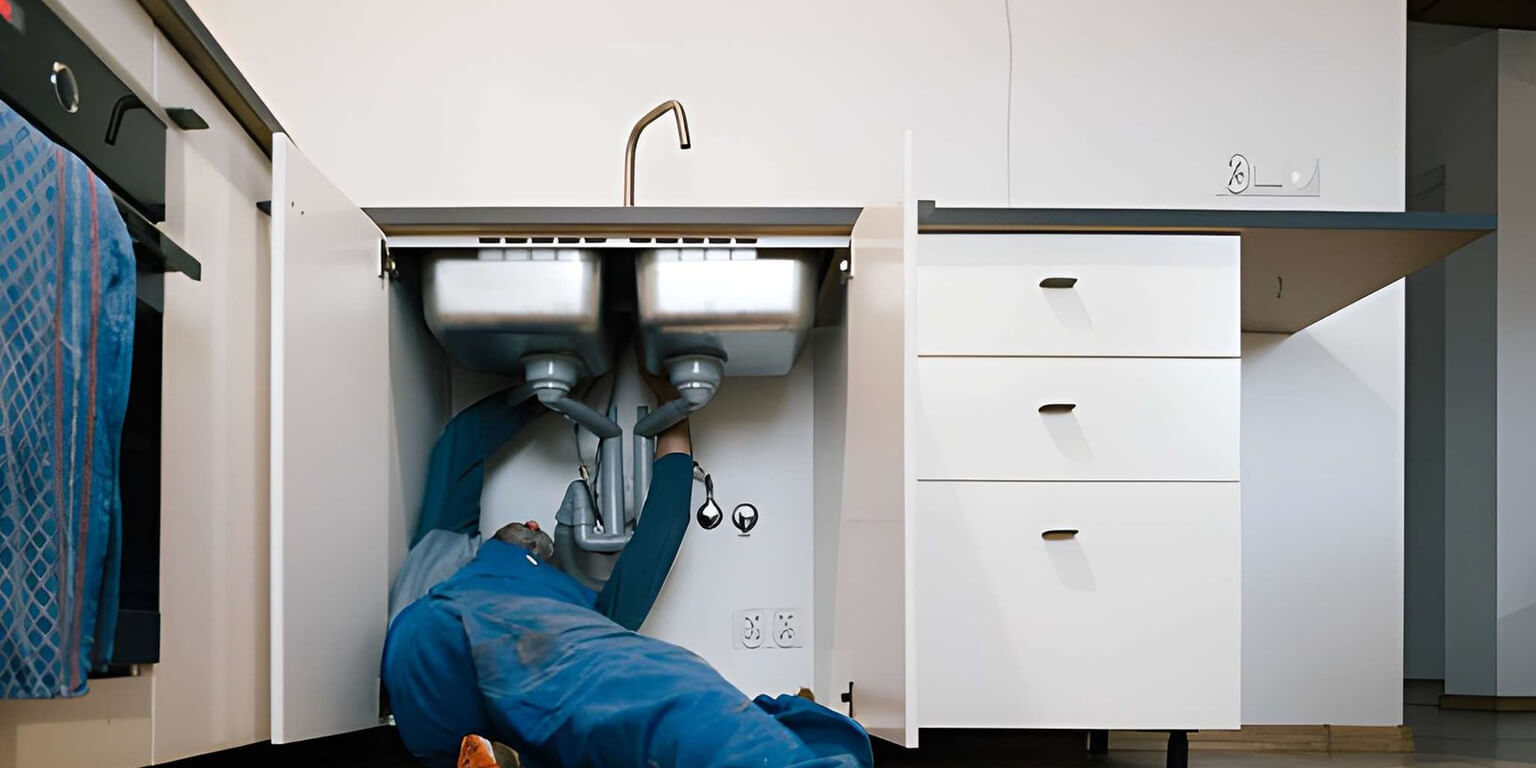
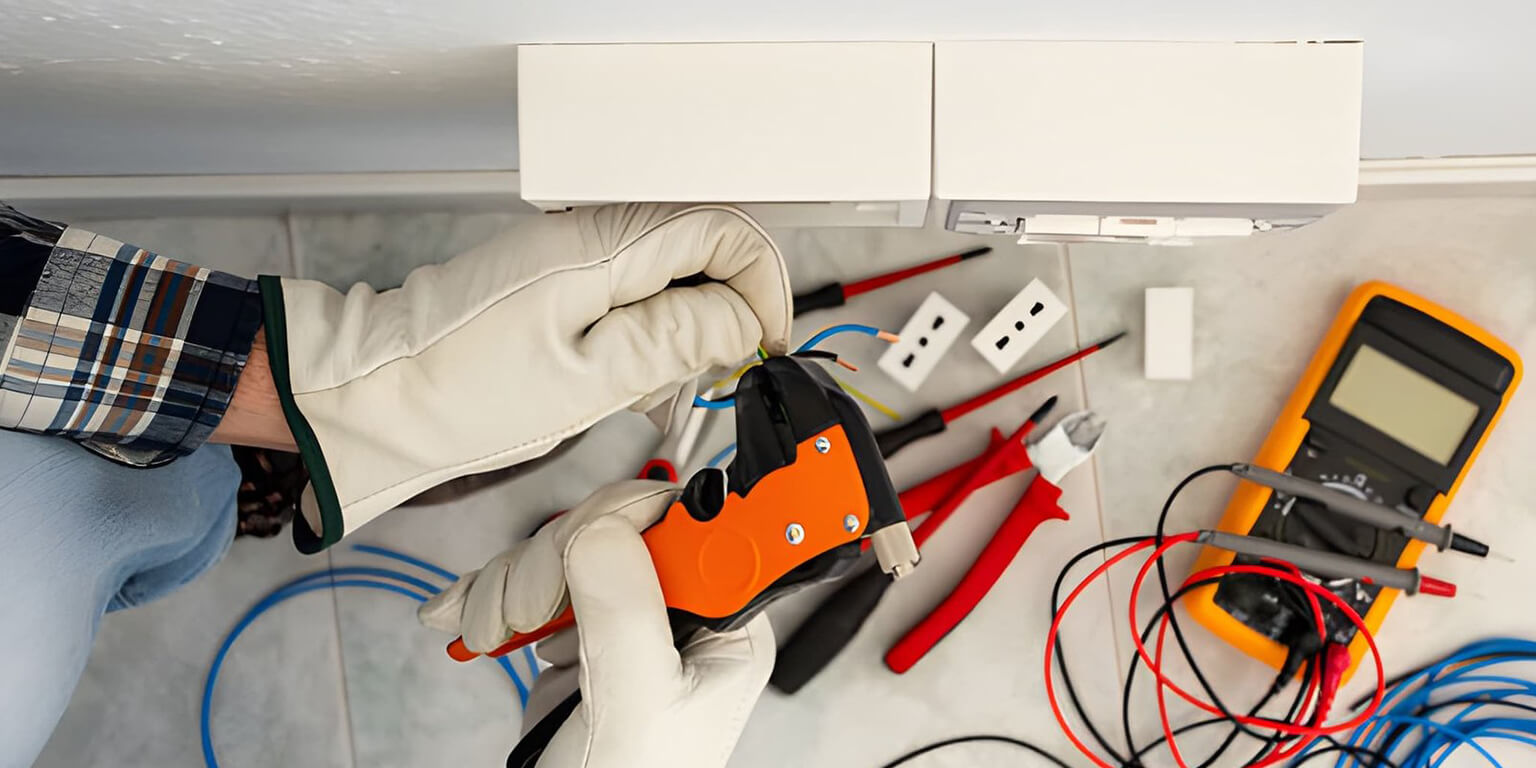
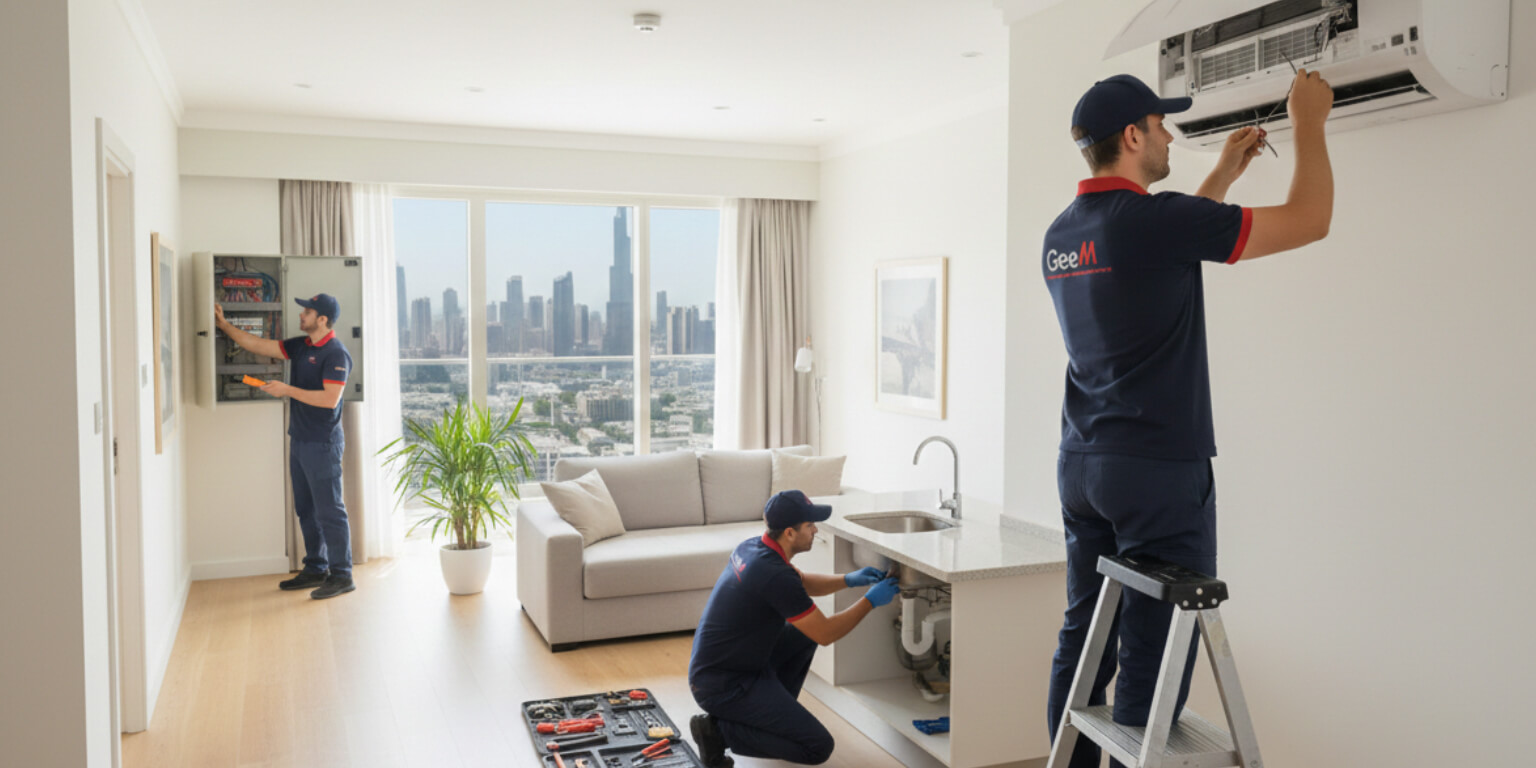
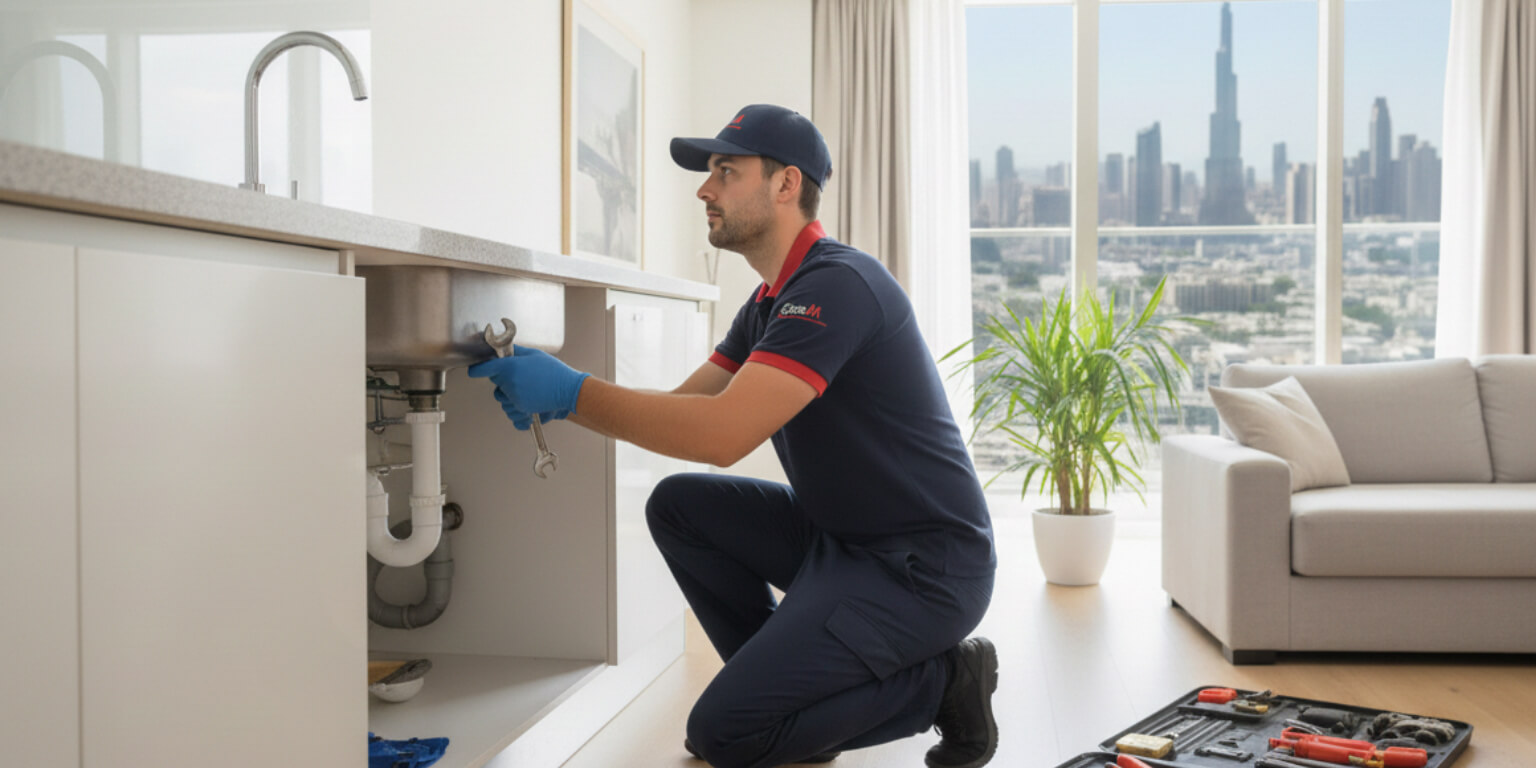
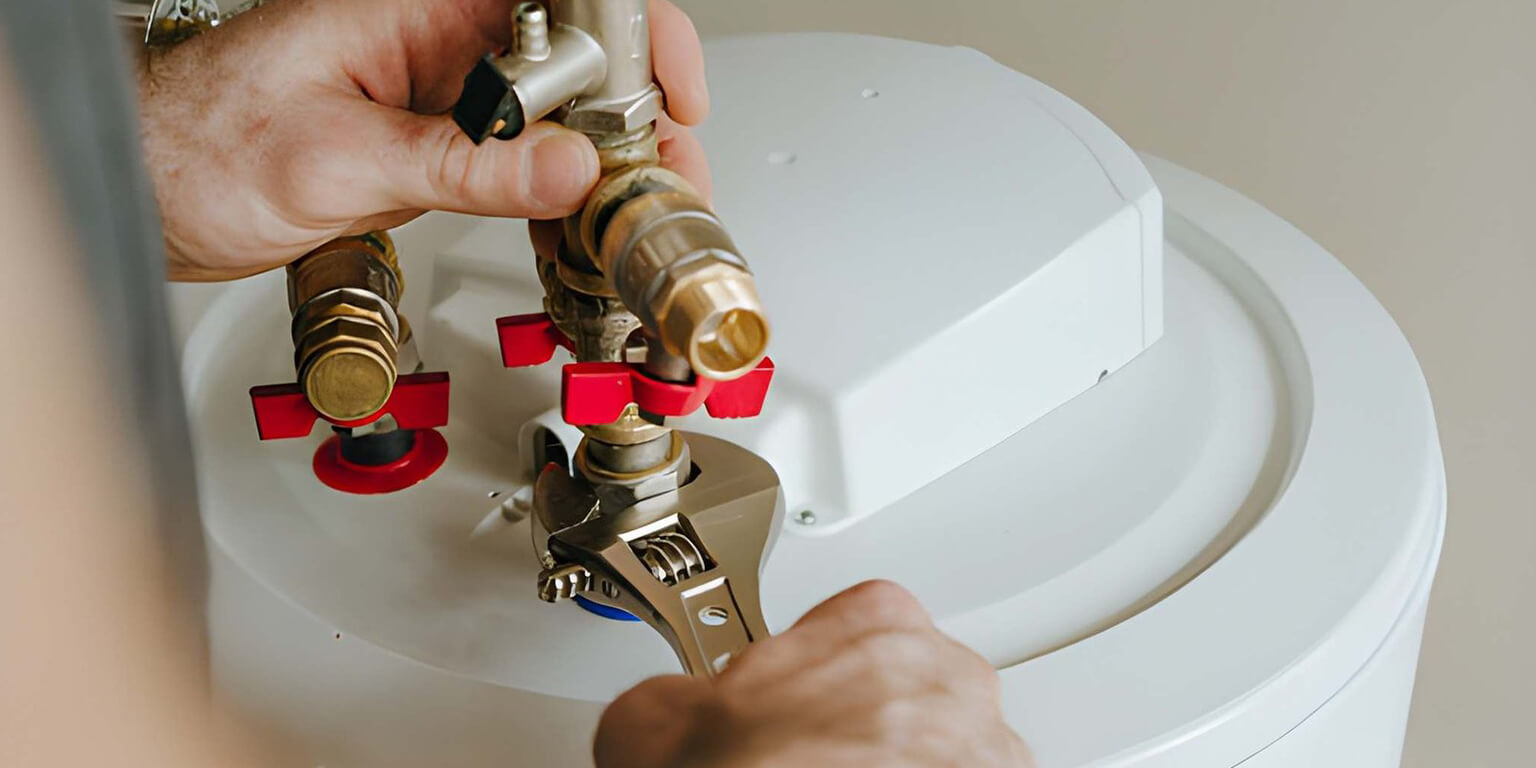
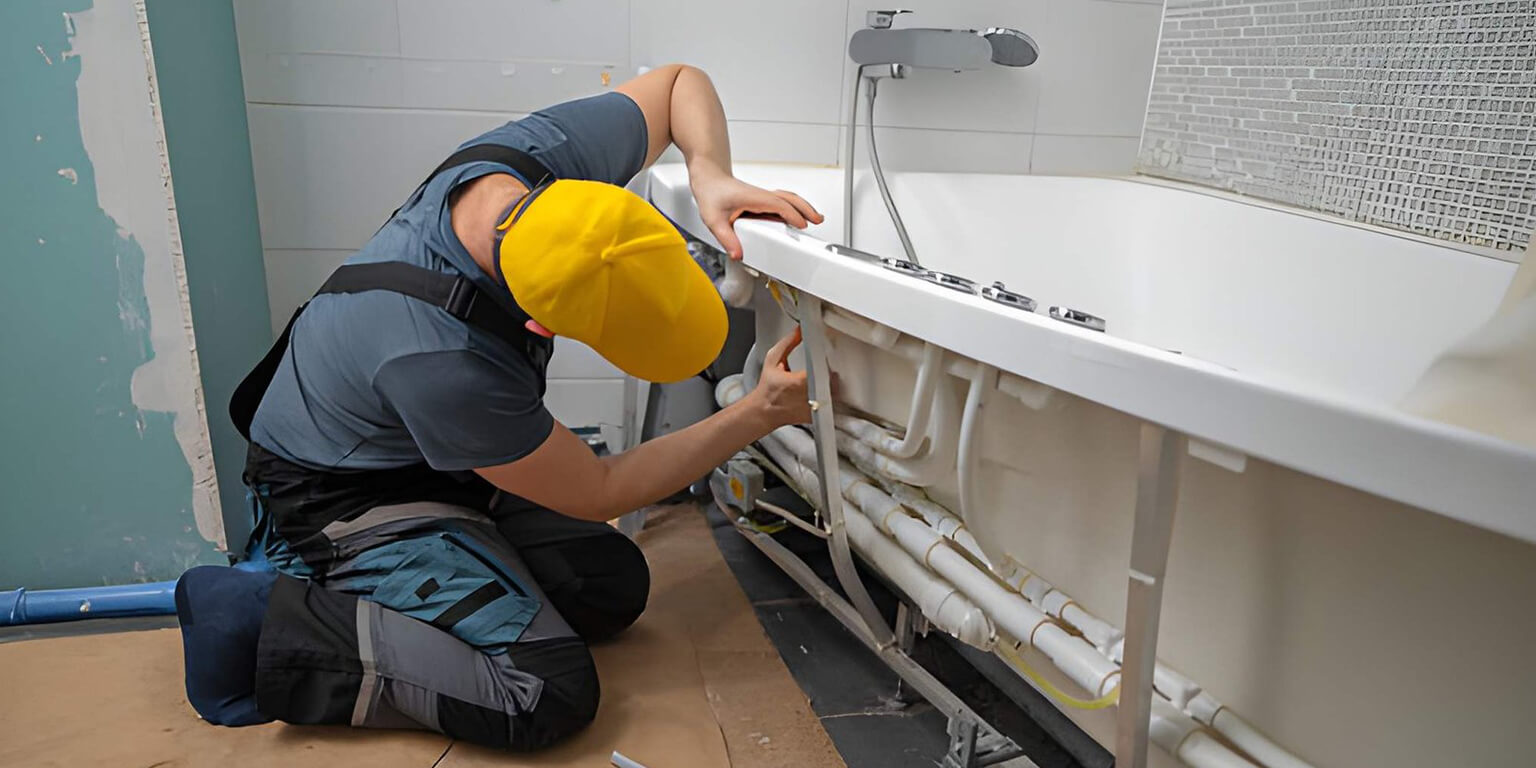





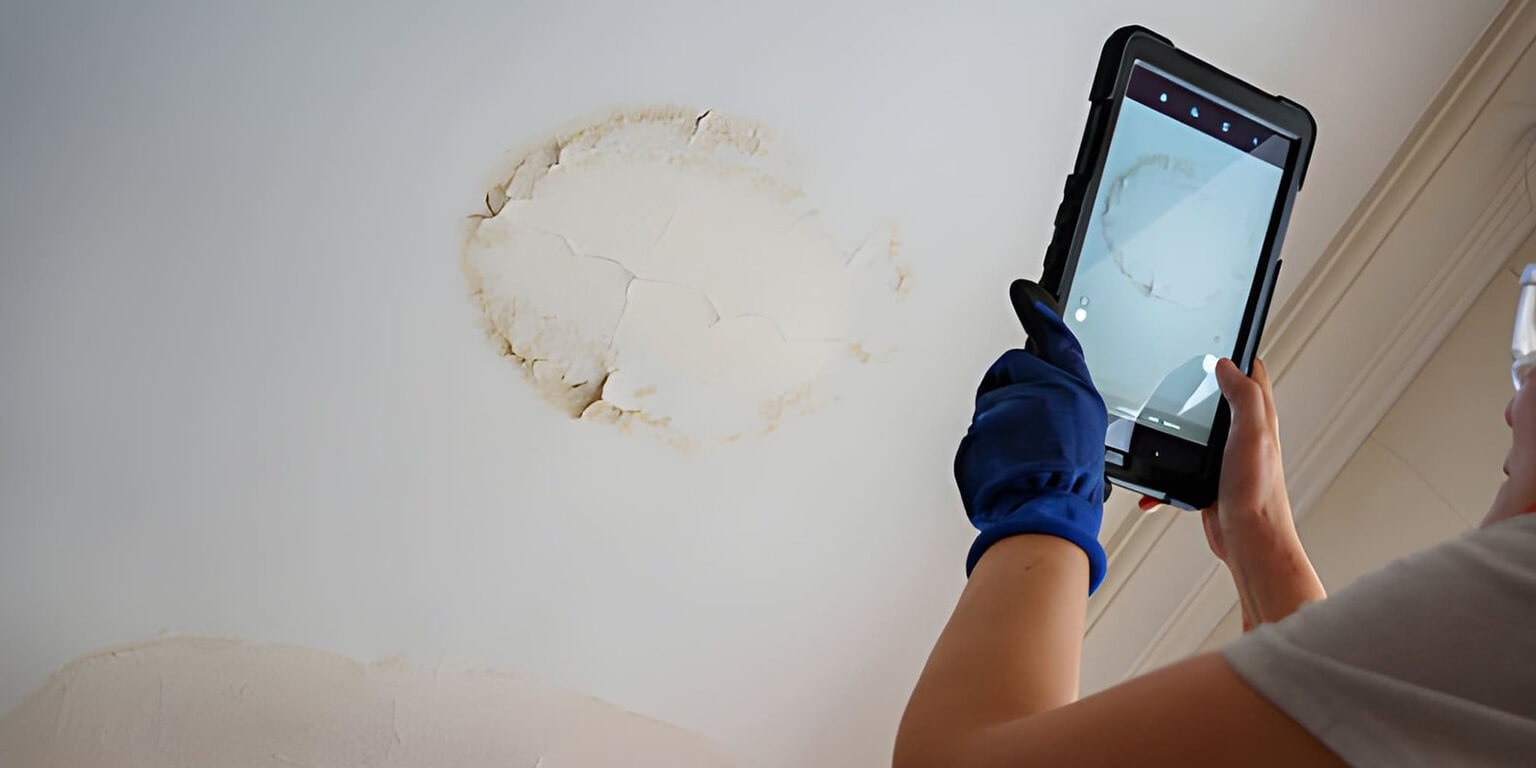




.svg)